The Short Answer: Latest Champion and All-Time Leaders
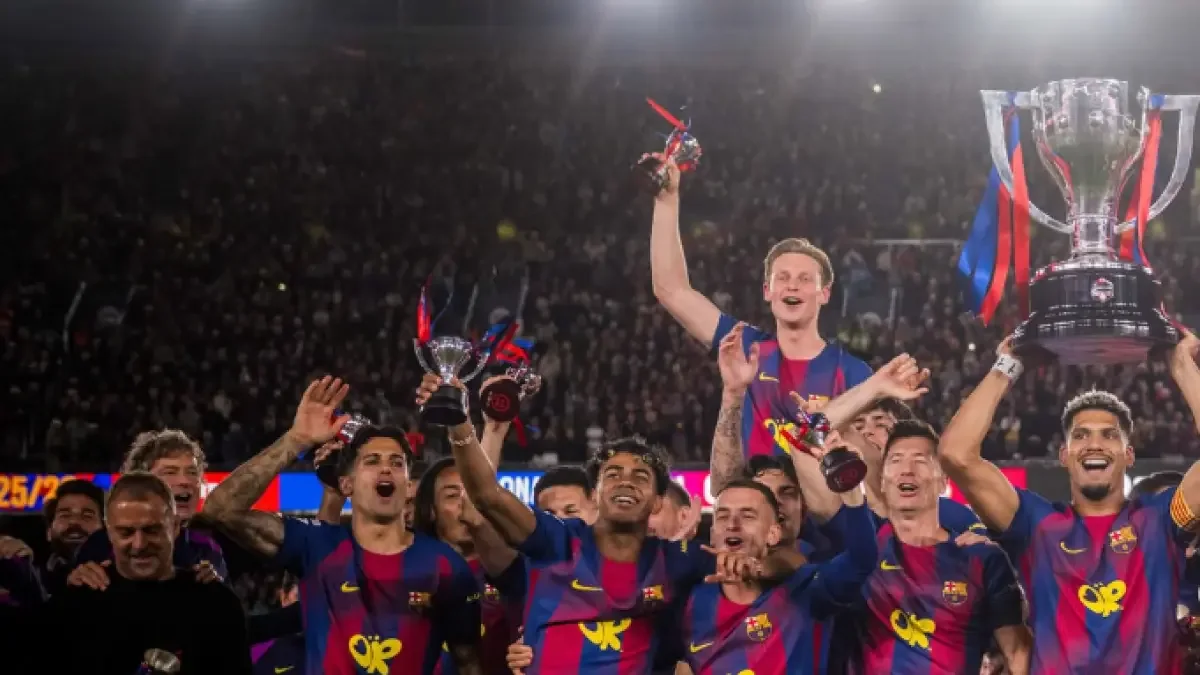
FC Barcelona are the latest completed-season La Liga champions. They won the 2025/26 title, taking their historical total to 29. It was Barcelona's second championship in a row after their 2024/25 success. Real Madrid, however, still lead the all-time winners list with 36 league titles. Those totals are correct through the end of the 2025/26 season; the 2026/27 title race is still in progress and must not be counted before it is mathematically decided.
That distinction matters because the question “Who has won La Liga the most?” is different from “Who won La Liga last season?” Real Madrid are the competition's record champions, while Barcelona are the defending champions. Real Madrid last added to their league total in 2023/24, when Carlo Ancelotti's side secured the club's 36th crown. Barcelona then won in 2024/25 and retained the championship in 2025/26, reaching 29.
Latest champion
Barcelona
2025/26, their 29th title
All-time leader
Real Madrid
36 league titles
Third place
Atlético Madrid
11 league titles
The current gap between Spain's two giants is seven titles. That number gives the rivalry historical weight, but it does not make every era identical. Madrid built decisive advantages in the 1950s, 1960s and late 1980s; Barcelona compressed the gap through sustained success from the 1990s onward and won 11 of the 18 championships from 2008/09 through 2025/26. Atlético Madrid remain the only club outside those two to win the league since Valencia's 2003/04 triumph, taking the crown in 2013/14 and 2020/21.
If you want the live position of the defending champion rather than historical honours, use the current La Liga table. The winners list below only records completed championships, which keeps a changing title race separate from settled history.
Complete La Liga Winners List by Season
La Liga seasons span two calendar years, so the safest label is the full season—for example, 2025/26, not simply “2026.” In the table below, the year on the right is the year in which the championship normally finished. Every completed top-flight season from the inaugural 1928/29 competition through 2025/26 is included. The three missing seasons were not accidental omissions: Spain's national league was suspended during the Civil War and resumed in 1939/40.
| Period | Season-by-season champions |
|---|---|
| 1928/29–1939/40 | 1928/29 Barcelona; 1929/30 Athletic Club; 1930/31 Athletic Club; 1931/32 Real Madrid; 1932/33 Real Madrid; 1933/34 Athletic Club; 1934/35 Real Betis; 1935/36 Athletic Club; 1936/37–1938/39 no national league; 1939/40 Atlético Aviación. |
| 1940/41–1949/50 | 1940/41 Atlético Aviación; 1941/42 Valencia; 1942/43 Athletic Club; 1943/44 Valencia; 1944/45 Barcelona; 1945/46 Sevilla; 1946/47 Valencia; 1947/48 Barcelona; 1948/49 Barcelona; 1949/50 Atlético Madrid. |
| 1950/51–1959/60 | 1950/51 Atlético Madrid; 1951/52 Barcelona; 1952/53 Barcelona; 1953/54 Real Madrid; 1954/55 Real Madrid; 1955/56 Athletic Club; 1956/57 Real Madrid; 1957/58 Real Madrid; 1958/59 Barcelona; 1959/60 Barcelona. |
| 1960/61–1969/70 | 1960/61 Real Madrid; 1961/62 Real Madrid; 1962/63 Real Madrid; 1963/64 Real Madrid; 1964/65 Real Madrid; 1965/66 Atlético Madrid; 1966/67 Real Madrid; 1967/68 Real Madrid; 1968/69 Real Madrid; 1969/70 Atlético Madrid. |
| 1970/71–1979/80 | 1970/71 Valencia; 1971/72 Real Madrid; 1972/73 Atlético Madrid; 1973/74 Barcelona; 1974/75 Real Madrid; 1975/76 Real Madrid; 1976/77 Atlético Madrid; 1977/78 Real Madrid; 1978/79 Real Madrid; 1979/80 Real Madrid. |
| 1980/81–1989/90 | 1980/81 Real Sociedad; 1981/82 Real Sociedad; 1982/83 Athletic Club; 1983/84 Athletic Club; 1984/85 Barcelona; 1985/86 Real Madrid; 1986/87 Real Madrid; 1987/88 Real Madrid; 1988/89 Real Madrid; 1989/90 Real Madrid. |
| 1990/91–1999/00 | 1990/91 Barcelona; 1991/92 Barcelona; 1992/93 Barcelona; 1993/94 Barcelona; 1994/95 Real Madrid; 1995/96 Atlético Madrid; 1996/97 Real Madrid; 1997/98 Barcelona; 1998/99 Barcelona; 1999/00 Deportivo La Coruña. |
| 2000/01–2009/10 | 2000/01 Real Madrid; 2001/02 Valencia; 2002/03 Real Madrid; 2003/04 Valencia; 2004/05 Barcelona; 2005/06 Barcelona; 2006/07 Real Madrid; 2007/08 Real Madrid; 2008/09 Barcelona; 2009/10 Barcelona. |
| 2010/11–2019/20 | 2010/11 Barcelona; 2011/12 Real Madrid; 2012/13 Barcelona; 2013/14 Atlético Madrid; 2014/15 Barcelona; 2015/16 Barcelona; 2016/17 Real Madrid; 2017/18 Barcelona; 2018/19 Barcelona; 2019/20 Real Madrid. |
| 2020/21–2025/26 | 2020/21 Atlético Madrid; 2021/22 Real Madrid; 2022/23 Barcelona; 2023/24 Real Madrid; 2024/25 Barcelona; 2025/26 Barcelona. |
Older records use names that can look unfamiliar. Athletic Club is often rendered as Athletic Bilbao in English-language lists. Atlético Madrid competed as Athletic Aviación and then Atlético Aviación around its first two titles after the Civil War; those championships belong to the same club's official lineage. Deportivo La Coruña may appear as Deportivo de La Coruña, while Real Betis is sometimes shortened simply to Betis. Normalizing those labels prevents one champion from being counted as two clubs.
The table also shows why a single end-year can mislead. Searching “La Liga winner 2024” normally means the champion of 2023/24—Real Madrid—not the team leading during the opening months of 2024/25. For match scores behind a completed campaign, use the site's La Liga results archive; the historical winner should always be tied to the full season label.
Clubs With the Most La Liga Titles
Only nine clubs have become champions of Spain since the national league began in 1929. The ranking is top-heavy: Real Madrid and Barcelona own 65 of the 95 completed championships between them, while the other seven winners share 30. That concentration explains why breaking the Madrid–Barcelona cycle carries so much emotional and historical value.
| Rank | Club | Titles | Most recent title |
|---|---|---|---|
| 1 | Real Madrid | 36 | 2023/24 |
| 2 | Barcelona | 29 | 2025/26 |
| 3 | Atlético Madrid | 11 | 2020/21 |
| 4 | Athletic Club | 8 | 1983/84 |
| 5 | Valencia | 6 | 2003/04 |
| 6 | Real Sociedad | 2 | 1981/82 |
| =7 | Deportivo La Coruña | 1 | 1999/00 |
| =7 | Sevilla | 1 | 1945/46 |
| =7 | Real Betis | 1 | 1934/35 |
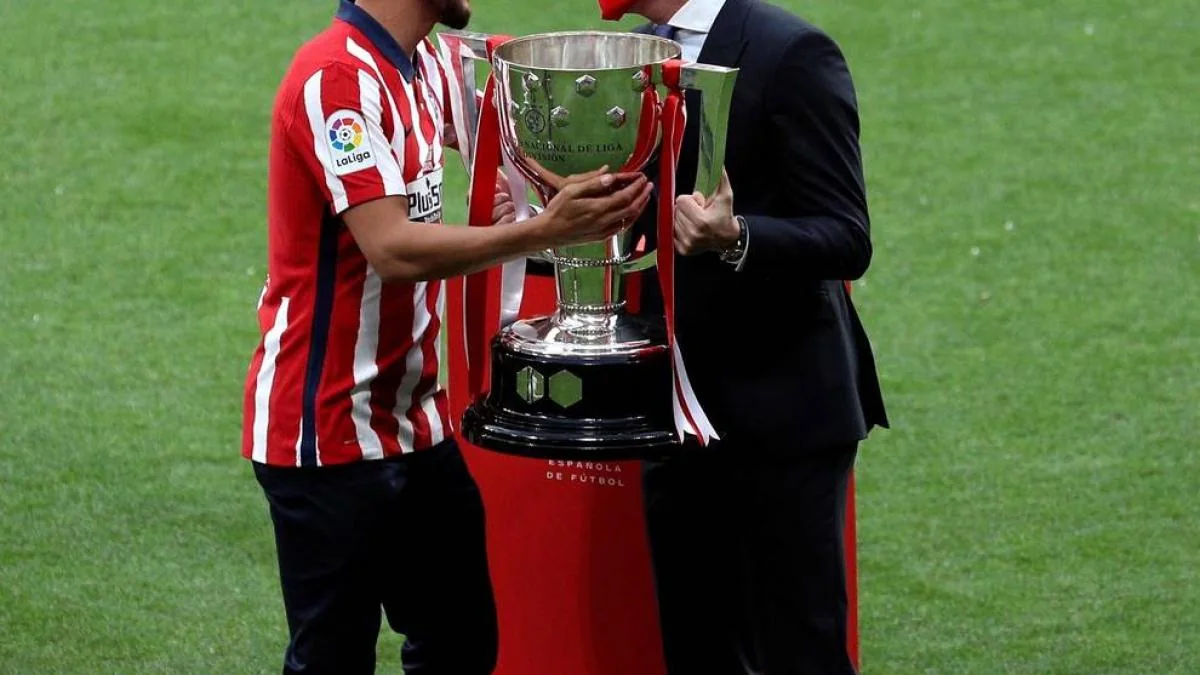
The “last title” column is as revealing as the total. Atlético's 2020/21 victory belongs to the modern tactical and financial landscape, whereas Athletic's eight championships were accumulated by 1983/84. Valencia remain the last winner outside the present big three, following their Rafael Benítez-led triumph in 2003/04. Deportivo's sole crown in 1999/00 is even more unusual: it made a club from A Coruña the only first-time champion of the last half-century.
Raw numbers also flatten distinct stories. Athletic won four of the first eight completed championships and later took back-to-back titles in 1982/83 and 1983/84. Real Sociedad won consecutive leagues immediately before that Athletic double. Atlético's total stretches from its Aviación-era championships after the Civil War to Diego Simeone's wins in 2013/14 and 2020/21. Valencia's six titles are split between the 1940s, 1970/71 and the early-2000s team that twice displaced richer rivals.
For the clubs competing now, visit the La Liga teams directory. Historical champion status does not guarantee current top-flight membership, and current membership does not mean a club has ever lifted the title.
Winners Over the Last 5, 10, 20, 25, 30 and 50 Seasons
Rolling lists are easy to miscount because writers sometimes treat calendar years as seasons or include the current unfinished campaign. The comparison below uses the latest completed seasons through 2025/26. Thus, “last 10” begins in 2016/17 and contains exactly ten champions; “last 20” begins in 2006/07. The active 2026/27 race is excluded.
| Window | Championships by club | What stands out |
|---|---|---|
| Last 5 | Barcelona 3; Real Madrid 2 | Only two winners |
| Last 10 | Barcelona 5; Real Madrid 4; Atlético 1 | Barcelona won half |
| Last 20 | Barcelona 11; Real Madrid 7; Atlético 2 | The big two won 18 of 20 |
| Last 25 | Barcelona 13; Real Madrid 8; Atlético 2; Valencia 2 | Valencia are the fourth winner |
| Last 30 | Barcelona 15; Real Madrid 10; Atlético 2; Valencia 2; Deportivo 1 | Five different champions |
| Last 50 | Barcelona 20; Real Madrid 19; Atlético 4; Athletic 2; Real Sociedad 2; Valencia 2; Deportivo 1 | Seven champions across half a century |
The last-20 result is the clearest picture of modern concentration. Barcelona won 11 and Real Madrid seven, leaving Atlético's 2013/14 and 2020/21 teams as the only breakers of the duopoly. Expand the window to 25 seasons and Valencia's 2001/02 and 2003/04 championships appear. Expand to 30 and Deportivo's 1999/00 breakthrough joins them. Every cutoff changes the story, which is why an article titled “last 20 years” should not casually start at the year 2000.
For a strict 21st-century league count using seasons from 2000/01 through 2025/26, Barcelona lead with 13 titles, Real Madrid have nine, and Atlético and Valencia have two apiece. The Spanish federation also described Barcelona as the century's leading First Division champion when presenting the club's 29th trophy in May 2026. That 13–9 comparison is narrower than the all-time 36–29 ranking and explains how Barcelona could dominate the modern period while still trailing historically.
The five-season window is more immediate but less predictive. Barcelona's three titles and Real Madrid's two describe recent outcomes, not the eventual winner of 2026/27. Fans following that race should pair this history with the 2025/26 season review and the live standings, rather than treating a past winning rate as a forecast.
How La Liga's Balance of Power Changed
The all-time table can create the illusion that Spanish football has always looked like the present. It has not. La Liga's champions form a sequence of distinct power shifts, each shaped by club building, coaching ideas, player development and the competition's changing scale.
1929–1936: Athletic set the early pace
Barcelona won the inaugural league and Real Madrid soon collected two, but Athletic Club were the first repeat force. Their titles in 1929/30, 1930/31, 1933/34 and 1935/36 meant four wins in the first eight completed seasons. Real Betis also produced the first true outsider story in 1934/35. Early La Liga was compact, regionally diverse and not yet controlled by one enduring duopoly.
1939–1953: a genuinely varied restart
After the Civil War interruption, Atlético Aviación won twice, followed by championships for Valencia, Athletic, Barcelona, Sevilla and Atlético Madrid. Six clubs won between 1939/40 and 1952/53. Valencia's three 1940s titles and Sevilla's only league crown belong to this period, evidence that the modern hierarchy was not fixed.
1953–1980: Real Madrid build the largest lead
Real Madrid won 18 championships from 1953/54 through 1979/80. The most severe run was five straight from 1960/61 to 1964/65, surrounded by further victories that made Madrid the record holder. Barcelona, Atlético and Valencia interrupted them, but no rival matched their season-to-season continuity.
1980–1994: Basque revival, the Quinta and the Dream Team
Real Sociedad and Athletic Club split four successive titles from 1980/81 to 1983/84. Real Madrid's Quinta del Buitre then won five consecutively from 1985/86 to 1989/90. Barcelona answered immediately: Johan Cruyff's Dream Team took four in a row from 1990/91 through 1993/94. These were not merely trophy streaks; they represented competing models of academy production, recruitment and attacking identity.
1995–2004: the last broad opening
Atlético's 1995/96 double, Deportivo's first championship in 1999/00 and Valencia's wins in 2001/02 and 2003/04 broke up the big two's sequence. Deportivo came within a missed final-day penalty of winning as early as 1993/94, then eventually converted sustained contention into a title. Valencia's disciplined Benítez sides became the last champions outside Real Madrid, Barcelona and Atlético.
2004–present: Barcelona rise and a narrower challenger pool
Barcelona's 2004/05 title began a modern run that transformed the historical comparison. Real Madrid continued to win regularly, while Atlético's 2013/14 and 2020/21 sides proved that an elite defensive structure and reliable scoring could still overturn financial hierarchy. Yet no fifth club has joined the champions list, and no fourth club has won since Valencia in 2003/04.
This history matters when fans call one champion “the greatest” or assume current strength is permanent. A title won in an 18-match inaugural season, a 30-match post-war campaign and today's 38-match league demanded different forms of endurance. The common achievement is finishing above every opponent across the league format of the time. For another view of institutional staying power, read which La Liga teams have never been relegated.
How to Read the Winners List Without Mixing Competitions
A surprising number of searches combine the right club with the wrong trophy. This page counts only champions of Spain's men's top-flight national league. It does not add Copa del Rey, Spanish Super Cup, UEFA Champions League or Europa League wins. A club can win several of those in one season, but each remains a separate competition with its own qualification route and format.
| Competition | Basic format | What the winner becomes |
|---|---|---|
| La Liga | Season-long league table | Spanish league champion |
| Copa del Rey | Knockout rounds leading to a final | Spanish cup winner |
| Spanish Super Cup | Four-team event with semifinals and a final | Super Cup winner |
| Champions League | European league phase and knockouts | European club champion |
Does La Liga have a final?
No. There is a final matchday, but there is no automatic championship final between the top two teams. The title goes to the team that finishes first under the league rules. A decisive game on Matchday 38 may feel like a final, and a head-to-head meeting can mathematically clinch the title, but neither turns the competition into a knockout tournament. Our separate guide explains in detail why La Liga has no final.
Why do searches mention a La Liga semifinal?
They usually mean the Spanish Super Cup. Since its expansion, that tournament has two semifinals and one final involving four qualified teams. League position helps determine entrants, which probably causes the wording to blur in search boxes, but winning a Super Cup semifinal does not advance a club toward the La Liga championship.
Is a Champions League title a La Liga title?
No. “La Liga clubs” is a convenient description of Spanish teams playing in Europe; it does not make their European trophies league championships. Real Madrid's record in the Champions League and Sevilla's record in the Europa League are separate from the totals on this page. The clean test is simple: if the trophy was awarded for finishing first in Spain's top division, count it here. If it came from a cup final or a UEFA competition, do not.
Comments
Sign in with Google to comment. Keep the conversation useful and football-focused. New comments are reviewed before they appear.
Loading comments…