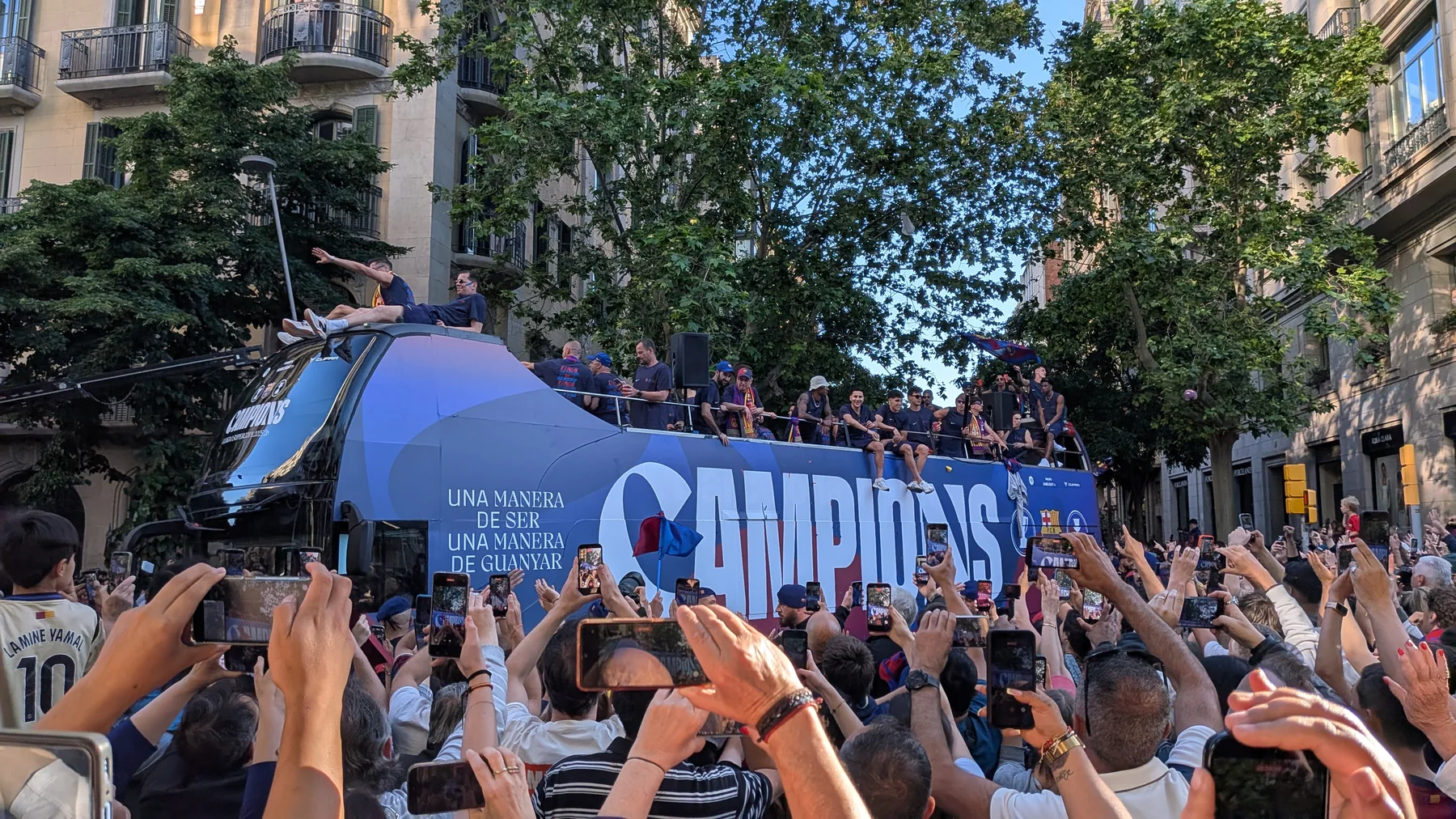
Final season review
Barcelona won La Liga 2025/26 with 94 points, eight ahead of Real Madrid. Kylian Mbappé took the Pichichi with 25 goals, Lamine Yamal was Player of the Season, and Mallorca, Girona and Real Oviedo were relegated.
The numbers below are final after Matchday 38. This guide connects the table, tactical story, scoring and goalkeeping awards, European qualification and relegation rules so fans can understand not only what happened, but why each figure mattered.
Final La Liga 2025/26 Table and the Numbers That Matter
Barcelona won La Liga 2025/26 with 94 points, eight clear of Real Madrid. The champions finished 31-1-6, scored a league-high 95 goals and conceded 36 for a +59 goal difference. Madrid's defensive total was actually one goal better at 35 conceded, but its 77-goal attack and four additional draws left the decisive gap. The title was won by turning more close or level matches into victories, not simply by owning the league's lowest goals-against figure.
| Pos. | Club | Points | Goals | GD |
|---|---|---|---|---|
| 1 | Barcelona | 94 | 95-36 | +59 |
| 2 | Real Madrid | 86 | 77-35 | +42 |
| 3 | Villarreal | 72 | 72-46 | +26 |
| 4 | Atlético Madrid | 69 | 62-44 | +18 |
| 5 | Real Betis | 60 | 59-48 | +11 |
| 18 | Mallorca | 42 | 47-57 | -10 |
| 19 | Girona | 41 | 39-55 | -16 |
| 20 | Real Oviedo | 29 | 26-60 | -34 |
The strangest line is Barcelona's single draw. One point from only one match does not mean the champions were unbeatable—they lost six times—but it does show how rarely their games settled into a stalemate. A draw-heavy challenger can protect an unbeaten run while leaking title-race value two points at a time. Barcelona instead lived with some defeats and banked 31 full three-point returns.
Villarreal's 72 points and 72 goals made third place a statement, not merely a collapse elsewhere. Atlético followed on 69, with a tighter 62-44 profile, while Betis reached 60. Below them, only four points separated Celta in sixth from Rayo in eighth. At the bottom, Mallorca went down on 42 points—the same total as both Levante and Osasuna—showing why La Liga's head-to-head tiebreak context matters as much as the headline goal difference.
The table also breaks into useful competitive bands. Madrid finished 14 points above Villarreal, making the top two distinct even though the title margin was eight. Villarreal and Atlético formed the next pair, only three points apart, before a nine-point fall to Betis. From Getafe in seventh on 51 down to Elche in 15th on 43, eight clubs occupied an eight-point range. That density explains why a short winning run could point a club toward Europe while two poor weekends could drag the same side back toward survival calculations.
Home and away splits add another layer. Barcelona took 57 points at home and 37 away; Madrid collected 49 at home and the same 37 away. Their road production was level, so the eight-point championship gap was created entirely by Barcelona's perfect home return. That is more informative than saying simply that the champions had “better form.” It locates the advantage: every visiting side left Barcelona without a league point.
For fans comparing seasons, points measure week-to-week output, goal difference measures scoring control, and position determines the consequence. They should be read together. The site's current La Liga table now tracks the new campaign; the figures above are fixed final totals for 2025/26.
Top Scorers, Assists and Goalkeeping Leaders
Kylian Mbappé won the 2025/26 Pichichi with 25 goals in 31 league appearances. Vedat Muriqi pushed him with 23 for Mallorca, and Osasuna's Ante Budimir finished third on 17. Lamine Yamal and Vinícius Júnior each reached 16. The list carried an important warning about using scorers as a shortcut for team quality: Mbappé's Madrid finished second, and Muriqi's exceptional return could not keep Mallorca in the division.
Pichichi
Kylian Mbappé
25 goals in 31 appearances for Real Madrid.
Creative leader
Lamine Yamal
Official award material credits 16 goals and 12 assists; some final stat tables list 11 assists.
Zamora
Joan García
21 conceded in 30, a 0.70 goals-per-game coefficient.
Lamine's assist total needs an attribution label. LaLiga's official Player of the Season release reports 12, while AS's final ranking shows 11. That kind of difference usually comes from event-definition decisions—for example, how a deflection or rebound is treated—rather than a dispute about the score. A responsible season review does not add or average the figures. It tells the reader who counted them, keeps comparisons within one provider and focuses on the shared conclusion: Lamine combined elite chance creation with 16 goals.
Why the Zamora and team defence are not the same table
Joan García's Zamora award was based on his individual goals-conceded rate among eligible goalkeepers. He allowed 21 in 30 appearances for a 0.70 coefficient. Real Madrid, however, finished with the league's lowest team total at 35 conceded, one better than Barcelona's 36. Substitute goalkeeper minutes and award eligibility explain how the winning keeper can play for the second-best team defence by raw goals.
These distinctions matter to fans evaluating a season. The Pichichi rewards the largest goal total, not the champion's most valuable player. The Zamora rewards an eligible keeper's rate, not the fewest goals allowed by an entire squad. Assist charts depend on a declared counting standard. Use the site's La Liga top scorers for the current race, and preserve these final numbers as the completed 2025/26 snapshot.
How Barcelona Turned 31 Wins into the Championship
Barcelona's title formula was territorial pressure with a ruthless home floor. Hansi Flick's side won all 19 league matches at home, an extraordinary source of certainty in a competition where even champions normally surrender draws. The club recorded 68.91% possession across the season, comfortably above Real Madrid's 59.44%, and scored 95 goals—18 more than any other team. Possession was not decoration; it repeatedly ended with enough players around the box to sustain another attack.
Flick's structure tried to make the pitch feel wider and shorter at once. Lamine Yamal received isolation opportunities on the right, while midfielders offered inside connections and runners occupied the last line. When Barcelona lost the ball, the nearest players pressed immediately so that an opponent's clearance often became the beginning of another possession. That loop helps explain a total of 31 victories: the champions did not merely create one good spell in a match; they kept forcing opponents to defend the same dangerous zones.
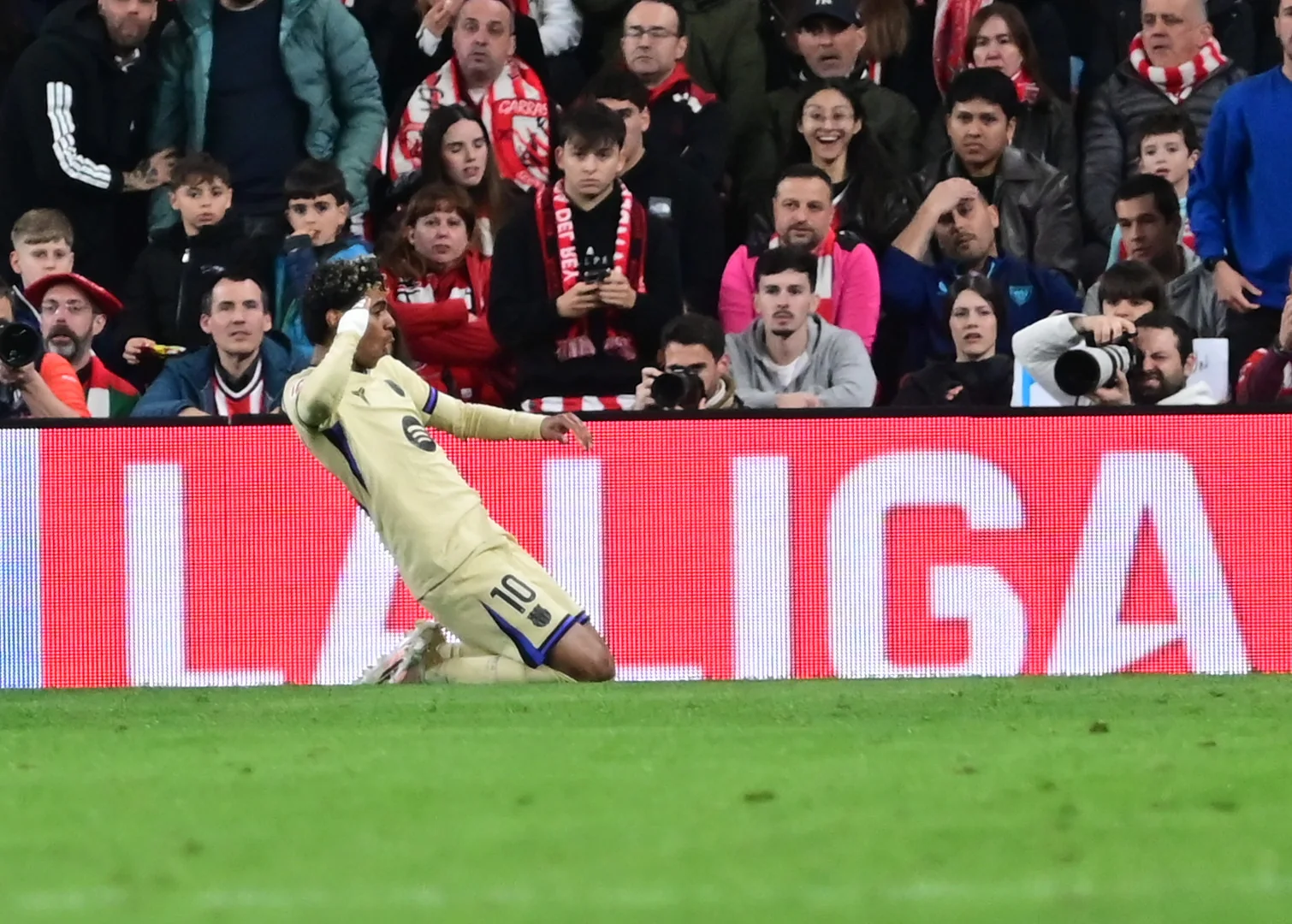
19/19
Home wins
A perfect league record at home created the title race's most dependable advantage.
68.91%
Average possession
Territory and repeated pressure supported the league's best attack.
+18
Goals over Madrid
Barcelona's 95 goals created the clearest separation from the runner-up.
The system still carried danger. A high line asks defenders to protect large spaces, and six league defeats show that Barcelona were not untouchable. The useful tactical distinction is that risk did not usually become hesitation. Their attacking volume gave them ways to recover from a concession, while a varied front line prevented the entire scoring burden from landing on one player. A side can be more vulnerable in individual moments yet more reliable at producing three points over ten months.
The title-clinching image brought those themes together. Barcelona beat Real Madrid 2-0 at home on 10 May 2026, with Marcus Rashford and Ferran Torres scoring early. Winning the championship in a Clásico made the celebration louder, but the trophy had been built through the preceding 18 home victories, away problem-solving and an attack that kept its pace across 38 rounds. Flick's Coach of the Season award reflected the repeatability of that work, not one night.
For supporters, the clearest lesson is that 94 points did not come from cautious protection of a lead in the table. Barcelona continued to seek the ball, press high and create one-versus-one opportunities. The strategy sometimes exposed them, but its league return was decisive. The teams guide provides the wider club context behind Barcelona and every opponent in this final table.
Europe, Relegation and the Fine Margins Below the Top
Fifth place carried an unusually large reward. Spain earned a European Performance Spot for the 2026/27 Champions League, an additional league-phase place based on its clubs' collective UEFA results in the previous campaign. Real Betis therefore joined Barcelona, Real Madrid, Villarreal and Atlético Madrid in the Champions League. This was a season-specific coefficient benefit, not a permanent rewrite saying fifth in La Liga always reaches Europe's top competition.
European places
- Champions League: Barcelona, Real Madrid, Villarreal, Atlético, Betis
- Europa League: Celta and Copa del Rey winner Real Sociedad
- Conference League: Getafe
Relegated
- Mallorca: 42 points
- Girona: 41 points
- Real Oviedo: 29 points
Celta's sixth-place finish delivered the Europa League, while Getafe reached the Conference League from seventh. Real Sociedad provide the important cup exception: they finished tenth in the league but entered the Europa League as Copa del Rey winners. That is why a list based only on final positions can look as if it has skipped a club. Domestic cup outcomes and association coefficient places must be applied before the continental picture is complete.
The bottom was even more dependent on fine print. Mallorca's 42 points matched both Levante and Osasuna, yet Mallorca finished 18th and went down. La Liga separates level teams through their head-to-head record before leaning on overall goal difference. A fan watching the final weekend therefore needed the season's direct meetings, not just a live total in the “GD” column. Girona fell one point below that cluster on 41, while Oviedo were isolated at the bottom on 29.
Muriqi's 23 goals make Mallorca's relegation especially striking. An elite scorer can rescue points, but survival still demands chance prevention, secondary goals and reliable results against direct rivals. Girona's fall, soon after experiencing Champions League football, shows how quickly squad strain and lost margins can reverse a club's trajectory. Oviedo's 26 goals, the league's lowest total, left too little room for error at the other end.
For future final-day viewing, start with points, then identify the relevant head-to-head tiebreak and only then consult overall goal difference. The archived La Liga results show those decisive direct meetings; the live table tracks the current season rather than rewriting this completed one.
Official Awards and the Season's Lasting Football Lessons
LaLiga's official awards captured five different ways to shape a season. Lamine Yamal was Player of the Season, Hansi Flick Coach of the Season, Carlos Espí Best Under-23 Player, Joan García the winner of Save of the Season and Arda Güler the scorer of Goal of the Season. The list stretches from ten months of repeatable influence to one unforgettable action, so it is best read as a set of categories rather than a ranking from first to fifth.
- Player: Lamine Yamal.Sixteen goals, elite chance creation and a central role in a 94-point champion made his value broader than a single leaderboard.
- Coach: Hansi Flick.A perfect home record, 95 goals and a second consecutive league title gave the clearest season-long coaching case.
- Under-23: Carlos Espí.The Levante forward scored 11 league goals, production with direct survival value rather than promise alone.
- Save: Joan García.At 0-0 against former club Espanyol, his 38th-minute reaction denied Pere Milla and showed how one intervention can hold a match's shape.
- Goal: Arda Güler.His March strike against Elche came from around the halfway line—reported at more than 65 metres—turning awareness and execution into the season's signature finish.
The widest lesson is that individual and collective tables told different stories. Mbappé won the Pichichi, but Barcelona won the league through more victories and a much larger team goal total. Muriqi finished only two goals behind Mbappé, yet Mallorca were relegated. Joan won the Zamora while Madrid conceded one fewer goal as a squad. None of those pairings is contradictory once the award's actual question is understood.
The season also rewarded rule literacy. Betis reached the Champions League because Spain earned an extra performance place. Real Sociedad reached the Europa League through the Copa del Rey. Mallorca went down level on points with two survivors because head-to-head results came first. Fans who followed only the default top-four colouring or overall goal difference missed decisions that were built into the competition.
What should carry into 2026/27? Barcelona's attacking model has proved repeatable, but opponents now have another full year of evidence on its high line. Madrid possess the league's leading scorer but must turn more control into wins. Villarreal's 72-point third place deserves to be treated as a platform, not a surprise footnote. And every promoted or lower-half club can see from Mallorca and Girona that one strong individual story cannot replace points against direct rivals.
This is a final 2025/26 review, frozen after Matchday 38. For the new campaign, move to today's La Liga schedule rather than carrying last season's positions forward. Historical clarity and current utility are both better when the seasons remain clearly separated.
Comments
Sign in with Google to comment. Keep the conversation useful and football-focused. New comments are reviewed before they appear.
Loading comments…