A three-point gap replaced the possibility of a nine-point lead
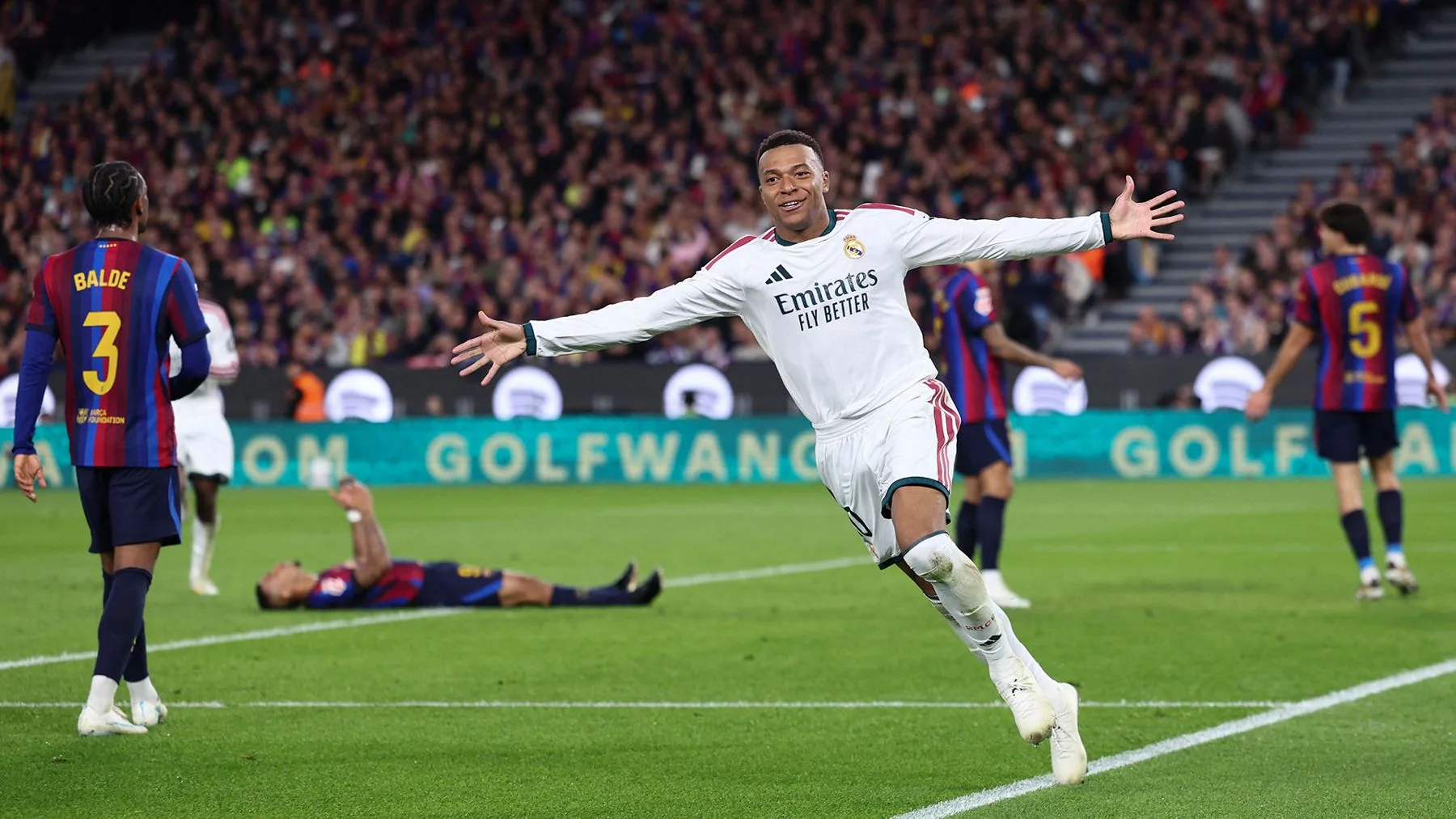
Real Madrid’s 2–1 win at Barcelona on 25 October 2026 ended the leaders’ nine-game winning start and reduced the gap between the rivals to three points. Kylian Mbappé scored twice, either side of Raphinha’s equaliser. Barcelona remained first; Atlético Madrid, rather than Real Madrid, occupied second. The result changed the pressure around the race without deciding who will win it.
The dated table is the right place to start. After ten league matches Barcelona had 27 points, Atlético 25 and Madrid 24. Those figures are reflected in the club’s league standings. This article examines that post-Clásico position, not a claim that those totals will remain current throughout the season. The live La Liga table is the useful companion when later results arrive.
The often-mentioned nine-point lead was a possible outcome, not a lead Barcelona actually held and then surrendered during this game. A home victory would have moved them from 27 to 30, leaving Madrid on 21. The actual away victory left Barcelona on 27 and raised Madrid to 24. The difference between those two possible margins is six points, while Madrid received the normal three points for winning.
| Outcome considered | Barcelona | Real Madrid | Gap |
|---|---|---|---|
| Before the Clásico | 27 | 21 | 6 |
| Hypothetical Barcelona win | 30 | 21 | 9 |
| Actual Madrid win | 27 | 24 | 3 |
That arithmetic explains the emotional scale of the night. Barcelona missed an opportunity to create separation; Madrid avoided having to recover a much larger deficit. Yet ten matches are still only part of a 38-game league. With 28 games remaining for each of these clubs at that point, the stronger conclusion is that the race stayed close. A statement that the title had changed hands would go far beyond the evidence.
The football explains why that escape was possible. Madrid’s official report records both the late winning move and the chances around it. The game was not a simple story of one side having the ball and therefore controlling everything that mattered.
Why Madrid remained dangerous when Barcelona had the ball
Madrid’s threat was broader than waiting for Barcelona to make a random mistake. Their ability to get out of pressure mattered because a successful escape changed the space available to the next attacker. The advantage of a high press is that it can recover possession near goal. Its risk is that players who have moved forward to press must recover if the opponent plays through them.
Getting beyond the first wave of pressure
The accessible portion of Tactical Football Analysis’s match study describes Madrid building with two central defenders and two deeper midfielders against Barcelona’s individual marking. Mourinho’s post-match assessment also praised his players’ willingness to play out against the press.
The football significance is straightforward: a pass that removes a nearby marker can be worth more than several safe passes which do not change the opponent’s shape. When the first line is bypassed, the receiving player can face forward, and the defenders behind the press must decide whether to step out or protect the space behind them. That moment of indecision is what a quick combination can exploit.
The cost of space around the full-backs
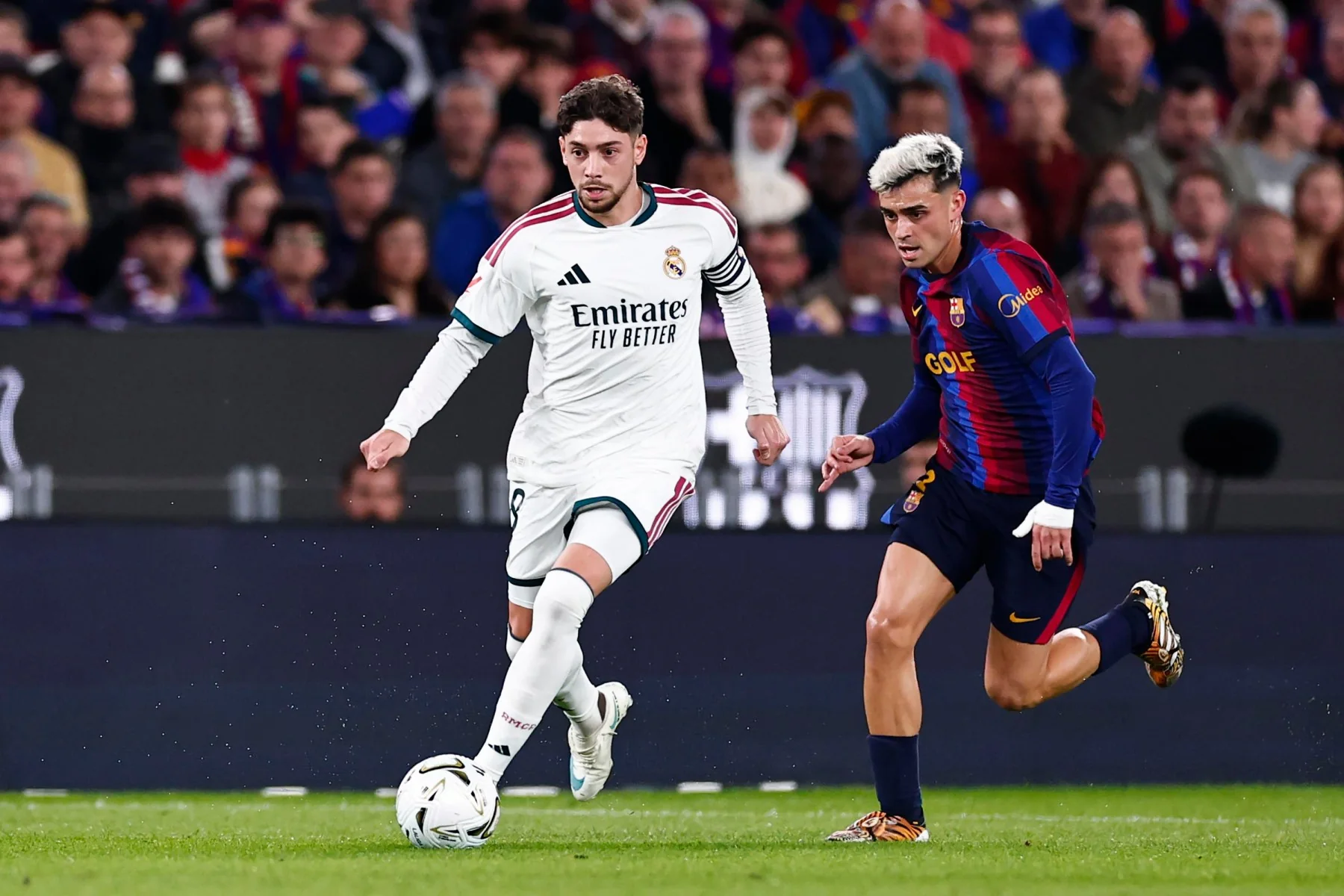
Managing Madrid’s tactical analysis highlights switches of play and combinations involving Valverde on one side and Cucurella and Diomande on the other. Its argument is that Madrid could draw pressure across before finding room on the far side. That is analysis of the match, rather than a numerical measure of how often the pattern succeeded.
For a viewer, the revealing movement is often away from the ball. Watch whether the far-side defender can remain connected to the centre-backs, whether a winger follows the advancing full-back, and whether a midfielder has time to move across. A team can have several players near the ball and still leave a dangerous gap elsewhere. Madrid’s reported approach helps explain why Barcelona’s attacking ambition did not remove the visitors’ threat.
The implication is not that Barcelona should stop pressing. A press needs the players behind it to move together, and the decision to go forward must be matched by cover. The Barcelona fixture analysis provides the wider calendar context; this match offers a particular test of how that ambitious approach holds up against opponents who can escape pressure accurately.
Raphinha’s equaliser changed the momentum without ending Madrid’s threat
Barcelona’s response after the interval prevents this match from being reduced to a story of a plan which never worked. The home side recovered from going behind and created an opportunity to take more than a draw. A team can have serious problems in one phase of a game and still improve enough to ask difficult questions of its opponent in another.
A quick corner and a different second half
Barcelona’s official match report describes a quick corner, Pedri’s involvement and Raphinha’s low finish for the equaliser. It also records Lunin denying a Gerard Martín header. Madrid’s own account acknowledges that save. Those are concrete reasons to take Barcelona’s improved period seriously, rather than dismissing the reaction because of the eventual score.
A quick restart poses a different problem from a settled possession attack. Defenders who are arranging their positions must suddenly respond to the ball moving again. The attacking advantage is the short period before the opponent restores its spacing and assignments. In that sense, the equaliser illustrates the value of speed of thought as well as the quality of the final shot.
But momentum is not a protective barrier against a counterattack. When the crowd senses a winner and players commit to finding it, the structure behind the attack becomes especially important. The question is how the side would defend the next loss of possession, even during its strongest attacking spell. That is a more useful lesson than treating confidence itself as a mistake.
It is tempting to read every preceding chance as proof that a winning goal was inevitable. Football does not reward accumulated excitement separately from completed chances. Madrid still had players capable of turning the next recovery into an attack, while Barcelona still needed to protect the route back towards their own goal. Both facts could remain true while the home side looked more threatening.
The result therefore records a defeat which followed a genuine response. For Barcelona, the practical question is how to preserve that attacking reaction while reducing the cost of the next turnover. For Madrid, it is how to remain a credible attacking side when the opponent’s pressure increases, rather than treating the equaliser as a signal to give up every route out.
The winning move showed the value of fresh runners
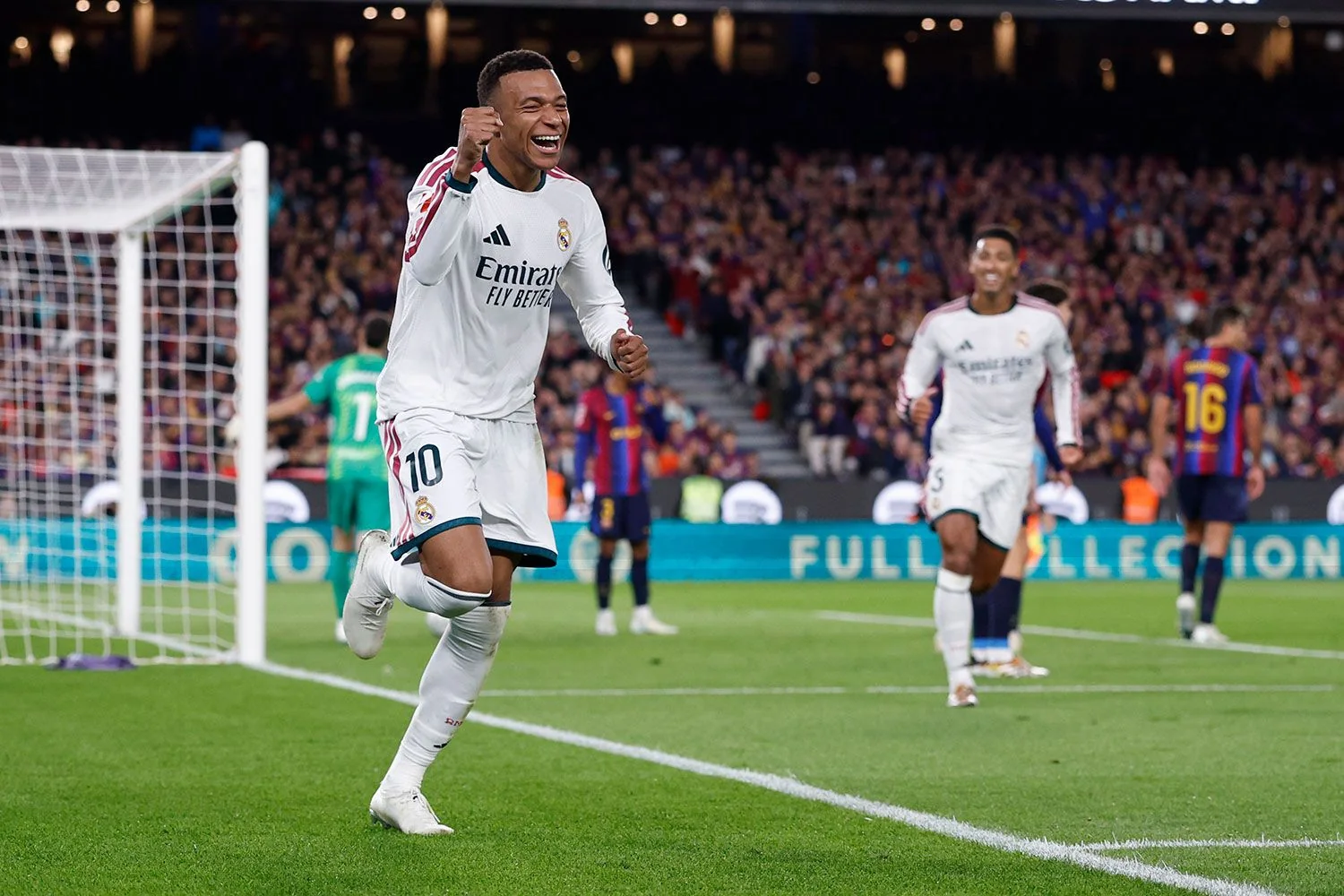
Madrid’s late winner brought several jobs together: Bellingham helped launch the attack, Arda Güler moved the ball on, Camavinga advanced past Cubarsí, and Mbappé finished the delivery. The sequence is described in the clubs’ accounts. Its significance is not confined to the name of the scorer; the runner arriving from deeper changed the problem Barcelona had to defend.
After the game, Mourinho explained Camavinga’s introduction in terms of fresh legs and the opportunity to attack space. He distinguished a run from midfield from a forward constantly threatening the last line. That was the coach’s explanation of his decision, not a claim that every substitution he made was guaranteed to produce a goal.
A striker who stays near the centre-backs gives them a reference point. A midfielder who joins later can ask a different question: who takes responsibility when he moves beyond the players he started among? A defender stepping towards that runner may release somebody else; a defender dropping off may give the runner more room to carry the ball. Timing makes that uncertainty valuable.
The move also illustrates why “fresh legs” is more useful when linked to a task. Introducing a player is not automatically an improvement merely because he has spent fewer minutes on the pitch. The coach needs to decide what movement or duel the game now requires. Here, the attacking run was the visible payoff. The same change also had to fit the team’s work without the ball.
For supporters assessing the Madrid squad, that is a better question than dividing everyone into permanent starters and reserves after one match. A player can be central to winning a particular contest through his timing of entry and the role he performs. The next opponent may demand a different balance. The Clásico gave Madrid a successful example of using an alternative from the bench; it did not settle every future selection debate.
Mbappé still had to finish. Recognising the build-up does not reduce the value of his position in front of goal. It explains why the finish became available and why the winning moment was a collective action, rather than an isolated event detached from the tactical decisions around it.
What Barcelona and Madrid can reasonably take from this result
The same match produced different immediate tasks. Barcelona needed to respond to their first league setback. Madrid needed to carry the value of a major away victory into less celebrated fixtures. Neither task is solved by the emotional force of the Clásico itself.
Barcelona’s response is about balance, not abandoning ambition
In his published post-match comments, Flick discussed a lack of freshness and stressed the need for the right reaction. He also identified injuries as a concern after Espart went off, while noting De Jong’s return. These are the coach’s stated concerns, not a medical explanation for every difficult moment.
For the next game, a useful test is whether Barcelona can attack without repeatedly leaving defenders to solve large spaces alone. That might involve different supporting positions, more careful timing of forward runs, or better coordination when possession changes. It does not require a declaration that the attacking approach which produced nine league wins had suddenly become worthless.
There is also a selection question whenever a player is returning. Being available and being able to carry the same workload every few days are different matters. Supporters should follow confirmed team news rather than assume a particular return automatically resolves all the midfield or defensive issues. The broader fixture-congestion guide explains why minutes and recovery belong in the discussion without turning them into an excuse for everything.
Madrid still need points beyond the biggest stage
Mourinho’s post-match warning was that Madrid compete for championships, so the value of the victory needs to be supported by subsequent results. That is a sensible distinction between a memorable evening and a successful league campaign. The three points count in the same table as every other league win.
The practical test is repeatability. Can Madrid create chances against a side which offers less room behind its defence? Can the players maintain their organisation when the opponent is content to leave them the ball? A plan which works against Barcelona’s pressure is a valuable solution to one demanding problem. It is not automatically the solution to a compact opponent protecting its penalty area.
For both clubs, the next assessment should begin with what the new opponent asks them to do. Our earlier seven-win Barcelona snapshot describes an earlier stage of the season, not the current unbeaten status. The Clásico has changed that story. It has not erased the points already earned or removed the need to judge each performance in its own context.
How to follow the next phase of the title race
The next league round offers a quick test of both responses. As listed on LaLiga’s Matchday 11 schedule when checked on 30 October, Barcelona host Alavés on Saturday 31 October, while Madrid travel to Racing Club on Sunday 1 November. These are forthcoming fixtures at the reporting cutoff, not results or guarantees of unchanged broadcast arrangements.
Keep Atlético in the picture and compare dated results
Atlético were two points behind Barcelona after the Clásico round and one ahead of Madrid. Leaving them out makes a three-club table look like a private contest between two rivals. Their next league game was away at Levante on 31 October. The order in which the teams play can temporarily alter the table before everyone has completed the same number of matches.
For supporters watching across the weekend, there are three useful habits. Check the number of games played beside the points total. Distinguish a live, in-game position from the completed table. Then compare the new position with a dated starting point, rather than with an old headline about how large a lead might have become. This keeps the sporting change clear even when clubs play on different days.
The daily schedule helps locate each match, the viewing guide helps with regional broadcast options, and the standings provide the updated comparison. For the match just played, the central football questions remain visible: Barcelona’s protection when attacks break down, Madrid’s ability to turn defensive organisation into chances, and the impact of a well-timed runner from the bench.
A Clásico makes those details feel larger because of the occasion and the points available between direct rivals. Their lasting significance will depend on what follows. Barcelona’s nine wins still form a powerful start, Madrid’s away victory remains an important recovery of ground, and Atlético retain their own place in the argument. The immediate outcome is a closer race with substantial work left for all three teams.
Comments
Sign in with Google to comment. Keep the conversation useful and football-focused. New comments are reviewed before they appear.
Loading comments…