The Short Answer: Yes, but Fatigue Is Not One Number
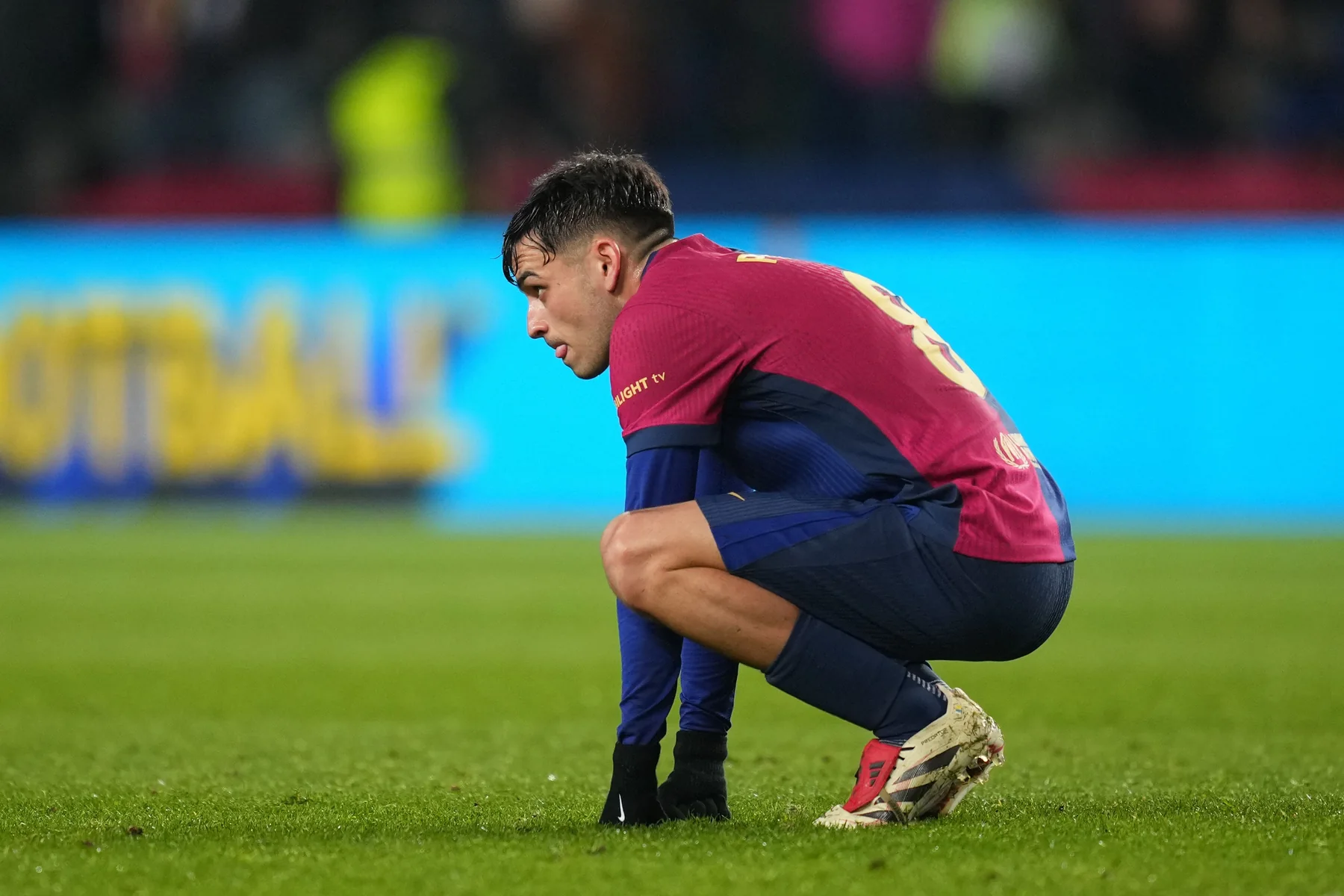
The elite calendar can overload La Liga players, especially internationals moving from a full club season into the expanded 2026 World Cup and quickly back into domestic competition. But fatigue is not a single meter that reaches 100 and explains every defeat. It includes match minutes, training, travel, sleep disruption, heat, mental stress and the absence of a genuine off-season.
Acute fatigue versus accumulated load
Acute fatigue is the short-term cost of one match: temporary reductions in sprint capacity or force, muscle soreness and depleted energy stores. Accumulated load is the repeated exposure to matches and travel without enough recovery across weeks, months and seasons. FIFPRO's monitoring framework explicitly combines match workload, rest and travel, emphasizing that cumulative overload is the central welfare concern.
The distinction matters. A player can recover well from one demanding game and still carry a dangerous season-long burden. Another can have modest annual minutes but face a sudden spike after injury. Age, position, previous injuries, travel route and training load all alter the response. No public fixture list can diagnose an individual.
Why one bad match proves very little
Sports science supports post-match impairment, but team performance has many causes. Opponent quality, tactics, finishing variance, score state, weather and selection can all make a side look slow. Even research reviews warn against a one-size-fits-all recovery model.
Fans should therefore use fatigue as context, not an alibi. A press that collapses after an hour across several short-turnaround games is a meaningful pattern. One misplaced pass is not medical evidence. Start with the dates and turnaround on our La Liga schedule, then consider travel and minutes before making a claim.
How the 2026 Calendar Created the Squeeze
The 2026 World Cup final took place on 19 July, while La Liga's opening round was scheduled for 14-16 August. That apparent four-week gap was not four weeks of recovery. Finalists needed post-match travel and media duties, a holiday away from football, medical screening and a progressive return to training before competitive selection.
From club season to an expanded World Cup
International players arrived at the 48-team tournament after domestic leagues, cups and UEFA competitions. Those advancing deep then added high-stakes matches and travel across Canada, Mexico and the United States. Even squad players with fewer minutes stayed in the tournament environment, trained and crossed time zones.
Load is uneven inside one dressing room. A non-international might have a normal preseason; a quarterfinalist could return later; a finalist might barely reset. Coaches must prepare one tactical unit from players on several physical timelines.
The shortened reset before La Liga
Spanish football acknowledged the problem by moving several Matchday 1 fixtures. Atlético-Málaga shifted to 19 August, with Valencia-Betis, Real Madrid-Real Sociedad and Barcelona-Athletic staged on 25-27 August. The delay created meaningful extra days for affected squads.
Yet postponement does not erase a match. It moves it into another week, potentially beside European or international commitments. The welfare gain at the start can become congestion later unless the calendar preserves a clean slot. That tradeoff explains why schedule design must be assessed across the season, not celebrated or condemned by one postponed weekend. Follow changes through our full La Liga schedule rather than an old screenshot.
What Sports Science Says About Recovery
Recovery is a process, not the empty space between kickoff times. Muscle damage, glycogen restoration, sleep and nervous-system readiness recover on different schedules. A player can feel willing to compete while objective sprint or strength measures remain below baseline.
The 72-hour problem
Three days between matches is often treated as adequate because it is common. It is better understood as a lower boundary in an emergency calendar. FIFPRO has cited five days as a performance-oriented interval, while independent experts have advocated broader safeguards including four-week off-season recovery and a four-week retraining period.
A Sunday-Wednesday-Saturday sequence may be manageable once. Repeating it while the same player logs long minutes changes the risk. Training becomes recovery-focused, leaving less time for tactical correction and physical development. Substitutes may be fresher, but the starters who decide major matches keep absorbing the critical load.
Travel, heat and mental load
The 2026 World Cup added long-haul travel and time-zone changes. Evidence-based guidance notes that travel fatigue may ease after sleep while jet lag can persist for days, particularly after crossing ten or more time zones. Research with national-team players also finds worse perceived sleep and fatigue as time-zone crossings increase.
Heat adds cardiovascular strain and can force players to regulate intensity. Mental load matters too: constant selection pressure, media duties, separation from family and high-stakes matches reduce the restorative value of nominal days off. Counting only appearances misses these costs. That is why responsible workload analysis uses the calendar as a starting point, then asks where, when and under what conditions those minutes occurred.
How Fatigue Changes a La Liga Match
Fatigue rarely appears as a player simply stopping. Elite footballers compensate: they choose when to sprint, protect positions and simplify actions. The team may remain organised while its margin for correction shrinks.
Pressing and transition defence
An aggressive press depends on repeated accelerations and synchronized distances. If the first presser arrives late, the opponent can play through him. If teammates hesitate to follow, gaps open behind the front line. Coaches may lower the block or press in selected triggers, which can look passive but may be rational load management.
Transition defence is especially revealing. Tired attackers react more slowly after losing possession; midfielders cover less ground; defenders face runners without pressure on the ball. Yet tactics can mimic the same symptoms, so analysts should compare phases and repeated matches rather than label every counterattack a fitness failure.
Decision-making, duels and late-game errors
Research reviews find clearer negative effects on physical and technical measures than on every cognitive outcome. Sprint capacity, high-speed distance, passing, dribbling and shooting can deteriorate, while mental-fatigue work increasingly identifies attention and decision costs. In a match, that may mean a safe pass chosen over a progressive one, a late tackle or a clearance directed centrally.
None of those actions proves overload. Score effects matter: a leading side may voluntarily defend deeper, while a trailing side takes risks. Use our results to establish match state and then examine whether the same late-game decline recurs across compressed turnarounds.
Why Rotation Is Harder Than It Sounds
“Just rotate” sounds obvious from outside. Coaches see a harder choice: drop points now or accept a health and performance risk later. A title contender cannot treat a league match as disposable, and a smaller club may have a large ability gap between its starter and replacement.
Competitive and squad constraints
Rotation changes relationships as well as legs. Pressing cues, buildup angles and set-piece assignments improve through repetition. A systematic review notes that coaches may resist rotation because inconsistent selections can reduce tactical cohesion. Injuries can also remove the intended backups, forcing the same durable players to cover repeatedly.
Five substitutions help within matches but do not distribute starts automatically. FIFPRO's squad-utilisation work found that in sampled leagues only eight players accounted for half of total game time. Managers naturally concentrate decisive minutes in trusted performers when jobs, qualification and revenue depend on results.
The load shifts to less visible players
Resting one star often transfers responsibility to another starter. Full-backs may run more when a winger stops tracking; midfielders cover larger spaces when the press is altered. Young players can be promoted as fresh solutions, then accumulate club, youth and senior international commitments across multiple teams.
True management requires an entire squad plan: staged returns, controlled training, pre-planned substitutions and permission to accept occasional performance variance. Fans can use our team pages to understand squad options, but only club medical and performance staff possess the individual data needed to decide readiness.
What Clubs, Leagues and Fans Can Do
Clubs cannot solve a structural calendar solely with ice baths and data dashboards. Recovery technology may help individuals, but it does not create days. Competition organisers control dates, federations control international windows, clubs select players and players need a meaningful voice across those decisions.
Better scheduling and minimum rest
The strongest reform is enforceable rest: protected off-season time, an adequate retraining block, weekly rest and minimum intervals between appearances. Travel burden should influence scheduling, not be treated as invisible. Postponed fixtures need protected recovery slots so an August concession does not become an October three-game week.
Data should travel safely with players between national teams and clubs. UEFA's 2026 medical-handover pilot recognizes the continuity problem. The purpose is not to make private health information public; it is to prevent two employers from managing the same athlete through disconnected plans.
How to read team news responsibly
Supporters can distinguish confirmed absence, reported discomfort and speculation. “Rested” does not mean injured; “available” does not guarantee full readiness. Avoid diagnosing muscle damage from a slow sprint or blaming a specific medical team without evidence.
Track starts, minutes, travel and rest windows, but preserve uncertainty. Read the coach's statement, club medical update and reliable reporting together. Our La Liga blog provides schedule context, while private wellness and GPS data rightly remain inside the team.
The answer to the headline is yes: the 2026 calendar created credible overload conditions for some La Liga players. The responsible conclusion is not that every injury or upset was caused by the World Cup. It is that football should design minimum protections before symptoms appear, and fans should judge performance with a better understanding of the work hidden between matches.
Implementation also needs independent auditing. A rule that promises three days between games can be undermined if it counts from midnight rather than the final whistle, ignores travel after an away match or excludes national-team duty. Publishing club-level exposure totals would let unions and competitions identify repeated short turnarounds without revealing private medical information. The same framework should count extra time, because 120 minutes in a knockout match is not equivalent to an unused substitute appearance.
Young players deserve special attention. Their ability to recover quickly can disguise the fact that they are combining senior club matches with age-group internationals and rapid physical development. A teenager's high availability is not an invitation to use him in every competition. Safeguards should follow the player across teams so a youth coach, senior manager and national federation cannot each treat their own minutes as the only relevant load.
Clubs also need permission to communicate uncertainty honestly. A player may be fit enough for 25 minutes but not 90, or medically available while lacking a full retraining block. Public discussion tends to reduce this to “fit” or “injured,” then accuse a coach of excuses when selection changes. More precise language—available for limited minutes, returning progressively, or rested as a precaution—would improve understanding without exposing confidential data.
Finally, fixture-makers should assess competitive fairness alongside welfare. If one title contender receives a protected recovery period but its postponed opponent later faces the rearranged game between two European ties, the burden has shifted rather than disappeared. Transparent principles for selecting makeup dates can reduce that problem. The goal is not a perfectly equal calendar, which is impossible, but a process that measures the consequences for both teams.
For viewers, the best habit is to keep a small evidence hierarchy. Confirm the schedule first. Add reliable minute and travel data second. Read official team news third. Use tactical symptoms only as supporting context. Treat anonymous medical claims and viral body-language clips with caution. That method will not settle every debate, but it respects the difference between a credible workload risk and an invented diagnosis—and keeps criticism focused on the calendar decisions that can actually be changed.
There is room for competitive ambition and player protection at the same time. Supporters do not need to apologize for wanting the strongest line-up, and players do not become less committed when they ask for recovery. A healthier calendar preserves the quality fans pay to see: sharper pressing, better decisions and stars available for decisive matches. Treating rest as part of performance, rather than its opposite, is the most practical conclusion of the entire workload debate.
Comments
Sign in with Google to comment. Keep the conversation useful and football-focused. New comments are reviewed before they appear.
Loading comments…