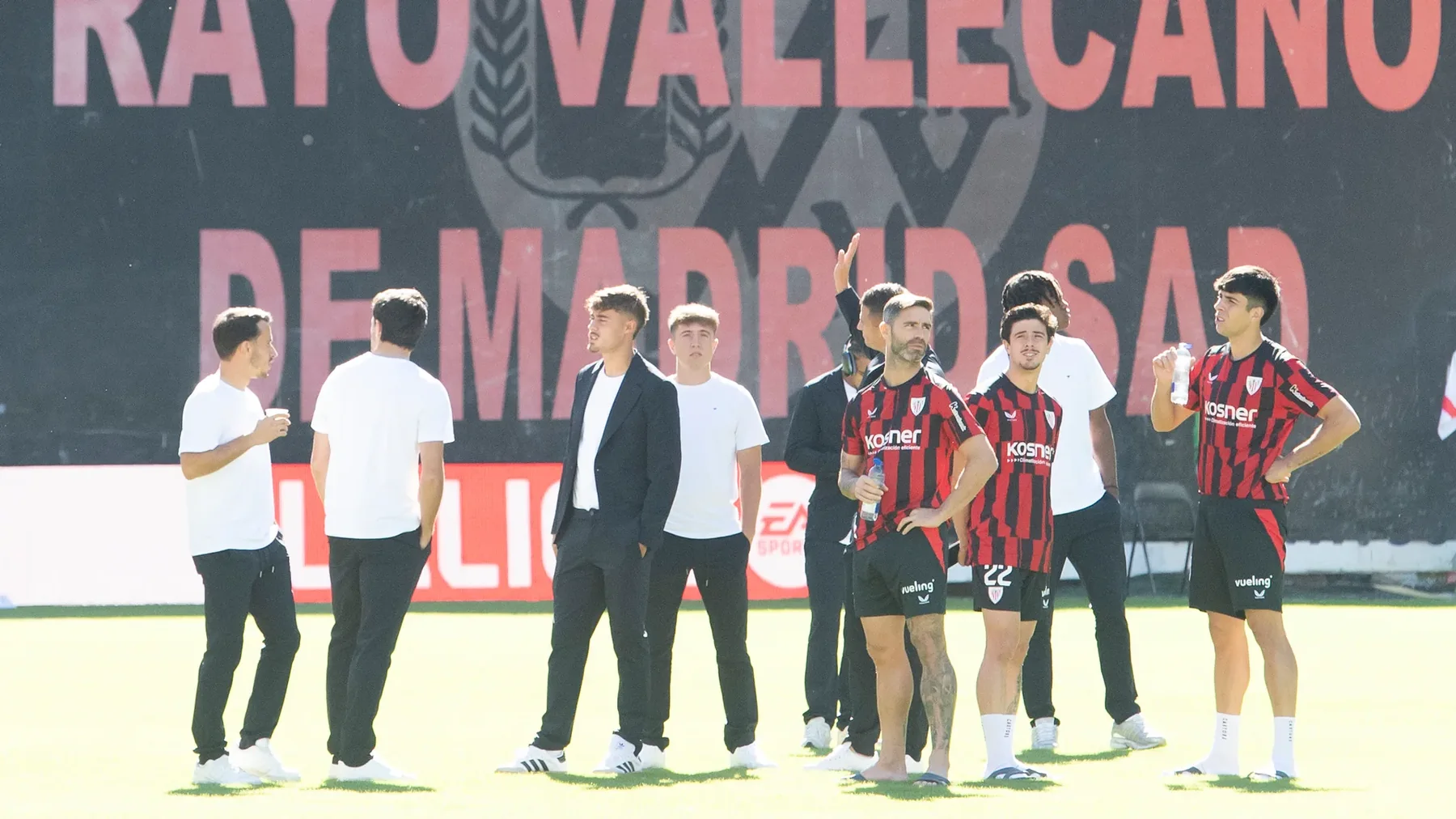
Rayo vs Athletic will continue, with scheduling still to be confirmed
Rayo Vallecano vs Athletic Club is to resume behind closed doors, continuing the interrupted match rather than starting again from minute zero. The RFEF's competition judge issued that decision on 16 October 2026. It answers how the outstanding game should be completed, while leaving LaLiga to determine the date, kickoff time and venue in coordination with the relevant National Police sports office.
As of 19 October 2026, the official LaLiga match record still identifies the original Matchday 8 fixture as suspended or abandoned. Its 10 October date is the date on which the game began. It should not be read as a newly announced date for the remaining play.
The distinction is practical. The 16 October resolution specifies a spectator-free continuation, but it does not itself publish the replacement matchday arrangements. A report about a possible calendar slot, an old listing or the date of Athletic's next league match cannot fill in those missing details.
Athletic's initial response also belongs to its own point in the timeline. Its 10 October announcement explained that the squad was returning to Bilbao after LaLiga ruled out completing the match that Saturday or Sunday. That explains why there was no immediate continuation; it does not establish a later kickoff.
What supporters should check before making another trip
The first item to confirm is whether there has been a later official announcement specifically naming the resumption of Rayo–Athletic. Check the clubs and LaLiga, and match the fixture identity rather than simply looking for the next date beside either club's badge. The current LaLiga schedule can help distinguish other league commitments from this outstanding match.
The closed-door condition is equally important. A confirmed kickoff would not, by itself, mean supporters could attend the remaining minutes. A ticket holder needs the club's refund or admission instructions for the original purchase, which are a separate question from the football timetable. Do not make a second journey on the assumption that the original ticket will gain entry.
For anyone combining matches with travel, wait for the specific fixture notice before treating a calendar suggestion as a booking opportunity. Our guide to LaLiga kickoff announcements explains the wider planning problem, but the decisive information here remains the announcement for this particular continuation.
The score, throw-in and time remaining
The match is to pick up with the score at 0-0 and a throw-in awarded to Rayo Vallecano. The referee's account places that throw-in between the halfway line and the visiting bench. The restart follows the circumstances at the stoppage; there is no new first-half kickoff that wipes away the football already played.
Although reports refer to the game being suspended in the twenty-fourth minute, the rounded minute is not a precise way to calculate what remains. The referee recorded the outstanding first-half regulation time as twenty minutes and forty-four seconds. The original second half has also yet to be played.
| Part of the match | Time still to play |
|---|---|
| First-half regulation time | 20 minutes, 44 seconds |
| First-half added time for the first interruption | At least 10 minutes |
| Second half | The full second half, with its applicable added time |
Why the first half still includes substantial added time
The referee's report reproduced in the resolution expressly includes a minimum of ten added minutes because of the first interruption. That allowance cannot be discarded simply because the game is completed on a different date. The suspension stopped the match before the half and its allowance had been completed.
Under IFAB Law 7, the referee accounts for time lost during each half. A minimum allowance is not a promise of an exact finishing time: further interruptions can require additional allowance. A supporter following the continuation should therefore expect more football than a casual subtraction from the rounded stoppage minute suggests.
Keeping the periods separate is also useful for understanding the contest. The teams still have a substantial first-half spell before the interval and then a complete second half. This is not merely a brief final passage in which a side protects a nearly finished result. Both coaches retain a long stretch in which their teams can change the score.
Why 0-0 is not a final result
The score at suspension describes the match state, not a completed draw. The official fixture page labels the game abandoned. When reading our LaLiga results, keep the outstanding status alongside the score rather than interpreting the two zeros alone as a full-time outcome.
The same distinction matters when comparing the league table. An unfinished match is an outstanding competitive opportunity, rather than evidence that both clubs have already earned a draw. Discussion about points in hand should distinguish points actually secured from the possibility of earning points when the fixture is completed.
For the restart itself, Rayo's throw-in gives the home side the first possession opportunity specified by the report. That is a concrete starting condition, but it does not establish an advantage equivalent to a goal or justify predicting the eventual result. The retained score and the remaining periods define the contest that still has to be played.
Which players can appear in the resumption?
The continuation does not require both coaches to reproduce the original starting eleven. The ruling uses a registration cutoff and preserves specific restrictions from the interrupted game. That creates more selection flexibility than simply sending the same players back out, without turning the resumption into a match with an entirely new eligibility date.
Registration on 10 October is the starting point
Paragraph II of the RFEF decision permits players who were properly registered with their respective clubs on 10 October 2026, whether or not they appeared during the portion already played. Registration on the original match date is therefore the key first check.
| Player's situation | Effect under the resumption ruling |
|---|---|
| Registered on 10 October and had not played | Can be considered, subject to the applicable conditions |
| Registered on 10 October and played without being substituted | Can be considered, unless excluded by the match-related suspension condition |
| Already substituted during the interrupted match | Cannot return |
| Registered with the club only after 10 October | Does not meet the original-date registration condition |
| Subsequently suspended because of this match | Cannot take part under the ruling's exclusion |
For example, a player who was registered but did not feature in the opening part can be considered for the continuation. That is a hypothetical illustration of the rule, not a claim that a particular player will start. Eligibility allows consideration; the coach still has to make a football decision, and the player's availability still matters.
Players who cannot return for the remaining minutes
A player already taken off cannot come back merely because the outstanding minutes are played later. The decision also excludes a player subsequently suspended by the disciplinary body as a consequence of this match. These are express limits in the order, rather than assumptions about what a new matchday would normally permit.
The substitution restriction is consistent with the basic distinction in IFAB Law 3 between a player and one who has been substituted. The fresh date does not restore a substituted player's place in the same unfinished contest. Nor should readers assume that every detail of the original match record disappears when the teams return.
For supporters discussing possible lineups, separate three questions: was the player registered at the required time, do any relevant exclusions apply, and will the coach select him? A current squad list can help identify the club's personnel, but it cannot by itself answer all three. Use the team directory for club context and wait for the official matchday selection before describing a lineup as confirmed.
The football consequence is that preparation can change while the score and clock remain fixed. A coach may have different eligible options available when the game continues, so the opening minutes of the original encounter are not a reliable preview of the exact personnel that will resume it. Any claim that one side is certain to benefit would need specific, verified selection information.
Why closed doors differs from the partial stadium closure
Two decisions about Vallecas answer different questions. The disciplinary decision of 14 October punished the incidents with a one-match partial stadium closure and a fine, as reported by El Pais. The competition ruling signed on 16 October sets the conditions for finishing this particular Rayo-Athletic fixture. Its closed-door instruction concerns the continuation itself.
The competition decision expressly distinguishes its arrangements from a disciplinary sanction. Its reasoning is practical: the authorities need conditions that allow the outstanding football to be completed without another interruption. Calling both decisions a stadium closure can hide that difference, especially when short headlines circulate without their dates.
For a supporter, the consequence is clear. A partial closure normally describes a restricted part of a ground. It does not follow that a ticket in another area gives access to this continuation. Here, the competition order excludes the public from the remaining minutes. A seat outside the affected end is therefore not a reason to travel expecting admission.
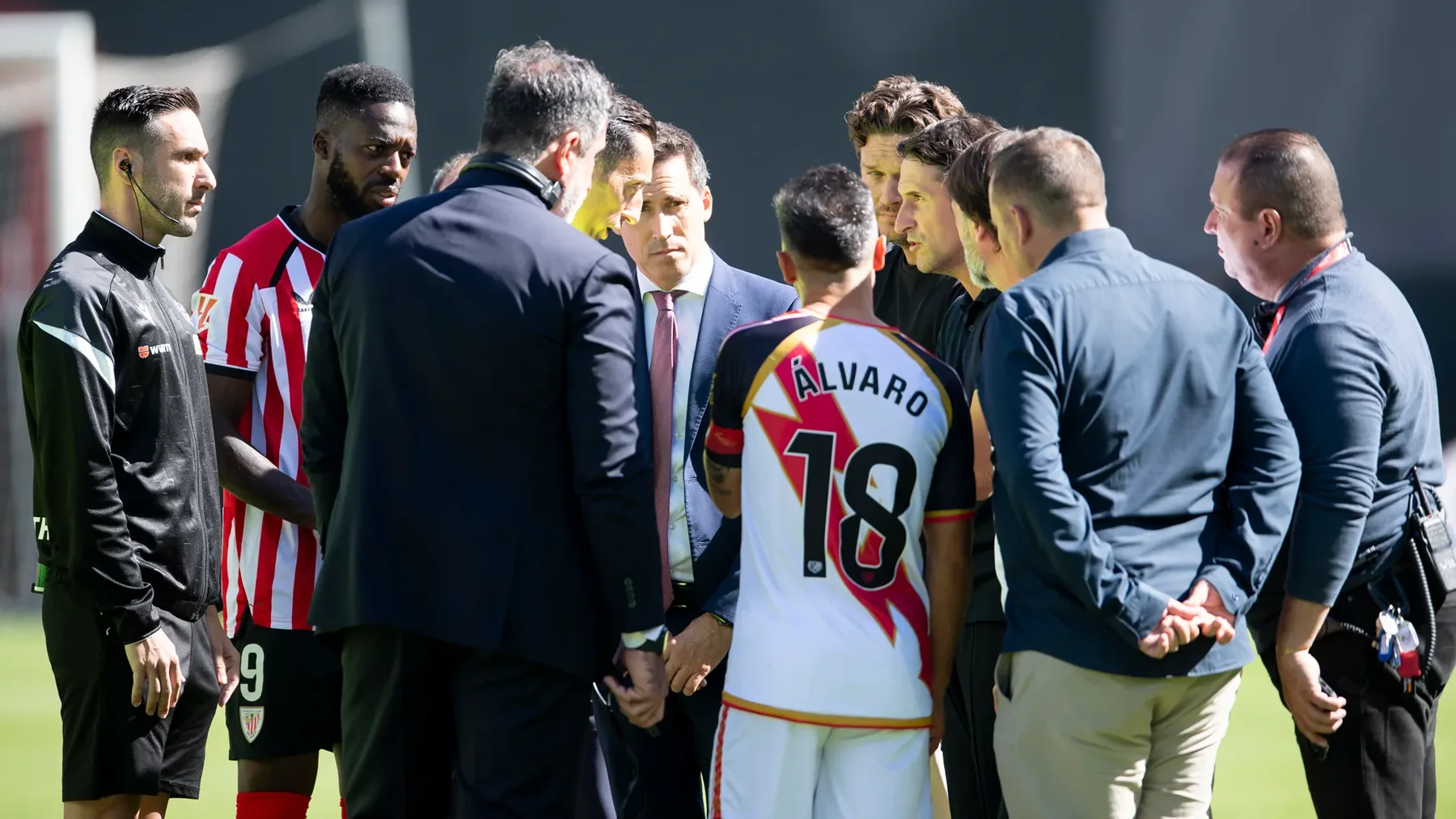
Closed doors also does not mean the match takes place without anyone working around it. The decision distinguishes spectators from the personnel necessary for the event, with the relevant arrangements left to LaLiga. That permits the football operation to function while removing general public attendance; it does not establish a public ticket entitlement or a special supporter exception.
Nor should the continuation order be treated as proof that the earlier disciplinary measure has disappeared or has automatically been served. The two notices have different purposes, and the relevant official instructions govern each. Our guide to La Liga disciplinary measures and stadium restrictions provides wider context for why sanctions can have different scopes.
On the pitch, removing the crowd changes the setting for the remaining contest, including the home atmosphere Rayo would ordinarily have at Vallecas. That is a football consideration, not a reliable prediction of the result. Both teams still resume the same unfinished game, under the retained score and the playing conditions set out in the ruling.
Ticket refunds and the limits of Athletic's announcement
For anyone who attended the abandoned match, the first refund question is who sold the ticket. Athletic issued a specific announcement for its own purchasers on 10 October. That is useful, concrete guidance, but it should not be expanded into a promise covering every ticket seller or every cost of a football trip.
Supporters who bought through Athletic Club
In its official ticket notice, Athletic said it would refund ticket costs and contact supporters who purchased through the club using the email address supplied when buying. It also said supporters did not need to take any action in advance. That is the announced process, rather than a requirement for those buyers to submit a fresh application immediately.
A practical step is to check the purchase inbox, including filtered messages, and keep the original confirmation available. If a buyer needs to ask about an individual payment, the booking reference will help identify the transaction. These are sensible record-keeping steps, not extra conditions announced by Athletic. The public notice does not establish that every purchaser has already received money, nor does it give an individual bank-processing date.
Other ticket purchases need their own instructions
A supporter who bought directly from Rayo or through another seller should follow that channel's instructions. Athletic's statement does not describe those transactions. For example, buying a home-area seat from another outlet does not turn the buyer into a customer covered by Athletic's club-ticket process simply because Athletic were the visiting team.
Keep the receipt, seller details and any subsequent communication together. Ask the seller specifically what procedure applies to the interrupted 10 October match, and distinguish a ticket refund question from an inquiry about admission to the remaining minutes. The closed-door order does not provide a public attendance opportunity to resolve the purchase by watching the continuation.
Our guide to buying La Liga tickets explains why identifying the actual seller matters when planning a match visit. Here, the absence of a promise in Athletic's announcement about another channel should not be interpreted as a ruling on that buyer's rights. It simply means that this particular notice does not answer that transaction's refund question.
The clubs' travel costs are a separate issue
The RFEF decision makes Rayo responsible for Athletic's travel expenses associated with the resumption, unless the clubs expressly agree otherwise. It sets out a process involving paid invoices and banking evidence, with the competition authority reviewing the expense claim after hearing the paying club. No fixed reimbursement total is announced in that ruling.
This concerns the visiting club's costs. It is not an announcement that individual supporters' flights, trains or hotels will automatically be repaid. A fan may have several separate purchases with different providers; a ticket refund announcement alone cannot establish the outcome for all of them. Check each booking's conditions and provider communication before changing or cancelling it.
For future trips, the useful lesson is to keep the match ticket and travel arrangements separate in your planning. Our 2026/27 away-ticket guide provides broader context for the ticket part of that budget. For this fixture, supporters should use the confirmed refund channel for their purchase and await the official continuation details without assuming they will be able to attend.
Comments
Sign in with Google to comment. Keep the conversation useful and football-focused. New comments are reviewed before they appear.
Loading comments…