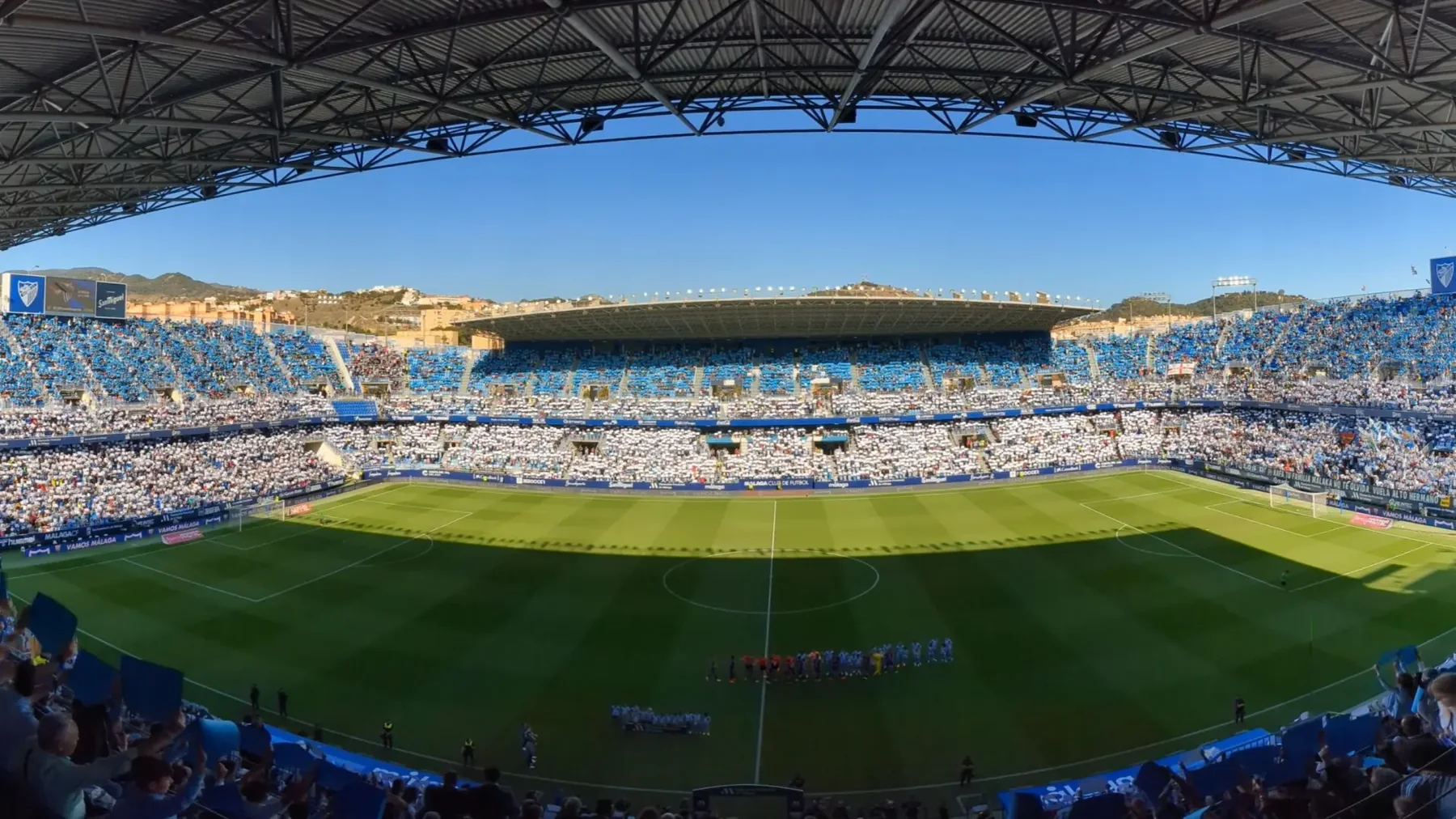
Is La Liga playing during the September–October 2026 break?
A blank La Liga fixture list in late September 2026 reflects a scheduled international break. The Spanish top flight is paused while national teams play; the league has not ended and matchday 8 has not been cancelled. As checked on 30 September, LaLiga's own 2026/27 fixture view places the first match of the next round, Málaga against Espanyol, on Friday 9 October. The round then continues across the weekend and ends on Monday 12 October. If your favourite club does not appear until Saturday or Sunday, that is its own match time, not the restart date for the competition as a whole.
The distinction matters because three different clocks are involved. The last league round ended on the weekend of 20 September. The international release window runs from 21 September through 6 October. The first listed La Liga game after that window is 9 October. That leaves a couple of days for players to return to their clubs before league football resumes, though the time available to any particular player depends on where and when that player's national side plays. The pause can therefore feel close to three weeks when you count from the previous La Liga weekend to the next one, even though the formal FIFA window is 16 days.
It also explains why a football app can show live international scores while its La Liga page says there is no game today. A Spain match in the UEFA Nations League is a national-team fixture, not a Spanish league fixture. A club can train, travel, prepare and announce news during the gap without playing a Primera División match. Similarly, a match from LaLiga Hypermotion, another domestic competition or a friendly does not fill a missing La Liga EA SPORTS matchday. Check the competition label before assuming a match belongs in the league table.
LaLiga's published dates can change, and its fixture page itself tells fans to recheck dates and times. This article uses the official listing available on 30 September 2026. For an immediate answer on any later day, look at the league's current matchday view and then use the site's today schedule to check the selected date. The recent results page helps identify the last completed league matches. The practical answer remains simple: no league fixture in the present pause does not mean no football is being played or that the season is in trouble.
Why is this pause longer than a usual international break?
The calendar changed before this season, rather than being improvised after a busy opening month. In March 2023, FIFA's Council approved a men's international match calendar that introduces a single 16-day window in late September and early October from 2026. It replaces two separate nine-day windows, one in September and one in October. The new block can accommodate four national-team matches rather than two in each of two shorter blocks. For 2026, the release dates are 21 September to 6 October. That decision is the main reason a La Liga fan sees a longer uninterrupted hole in the club schedule.
One 16-day window replaces two shorter breaks
Under the old pattern, supporters might watch a few league rounds, stop for a September international break, return to club football, then stop again in October. Under the 2026 pattern, the league has one larger interruption at this point of the year. It is easy to describe it as a three-week break because the gap between consecutive club weekends stretches from late September into the second week of October. But the formal FIFA release period is 16 days, and the next La Liga fixture is listed after that period ends. Those two measurements answer different questions: one describes national-team availability, while the other describes how long a supporter waits between domestic league matches.
FIFA's decision does not mean the league is adding a third round of fixtures later or reducing its normal 38 matchdays. It changes how international commitments sit inside the season. The Premier League's official explanation says the merged block reduces the number of separate interruptions and long-distance returns. That is a plausible scheduling advantage, especially for players who travel across continents, but it is not proof that every individual has a lighter workload. Four matches in one window can still be demanding. For the broader question of football workload, see our player-fatigue guide.
Four Nations League matchdays fill the window
For European national teams, UEFA has placed Nations League matchday 1 on 24–26 September, matchday 2 on 27–29 September, matchday 3 on 30 September–3 October, and matchday 4 on 4–6 October. Spain's 2026/27 League A group contains Croatia, England and Czechia. These are international competition rounds; they are not rounds eight through eleven of La Liga. That distinction matters when a schedule page uses the same word, “matchday,” for two unrelated competitions.
The sequence also explains the timing from a club perspective. A Spanish player can finish a La Liga weekend, join a national-team camp, play or train through several dates, and return shortly before the league resumes. Another player at the same club may remain in Spain and follow a very different training plan. A headline that calls this a league “shutdown” captures the absence of club fixtures but misses the continuing football in the window. The actual return day for each player depends on national-team selection, schedule and travel, not merely on the date stamped at the end of the FIFA window.
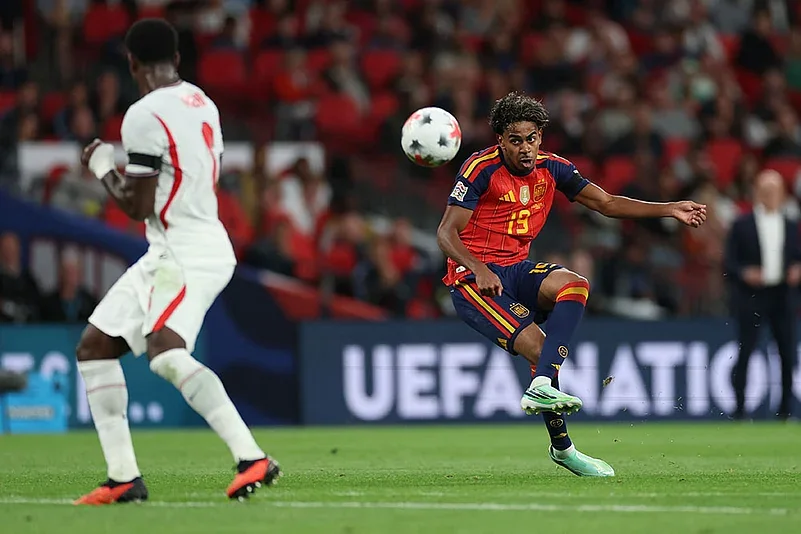
When does La Liga return in October 2026?
As of 30 September 2026, the official LaLiga matchday 8 listing starts on Friday 9 October, not on the Sunday at the center of the weekend. The first scheduled league game is Málaga at home to Espanyol. The remainder of the round runs through Monday 12 October. This is the clearest answer to “when does La Liga start again?”: the competition resumes on 9 October, while your own club may play on a later date in the same round. It is worth checking again before travel or a viewing party because LaLiga explicitly says match dates and kickoff times can be modified.
Matchday 8 begins on 9 October
The first fixture is a useful marker because it ends the domestic gap for the league as a whole. Espanyol's official next-matches page confirms its trip to Málaga on Friday 9 October, listing a 21:00 local kickoff at La Rosaleda. LaLiga's own matchday table also puts Málaga–Espanyol first. Different websites sometimes print kickoff in different time zones, so keep the date and the time-zone label together. A bare “19:00” copied from one view may represent a different display setting from “21:00” shown by a club for a Spanish evening match.
There is no need to wait until that first whistle to follow the story. The return game is an early test for two clubs with different openings to the season: Málaga entered the pause at the foot of the official table, while Espanyol were in the lower half. That table position describes the end of matchday 7, not a prediction of the result. A long gap may allow coaching work, but international call-ups and player availability can pull teams in different directions. Form before the break is a clue, not a guarantee for the next game.
The first fixtures to check
The official list then has Saturday games including Barcelona against Getafe and Real Madrid against Villarreal. Barcelona's own match page confirms its Getafe home fixture for Saturday 10 October and labels kickoff 18:30 CEST. Sunday brings, among others, Real Sociedad against Deportivo and Racing Santander against Valencia. The round finishes on Monday with Levante against Sevilla. These examples give fans a compact orientation; the full round has ten games, so check the complete La Liga schedule for your own club rather than assuming its next match shares the first date.
For a title-race viewer, Saturday's Barcelona and Real Madrid games make the restart immediately relevant. The official table at the pause has Barcelona on 21 points from seven games and Real Madrid on 15. The six-point gap is a snapshot, not a final verdict. Both teams return from the same FIFA window, but their players may have served different national sides. Opponent identity also matters: Getafe and Villarreal pose different tactical questions, and a big club's pre-break league form alone cannot answer how either matchup will unfold.
Why a listed kickoff can still change
A published match date is the best available planning information, but it is not a permanent promise. LaLiga's fixture page tells supporters to verify schedules through its website and official ticket channels because a date, time, cancellation or postponement may be updated. Broadcaster listings can also differ by country. For a domestic trip, verify the club's ticket page and the official match page again before committing to transport. For a stream, confirm the rights holder in the country where you will watch; a service carrying the previous round might not show every game on the same channel.
Time zones deserve the same care. Spain is on summer time for the 9–12 October round, but an overseas fan's phone may convert a fixture automatically while a club page may print Spanish local time. Record the city, date and zone together. If two schedules disagree, use LaLiga's current match entry and the host club's latest match page, then check again close to kickoff. That simple order is more reliable than an old social graphic or a search snippet. The league table can tell you why a fixture matters; the official fixture listing tells you when it is due to begin.
What does the break mean for clubs and players?
The international break is a pause in the league's match calendar, not a promise of rest for every person employed by a La Liga club. Some players join national teams, with UEFA Nations League fixtures continuing through 6 October. Others remain with their clubs and can train, recover or receive a short break according to a coach's plan. Those paths can create a different starting point for teammates when matchday 8 arrives on 9 October. They also explain why a supporter should pay attention to verified club news in the final days before a match instead of assuming the last league lineup will be repeated.
National-team duty is competitive football, not a holiday
Four Nations League matchdays are scheduled inside the 2026 window. A player named in a national squad may train, travel and potentially play, but a squad listing alone cannot tell us how many minutes that player will log. UEFA's Spain page, for example, records the squad for the competition; the match reports and minutes provide the separate evidence of actual participation. Other La Liga players can represent nations outside Europe or may not receive a call-up at all. The label “international break” is therefore a description of the club calendar rather than a single physical experience shared by every footballer.
For a club coach, this creates a practical planning problem. A player who stays with the club may work in a smaller training group. A player away on national duty may return with match rhythm but less time to prepare specifically for the next league opponent. The value of either situation depends on fitness, role, playing time and the tactical task waiting on the weekend. It would be careless to say that every returning international is tired or that every player left at home is better prepared. Those are possibilities a coach assesses individually, not facts established by the calendar alone.
Travel and availability affect the first league week back
The last Nations League dates run to Tuesday 6 October, while La Liga's first listed game follows on Friday 9 October. That short interval gives supporters a sensible question to ask: when did the player finish international duty, and when can the club work with its full group? Long-distance flights, time-zone adjustment and national-team minutes can matter, particularly for a Friday or Saturday club fixture. They do not, on their own, establish an injury, a rest order or a changed starting XI. The club's medical update and manager's pre-match comments are needed before such claims become reliable.
European clubs use the gap in different ways. Sporting News reported examples of time off, smaller-group training and friendlies for players who stayed behind in the September 2026 window. Those examples illustrate the options, but they should not be copied onto a La Liga club unless that club confirms its own plan. The football consequence fans can reasonably expect is more uncertainty than a normal week with one league game following another. Squad selections, rotation and pressing intensity may be worth watching in the first matches back; they are questions for match analysis, not conclusions to announce in advance.
A fan tracking the title race or relegation picture can use the table at the pause to identify the stakes, then check national-team appearances and the club's latest team news closer to kickoff. That is more useful than a broad claim that the break helps or hurts a particular side. The longer-term workload issue is discussed in our calendar and fatigue guide, where the distinction between scheduled rest and actual playing load remains central.
How can fans follow football and plan for the return?
There are two separate viewing plans for this gap. Until 6 October, look for national-team fixtures under the UEFA Nations League or the relevant confederation's competition, depending on the team you follow. From Friday 9 October, switch back to the La Liga matchday 8 list. A football app's “all games” screen may mix international fixtures, second-division matches and club friendlies together, so the competition label is as important as the team name. The league table will only change when a La Liga match is played; a Spain win or loss during this period has no effect on Barcelona, Real Madrid or any other club's league points.
For the national-team stage, UEFA's official fixture and results pages give the Nations League opponent, date and competition round. If you follow a player rather than a national side, first confirm that player was called up, then use the match record to see whether the player actually appeared. Social posts can be useful pointers, but a roster picture posted early in the window may change or fail to reflect who played. It is also easy to mistake a training image for a match appearance. Keep those categories separate when discussing a club's likely readiness after the break.
For the league stage, start with LaLiga's current matchday 8 fixtures and the relevant home club's match page. The league's page currently lists Málaga–Espanyol for 9 October, Barcelona–Getafe and Real Madrid–Villarreal for 10 October, and additional games through 12 October. Those dates were checked on 30 September. A fan who is booking a ticket should verify the match again through official ticket channels because the league itself warns of changes. A fan planning a broadcast should check the country-specific rights information close to the game: the official LaLiga “where to watch” page offers a country search, while its matchday 8 broadcaster cells were not yet populated in the reader view at this check. A generic claim that every game is on one channel would be premature.
Use one time zone all the way through your plan. A club may print Spanish local time; an app may convert to the device's zone; a TV guide may use the broadcaster's market. Write down the match date, kickoff time and zone together, then confirm the conversion before setting an alert. The site's viewing guide is a starting point for regional options, and the date-specific schedule can help with a day-of check. When two listings differ, resolve the question against LaLiga and the home club's current entry rather than assuming the first search result is newest.
The gap can also be a good moment to read the league's current table and identify what each returning fixture is really about. Málaga's opening match has a different immediate pressure from Barcelona's, and Real Madrid's six-point gap to the leader makes its Saturday fixture relevant to the early title conversation. None of those stakes changes the date of the game, but they help a viewer decide which fixtures merit attention. Once matchday 8 begins, return to the results page for confirmed scores instead of treating a preview or prediction as a final result. That small habit keeps the pause, the restart and the standings in the right order.
Comments
Sign in with Google to comment. Keep the conversation useful and football-focused. New comments are reviewed before they appear.
Loading comments…