Why Lo Celso's goal was ruled out on 17 October 2026
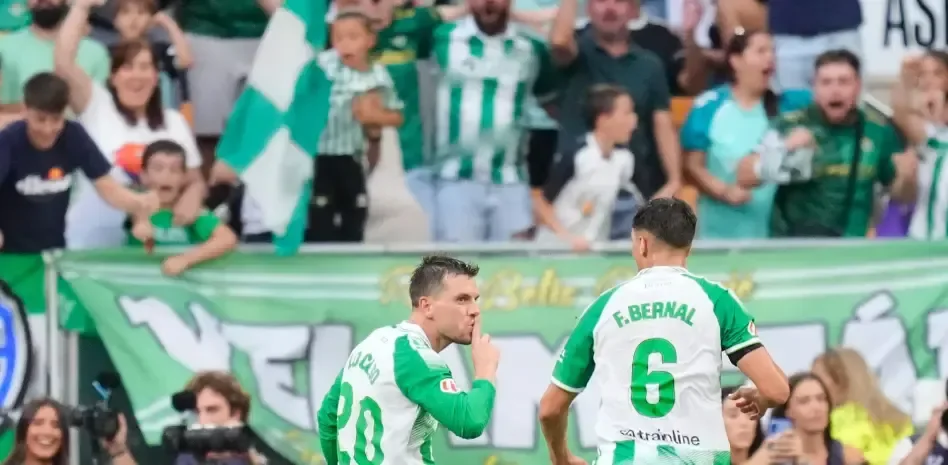
Giovani Lo Celso's goal against Barcelona was disallowed for an earlier handball by his teammate Cucho Hernández. The officials judged that the handling was punishable and remained within the attacking phase that produced the finish. Lo Celso was the scorer, not the player penalised for handling. The controversy therefore involves two questions: whether Cucho committed an offence, and whether the subsequent play still belonged to the same attack.
The incident occurred during Real Betis's 2–5 defeat at La Cartuja on 17 October 2026. Barcelona's official results record confirms the match, venue and score. Lo Celso's first-half volley would have made it 2–2. Instead, the review removed the equaliser and left Barcelona ahead at that point.
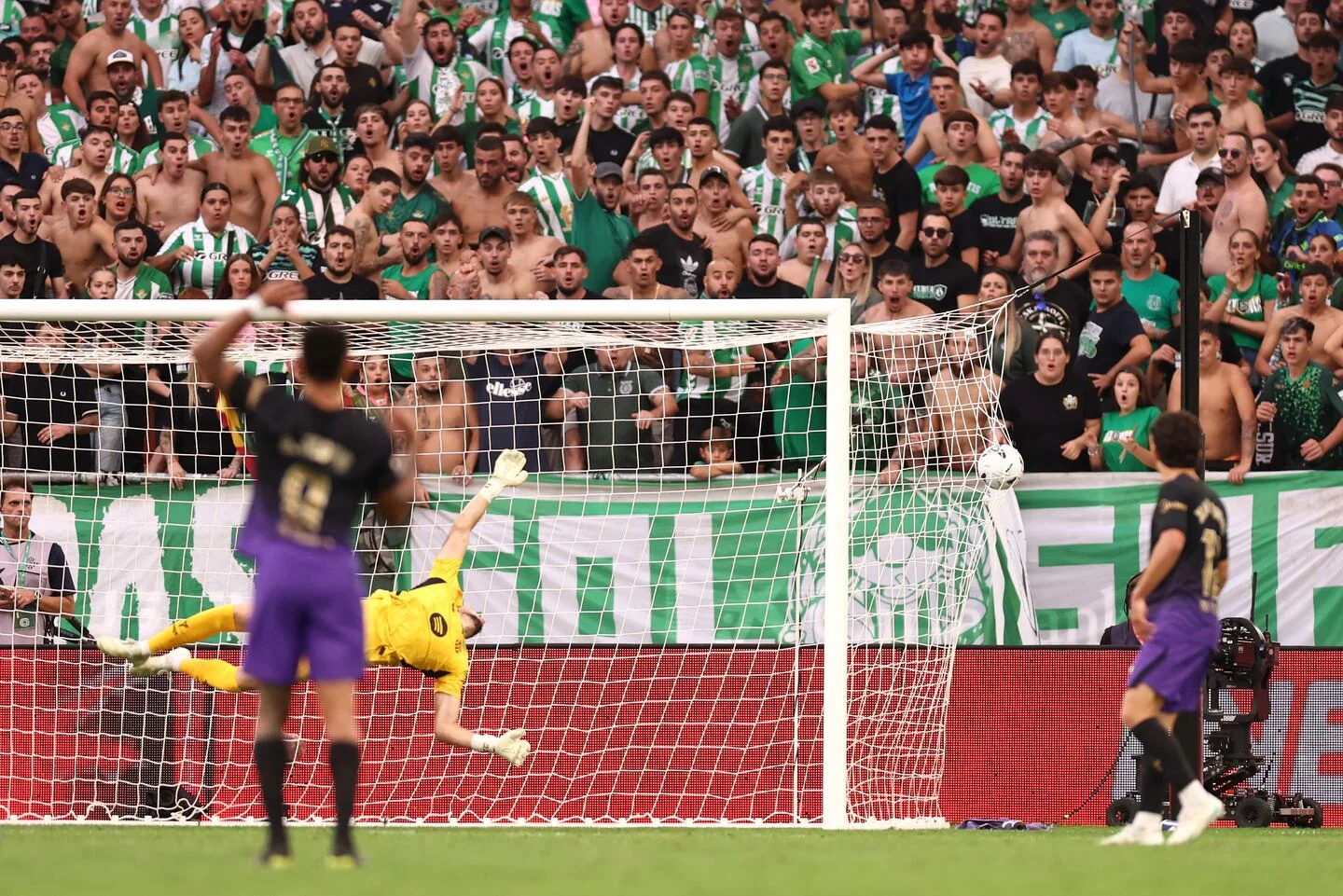
Mundo Deportivo's incident report describes the sequence in the 43rd minute: Cucho contested the ball with Gerard Martín; Betis moved the attack left towards Abde; Jules Koundé intervened against the delivery; and the ball eventually reached Lo Celso for the finish. Koundé's intervention is the hinge of the argument. A Barcelona player touched the ball, but the officials did not consider that Barcelona had established control.
That distinction explains why descriptions such as “the handball happened several passes earlier” do not settle the decision. A move can contain a cross, a defensive touch and another attacking action without necessarily becoming an entirely new possession. Equally, an earlier offence cannot simply be attached to any later goal regardless of what happens in between. The boundary needs to be examined in the actual sequence.
For supporters, the useful starting point is to separate what happened from the judgement applied to it. Cucho's arm contact and Lo Celso's finish concern different players; the intervening clearance concerns the review's scope. Our results page follows completed league games, while the explanation below focuses on why this particular apparent equaliser did not count.
What the published VAR audio says
The RFEF published the review exchange in its ninth-round audio release, identifying the Betis–Barcelona incident at minute 43. That is the official publication to consult for the review itself. BeSoccer's readable transcription sets out the explanation given by the officials.
In the published exchange, as transcribed by BeSoccer, VAR Carlos del Cerro Grande recommends a review of a possible handball in the attacking possession phase. He points to an additional movement by Betis's number nine to control the ball and offers different camera angles. Referee Ricardo de Burgos Bengoetxea agrees that the handling is punishable and asks to see the wider attacking sequence.
The referee made two separate judgements
The second part of the explanation concerns the intervening play. In the transcription, De Burgos concludes that Barcelona did not gain control or possession during the sequence. He therefore treats it as the same attacking phase, disallows the goal and awards a direct free kick to Barcelona. The decision was not explained as a special rule cancelling a teammate's goal after any accidental arm contact.
This separation matters when assessing the footage. An objection to the handball finding should examine Cucho's movement and the circumstances of the contact. An objection to the length of the review should examine whether the defending team established a new possession. Accepting one part does not require accepting the other: someone could consider the handling an offence while believing the subsequent intervention should have closed the phase.
The exchange gives supporters a reason they can test against the pictures. It does not make a judgement immune to criticism. Look first at the angles used for the arm movement, then at the continuous view linking that incident to the shot. A tightly cropped replay of only the contact cannot answer the phase question; a beautiful replay of only the volley cannot answer the handball question.
Our 2026/27 rules guide provides the wider season context. Here, the relevant point is narrower: the officials identified a prior offence and decided that the goal remained connected to it through the same attack.
Cucho's handball and the rule for an accidental touch by a teammate
A teammate's accidental arm contact does not automatically cancel a goal. The current 2026/27 IFAB Law 12 distinguishes ordinary handball offences from the special restriction applying to the player who scores. That distinction is essential here because Cucho and Lo Celso are different players.
Deliberate movement and an unnaturally bigger body
Law 12 penalises deliberately handling the ball, including moving the hand or arm towards it. It also penalises contact when the arm makes the body unnaturally bigger: the position must be assessed against the player's movement in that particular situation. The alternatives matter. Saying that a player did not intend the contact is not a complete answer if the position still meets the second test.
In this incident, the published review explanation identifies an additional movement to control the ball. That is the officials' stated basis for treating the contact as punishable. A supporter who disagrees should examine that movement, including what the challenge does to the player's balance, rather than assuming that every contact is forbidden or every unplanned contact is permitted.
For an accurate assessment, a still image and a continuous view perform different jobs. The still may locate the contact; the moving sequence helps explain how the arm arrived there. An arm away from the torso is a fact about position, while whether that position is justified by the movement is a judgement. Treating the photograph alone as the entire rule removes the context the law requires.
Why the goalscorer's accidental-handball rule is different
The special scoring restriction covers a player scoring directly with the hand or arm, or immediately after their own hand or arm contact, even if accidental. It does not create the same automatic outcome whenever a different teammate touched the ball earlier. FIFA's explanation of the 2021 change specifically removed accidental teammate contact as an automatic offence leading to a goal; the current law retains the distinction.
Consider two hypothetical plays. In the first, an attacker accidentally brushes the ball with an otherwise lawful arm position and a teammate scores. In the second, that attacker deliberately uses the arm to retain the ball before passing to the scorer. The identity of the eventual scorer is unchanged, but the handling assessment is different. The second action can be an offence without invoking the special rule for a scorer's own accidental touch.
That is why the strongest version of the Betis objection is about the actual contact and movement. If Cucho's contact were judged accidental and otherwise lawful, merely showing that Betis later scored would not supply the missing offence. The review instead proceeded on the opposite judgement: that his handling was punishable.
Why Kounde's clearance did not end the attack in the officials' view
The important question about Koundé is not simply whether he touched the ball. It is whether his intervention changed the possession or attacking phase in the relevant sense. The officials' explanation was that Barcelona never established control. That supplies a reason for reviewing the earlier incident, even though Betis had to perform further attacking actions before Lo Celso could shoot.
Contact with the ball is not the same as control
The RFEF's 2026/27 APP guidance distinguishes controlled possession from a rebound, deflection or uncontrolled clearance. A defensive touch alone need not reset the phase. It also warns that this control assessment is different from the deliberate-play test used for offside. Importing an offside explanation into this incident can therefore answer the wrong question.
Two hypothetical situations help distinguish the possibilities. A defender might turn into an incoming delivery and send the ball loose while still under immediate pressure. Alternatively, he might secure the ball, select a teammate and complete a controlled pass before his team subsequently loses it. Both situations contain a defensive touch, but they describe very different relationships with the ball.
For a viewer, follow what the player can actually do next. Is the ball still being contested? Is he making an emergency intervention against the incoming attack, or has his team established a possession from which it can choose its next action? Those questions are more revealing than counting how many different shirts touch the ball.
There is no universal fifteen-second limit
Neither the IFAB goal-review framework nor the RFEF phase criteria provide a universal fifteen-second expiry for an earlier attacking offence. The relevant connection is the attacking phase leading to the goal. This is separate from how long the officials take to conduct their review.
Controlled defensive possession is also not the only possible boundary. The Spanish guidance recognises a clear new attacking advance and an attack stopping and beginning again, with qualifications near the penalty area. Remaining on the ball does not automatically make an entire prolonged possession one indivisible attack.
That is why the full sequence matters. A cross, a clearance and another shot may preserve immediate pressure on the same defence, whereas a move withdrawn and deliberately rebuilt can present a different phase question. In the Betis incident, the officials selected the first interpretation. Describing their conclusion accurately still leaves room to debate whether the complete pictures justify it.
Why VAR could recommend an on-field review after the goal
The goal provided a reviewable incident; it did not create a new handball offence. Under the IFAB VAR protocol, a goal can be examined for an attacking offence in its build-up. Allowing play to continue is an initial decision that can be reviewed. It is therefore possible for the referee to let a sequence develop and subsequently change the outcome after the relevant goal review.
An automatic check is not an automatic reversal. The Spanish referees' VAR manual describes intervention as a correction for a clear and obvious error or a serious missed incident. It stresses respect for the on-field decision when the pictures do not supply sufficient evidence. A different plausible interpretation is not, by itself, the same as an obvious mistake.
Handball also contains judgement beyond locating the contact. For that subjective assessment, an on-field review is appropriate: the referee examines the images and retains responsibility for the final decision. The VAR can recommend the visit and explain the footage, but the trip to the monitor is not supposed to transfer the decision to somebody else.
For fans watching in the stadium, that distinction helps explain the pause after an apparent goal. The celebration and the legal confirmation need not occur at the same moment. A referee receiving information is not necessarily deciding that the goal must be removed; the process first establishes whether there is a reason to review it.
The order of the replay is useful too. One view can establish where the ball hit the player. Another shows the movement leading into contact, while a wider sequence establishes what happened afterwards. Those views address different questions. Repeatedly slowing down the arm contact cannot substitute for checking the complete attacking phase.
In this case, the published explanation indicates that the referee considered both the handling and the continuity of the attack before giving Barcelona the free kick. Whether the evidence met the intervention threshold remains a legitimate subject for analysis. Merely seeing a monitor visit establishes that a review took place; it does not independently prove that every aspect of the final judgement was correct.
What remains open to criticism after the explanation
An explanation of the decision is not a demand that every supporter agree with it. GOAL's report of Pedro Martín's criticism highlights his objection to treating the earlier contact as part of the move that ended in the goal. His argument concerns the interpretation and connection between events; it does not establish a written fifteen-second limit.
The Spanish APP guidance itself recognises reasonable disagreement about phase boundaries. It calls for prudence where the connection or influence remains debatable. An earlier infringement needs a sufficiently clear and relevant connection to justify cancelling a goal. That restraint belongs in the discussion alongside the rule that an uncontrolled clearance need not reset the phase.
A precise disagreement should identify the point at issue. Was the arm movement actually punishable? Did the defensive intervention or subsequent development produce a new phase? Was the original decision clearly wrong enough to justify intervention? Those are related questions, but they are not interchangeable. A useful debate can concentrate on one without pretending the others have vanished.
Judge the decision without inventing the rest of the match
The final 2–5 score does not make the apparent equaliser unimportant. A level game before half-time can affect risk-taking, substitutions and the spaces available later. It is equally impossible to award Betis an imagined result by inserting the goal and assuming that everything afterwards remains identical. A counterfactual scoreline is an argument about a different match, not the record of this one.
For the same reason, the disagreement does not establish hidden motives. The available explanation concerns a handling judgement and an attacking-phase judgement. Accusations about deliberate favouritism would require evidence beyond dissatisfaction with the decision. Supporters can demand consistency and clearer explanations without turning an unproven allegation into a fact.
The central answer, checked on 19 October 2026, remains specific: the referee penalised Cucho's earlier handling and judged that Barcelona's intervening touch did not end the relevant attack. Lo Celso's finish was removed on that basis. The Betis squad guide supplies the players' wider team context; the incident itself is best assessed through the complete sequence and the two distinct decisions it required.
Comments
Sign in with Google to comment. Keep the conversation useful and football-focused. New comments are reviewed before they appear.
Loading comments…