The short answer: what actually changed in La Liga
The most important answer is also the simplest: not every innovation discussed around the 2026/27 season is a new La Liga law. Some changes come from the Laws of the Game issued by the International Football Association Board (IFAB), some are Spanish refereeing instructions about how those laws should be managed, and others are experiments that require specific approval. That distinction matters whenever a social post says La Liga has “introduced” a rule without saying whether it is compulsory, procedural or only being tested.
For an ordinary viewer, the most visible confirmed theme is a stronger attempt to protect playing time. Goalkeepers cannot keep the ball indefinitely, restarts should not become tactical pauses, and referees are expected to manage dissent without inviting a crowd of players into every argument. VAR is still built around a limited set of match-changing incidents rather than a promise to correct every mistake. The technology is a safety net for defined situations, not a second referee for every contact.
Rules in force, protocols and experiments are not the same
A Law of the Game applies because IFAB has amended the global code for the relevant season. A competition protocol describes how officials in a league communicate or administer those laws. A trial can test a different solution under controlled conditions, but it does not automatically become part of every La Liga match. This three-part test is especially useful for the “Vinícius Rule”: the label describes a temporary-substitution concept associated with treatment after an injury-producing foul, yet supporters should look for an explicit competition announcement before expecting it in a league fixture.
The practical takeaway is to judge incidents by the competition actually being played. A World Cup experiment, Champions League instruction and La Liga protocol may resemble one another without being identical. Check the competition badge, match date and official explanation before concluding that a referee ignored a new rule. For the match itself, the site’s today schedule identifies the relevant La Liga fixture; this guide explains the framework that applies once the whistle blows.
The goalkeeper countdown and the fight against time-wasting
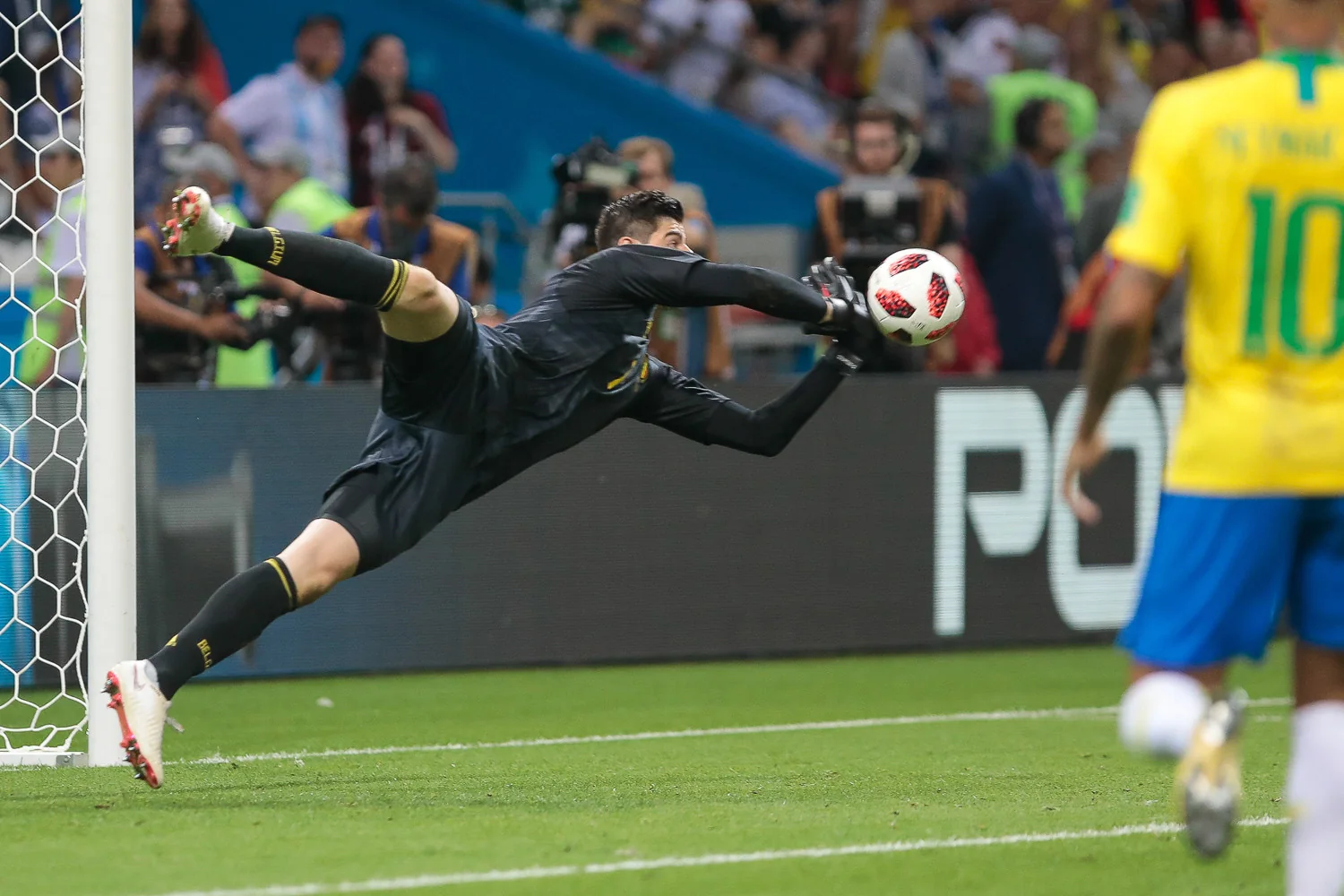
The goalkeeper measure is designed to solve a familiar stadium frustration: a keeper catches the ball, falls to the turf, waits for teammates to spread out and consumes a large slice of the match. The important number is eight seconds, but the enforcement mechanism matters more than the number. If the goalkeeper retains hand or arm control beyond the limit, the opposition receives a corner kick. That creates an immediate attacking consequence and is far easier for spectators to understand than an unusual indirect free kick inside a crowded penalty area.
Referees are not expected to treat the rule like a television stopwatch triggered by first contact. They must establish that the goalkeeper has possession and can release the ball safely. A keeper who is still completing a save, being challenged or recovering from genuine contact is not in the same situation as one who is standing unopposed with the ball. Once the referee considers the release possible, the final five seconds should be shown with a raised hand. That public countdown gives the goalkeeper warning and gives everyone in the ground the same reference point.
What the referee counts
Control includes holding the ball in the hands, trapping it between hand and another surface, or bouncing it while retaining possession. The count concerns deliberate retention after control, not the entire sequence from shot to distribution. A fan counting “one” while the goalkeeper is still sliding across the grass will therefore reach eight before the official. The visual five-count is the useful signal: it says the referee believes the normal recovery phase has ended.
This also explains why two incidents that look equally long on a clipped video can produce different outcomes. A complete replay may show an attacker blocking the release, medical concern after a collision, or the keeper only gaining secure control later than the first touch. Those are factual circumstances; whether enough time has elapsed after them remains the referee’s judgment.
What the attacking team receives
When the limit is exceeded, the restart is a corner from the side nearest the goalkeeper’s position when the offence occurred. The corner is strategically meaningful but proportionate: it punishes delay without awarding a direct shot from inside the penalty area. It also removes the old enforcement problem in which an indirect free kick near goal required defenders to stand on the line and could consume more time than the original offence.
Supporters should expect early enforcement to feel uneven while players and officials establish a common rhythm. The best test is consistency within the match: Was a visible countdown given? Did the keeper remain in clear control? Was the same threshold applied at both ends? Use the results page for the final score, but use those three questions—not a cropped stopwatch—to assess the incident.
How VAR is supposed to operate in 2026/27
VAR remains intentionally narrow. Its purpose is to assist with a defined group of decisive incidents, not to re-referee all ninety minutes. That produces the tension fans feel every weekend: a replay can show an error, yet the protocol may not permit intervention. Understanding the boundary does not end arguments about judgment, but it reveals whether the argument is about the referee’s decision, the VAR’s threshold or the protocol itself.
Every potential incident is checked in the video operation room, often without stopping play. A check is the routine process of reviewing available angles. A review begins only when VAR identifies a potential clear and obvious error or serious missed incident within the permitted categories. The referee may accept factual information—for example, an offside position—or use the pitch-side monitor for a subjective judgment. Seeing no monitor visit does not mean the incident was ignored.
The four reviewable categories remain the foundation
The foundation is still: goal/no goal, penalty/no penalty, direct red card, and mistaken identity when the wrong player is sanctioned. The attacking phase leading to a goal or penalty can also be examined for a relevant offence. That is why a foul several passes before a routine midfield throw-in is treated differently from a foul in the phase that produces a goal.
VAR’s intervention threshold is deliberately higher for subjective decisions. “Clear and obvious” protects the referee’s authority and prevents endless interruption, but it creates a grey area around contact, handball and the severity of challenges. Two viewers can agree that they would make a different decision while disagreeing that the original call was clearly unsustainable. The protocol is meant to correct major errors, not choose the most popular interpretation of every replay.
Second yellow cards and factual mistakes
A normal second yellow is not one of the four base categories. If a player receives a second caution and is sent off, VAR generally cannot simply reassess whether that caution was deserved under the standard protocol. It can become involved when a separately reviewable incident exists, such as mistaken identity or conduct that may merit a direct red card. Any reported expansion to second-yellow reviews must therefore be checked against a formal trial announcement for the competition, rather than assumed from a headline.
This distinction frustrates fans because a second yellow changes a game just as dramatically as a straight red. The institutional trade-off is scope: allowing every caution to be reviewed could turn many tactical fouls, simulations and dissent calls into stoppages. Trials may explore a narrower factual correction, but “VAR can review second yellows” is too broad unless the exact trial and conditions are named.
Stadium explanations and transparency
Referee announcements after a review can tell spectators what was decided and why the restart follows. They do not make a new incident reviewable. Think of the announcement as the final layer of communication: the protocol determines whether VAR may intervene, the referee reaches a decision, and then the decision can be explained more clearly to the stadium and broadcast audience.
Transparency is valuable because silence leaves supporters to infer whether VAR considered offside, handball, a foul or identity. It cannot eliminate disagreement, especially when the central question is subjective. For ongoing explainers and match context, the La Liga blog can add the law and competition details that a short stadium message cannot contain.
What people mean by the “Vinícius Rule”
The phrase “Vinícius Rule” is a media nickname, not the formal title of a universal Law of the Game. It refers to a proposed or trialled treatment mechanism intended to stop a team being numerically disadvantaged when a player is hurt by an opponent’s foul. The player receiving treatment leaves the field for a defined period; under the experimental concept associated with the nickname, a temporary replacement can cover that absence in specified circumstances.
The policy problem is real. Football wants injured players assessed properly, yet it also wants to discourage tactical treatment breaks and exaggerated delays. The conventional rule normally requires a treated player to leave and wait for permission to return, with limited exceptions. That can seem unfair when an opponent caused the injury. A temporary replacement tries to protect medical care and competitive balance simultaneously, but it adds administrative questions about eligibility, timing and the transition back to the original player.
The temporary-substitution idea
In principle, an approved trial would need a clear trigger: the treatment must follow a qualifying foul, officials must identify the temporary substitute, and the injured player’s return must be controlled. It cannot operate as a casual extra substitution. Competition regulations have to state who may enter, how the replacement affects the normal substitution allocation, what happens if the injured player cannot return and how long the temporary period lasts.
Those details explain why fans should resist reconstructing the rule from a ten-second clip. If a player receives treatment and no temporary replacement appears, that may mean the competition is not running the trial, the incident does not meet its conditions, or an ordinary exception applies. The absence of a replacement is not proof that officials forgot a law.
Why the nickname can mislead fans
Attaching Vinícius Júnior’s name makes the idea memorable because the Real Madrid forward is frequently fouled and his treatment incidents attract enormous attention. It can also imply that the rule was invented for one player or that he receives special protection. Neither implication describes how formal laws and trials work: any adopted provision must be written in general terms and applied to every eligible player.
Reporting around the start of 2026/27 was not uniform, with some explainers listing the concept among new ideas and others stressing that La Liga had not adopted the relevant World Cup trial. The safest conclusion is therefore status-based: do not expect a temporary substitute in a league match unless La Liga and the refereeing authorities identify the competition as participating and publish the operating conditions. Fans can discuss the merits of the proposal without presenting an experiment as settled law.

Captains, dissent and restarts: the changes fans will notice
Some of the season’s biggest changes will look less dramatic than a VAR review. After a major decision, the referee may indicate that only team captains should approach. Other players who run in, protest aggressively or ignore instructions risk disciplinary action. The aim is not to prevent communication; it is to replace a chaotic ring of players with one controlled conversation per team.
The captain does not receive a legal right to negotiate a penalty, demand a monitor review or delay the restart. The role is communicative. If the goalkeeper is captain and remains far from the incident, the team can nominate an outfield player for the approach under the applicable guidelines. Referees still retain normal authority to speak to any player when clarification or management is required.
Captain-only communication
This measure succeeds only when boundaries are established early. If several players crowd the referee in the opening minutes without consequence, a sudden caution late in the match feels arbitrary. Conversely, prompt instructions and proportionate sanctions tell both teams where the line is. Fans should watch the referee’s signal and whether non-captains continue their approach after being told to move away.
The cultural goal is significant. Fewer mass confrontations can produce quicker restarts, clearer broadcasts and a better example for grassroots football. Yet it should not be confused with suppressing emotion. Captains may ask for an explanation at the appropriate moment; spontaneous celebration, frustration and respectful questions remain part of the sport.
Faster restarts and added time
Goal kicks, substitutions, throw-ins and treatment can all be used to disrupt rhythm. Referees have several tools: visible warnings, cautions for delaying the restart, the goalkeeper countdown, and the addition of time that was genuinely lost. The best outcome is prevention. Adding nine minutes compensates for delay but does not restore the attacking team’s momentum at the moment it was interrupted.
For clubs protecting a lead, stricter tempo management changes risk calculations. Repeated slow restarts can produce cards, a dangerous corner under the goalkeeper rule, or enough added time for another attack. For the chasing team, it reduces—but cannot eliminate—the incentive to exaggerate every pause. The effect may eventually show up in late goals and the league table, although conclusions require a meaningful sample rather than one heated matchday.
How to watch a match under the new framework
New rules are easiest to understand when the viewer follows the decision in order. First identify the competition: a Champions League match, Copa del Rey tie and La Liga fixture can use different competition protocols even under the same basic Laws. Then identify the incident and restart. Finally ask what the referee signalled, what VAR was allowed to check and whether a public explanation supplied additional information.
That process prevents several common mistakes. A broadcaster’s informal nickname is not the law’s text. A slow-motion replay does not automatically make an incident reviewable. A visible VAR check does not guarantee a pitch-side review. And a trial used in one tournament does not silently transfer to Spain’s domestic league. Official competition notices should beat social graphics whenever the two conflict.
A practical decision checklist
Use these questions while watching:
- **Which competition is this?** Confirm that the announced protocol applies to this match.
- **What is the original decision?** The threshold for overturning a subjective call starts from what the referee decided on the field.
- **Is it in a VAR category?** Look for a goal, penalty, direct red card or mistaken identity, plus any formally announced trial extension.
- **Is the issue factual or subjective?** Offside position can be factual; the severity of contact often requires judgment.
- **What restart follows?** A corner after excessive goalkeeper possession is different from a caution for delaying another restart.
- **Was an announcement descriptive rather than legislative?** Explaining a ruling does not create new VAR power.
Viewers looking for the correct broadcaster can begin with the worldwide La Liga viewing guide; once coverage starts, the checklist helps decode the officiating sequence without relying on a commentator’s first reaction.
What remains a matter of referee judgment
No framework removes interpretation from football. Officials still judge when goalkeeper control becomes secure, whether contact is careless or reckless, whether an error is clear and obvious, how much time was lost and when an injured player can safely return. Camera angles improve evidence, but distance, speed and force do not always translate perfectly to a freeze-frame.
Supporters can therefore make two separate arguments: “I would have made a different decision” and “the protocol was applied incorrectly.” The first is football judgment; the second is a rules claim that should be tested against the written category, threshold and restart. Keeping those claims separate makes criticism more precise. It also exposes the real test for 2026/27: not whether controversies disappear, but whether equivalent incidents receive understandable, consistent treatment across the season.
Comments
Sign in with Google to comment. Keep the conversation useful and football-focused. New comments are reviewed before they appear.
Loading comments…