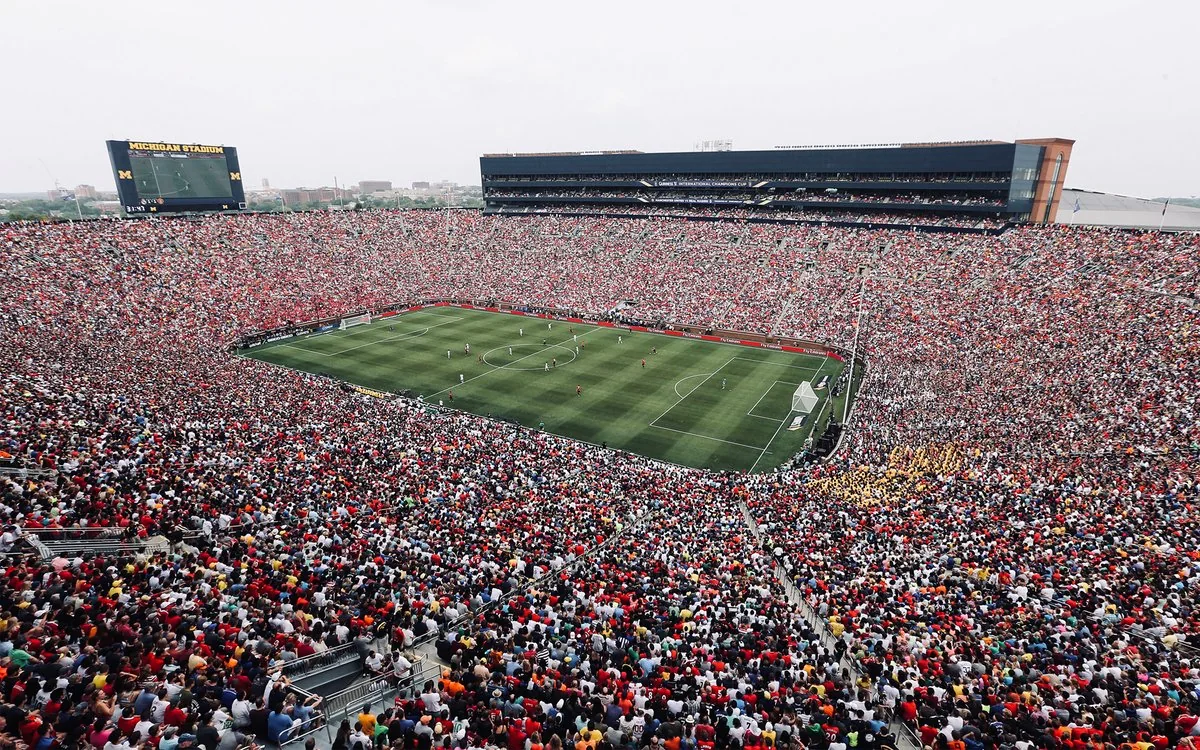
Real Madrid played at Michigan Stadium because its 2014 US preseason tour included an International Champions Cup match against Manchester United in Ann Arbor. The stadium, known as the Big House, is the University of Michigan’s college football home. It was an extraordinary setting for a European club encounter, rather than a La Liga fixture transferred abroad.
For a Madrid supporter curious about the ground in those famous crowd photographs, the connection leads to a different kind of football Saturday. This guide explains the historical match, the Wolverines’ home stadium and how to choose a current Michigan home game. Schedule and visitor examples were checked on October 23, 2026; confirm the chosen event before making a trip.
What brought Real Madrid to Ann Arbor in 2014?
Real Madrid faced Manchester United at Michigan Stadium on August 2, 2014, as part of the International Champions Cup, a preseason tournament. The original event announcement identified Relevent Sports as the organizer and placed the match within a North American series involving eight clubs. Ann Arbor was a tour destination, not a new venue for Madrid’s Spanish league home fixtures. That distinction matters when an old photograph or highlight clip resurfaces without its date: the shirts and enormous crowd are real, but the competition was not La Liga or the UEFA Champions League.
The result was a 3–1 Manchester United win. Ashley Young scored twice, Javier Hernández added United’s third and Gareth Bale converted Madrid’s penalty. Michigan’s contemporary match report recorded an attendance of 109,318, establishing a United States soccer attendance record at the time. Those are two different parts of the story. United won the match; both clubs helped draw a remarkable audience. A crowd figure measures the scale of the occasion, not the competitive importance of the result within Madrid’s season.
Why choose a college stadium for that occasion? The organizers could combine the appeal of two internationally followed clubs with a venue capable of accommodating a very large audience. Demand was visible well before kickoff: the university’s April 2014 sales announcement said the match sold out on the first day of general sale. For supporters in the region, it offered a chance to see elite European club football without a journey to England or Spain. For the visiting teams, the event also formed part of summer preparation. Sporting preparation and a major public occasion could exist together; neither description cancels the other.
Madrid’s own history of its US trips, published in 2024, places Michigan among the club’s 2014 destinations and records a return to the state in 2016. The Big House appearance therefore belongs within a longer touring history. It should not be read as evidence that Madrid plays in Ann Arbor every summer, or that a present-day stadium ticket will include a Spanish club. A historical tour stop can introduce you to a place; the current event calendar determines what you can actually see there now.
For a La Liga supporter, the right way to read the 2014 game is as a meeting between familiar players and an unfamiliar football setting. You can appreciate the crowd, the goals and the unusual scale without treating a preseason score as a verdict on a title race. Use the La Liga results page for the league campaign, and keep the Michigan match in its own tournament context. The more interesting lasting question is what filled that stadium before Madrid arrived, and what brings people back when the touring clubs have gone.
Whose home is the Big House?
The Big House is Michigan Stadium, home of the University of Michigan Wolverines’ American football team in Ann Arbor. Its defining regular event is college football, rather than an NFL home schedule or a European club season. Michigan’s April 2026 stadium anniversary announcement records an opening date of October 1, 1927, and plans to celebrate the centenary in 2027. Madrid arrived at a venue with decades of its own sporting history. The club’s visit added a memorable chapter; it did not establish the stadium’s identity.
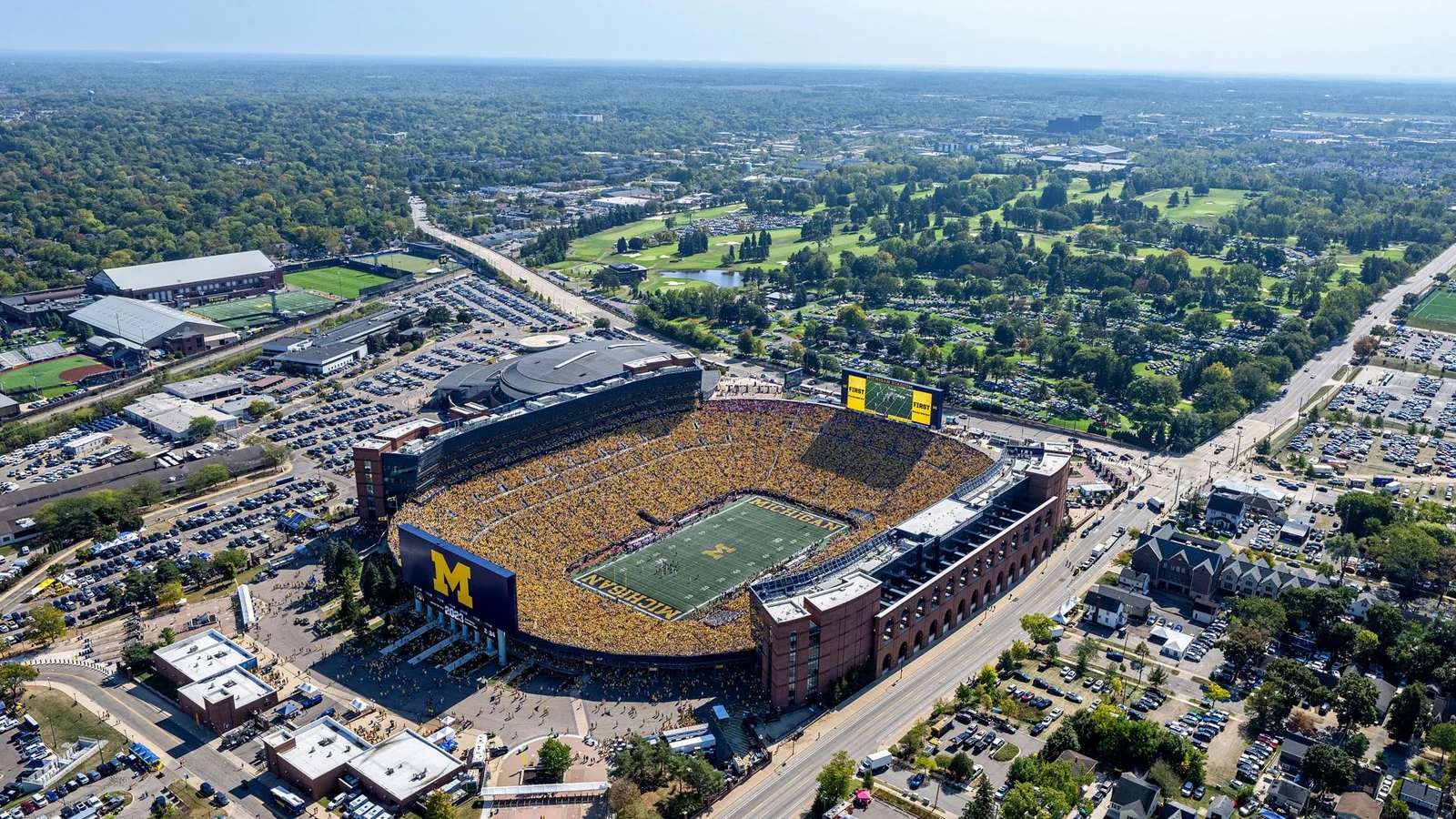
One easily confused detail is the size. The 2026 university announcement gives a current capacity of 107,601. That should not be substituted for the 109,318 attendance reported for the Madrid–United event in 2014. Michigan’s 2015 seating announcement explained the revised ticketed capacity through accessibility improvements and configuration changes. Wider aisles and handrails were among the practical considerations. A venue’s official seating figure and the attendance announced for a different event in an earlier year answer different questions; putting them beside one another does not make either figure a mistake.
For a visitor, the significance of that scale is more practical than a ranking of the world’s biggest grounds. You will be finding a gate and a seat within a very large stadium, then sharing the surrounding area with many people arriving for the same event. A photograph taken from high in the bowl communicates the spectacle, but it cannot tell you how close a particular seat feels to the action. When choosing a ticket, use the current event’s seating information and the location you are actually being offered. Do not infer the view from a panoramic photograph or from the number of spectators at a past match.
The atmosphere also has its own structure. The Michigan Marching Band describes pregame, halftime and postgame performances, with a new halftime show prepared for each home football game. For someone used to a Spanish club match, that makes the periods around play part of the visit, not merely waiting time. You do not need to arrive with an expert knowledge of every tradition to appreciate it. Leaving space to watch the band and follow the crowd’s response is a more useful introduction than expecting the day to reproduce the rhythms of the Bernabéu.
The stadium has welcomed other sports and touring clubs, including further International Champions Cup matches after 2014. Those events demonstrate its versatility, but a Michigan home game is a chance to experience the place through its regular team. The common thread with following a La Liga club is attachment to a home ground and a shared sporting occasion. The differences are worth enjoying on their own terms. Once that is the experience you want, the next task is precise: find a Wolverines game actually played in Ann Arbor, rather than any fixture carrying Michigan’s name.
Find a Michigan home game before choosing a date
If the stadium is your reason for going, begin with the venue rather than the team name. A Michigan fixture can take place hundreds of miles from Ann Arbor. The university’s official football schedule identifies home games at Michigan Stadium and explains that its times are local to the game site; Ann Arbor uses Eastern time. Look at the opponent, home or away designation and location together. This is familiar logic for anyone planning a Bernabéu visit, but American schedule layouts may present the teams differently from the European fixture list you usually read.
These examples from the 2026 schedule, checked on October 23, show why the distinction matters. Indiana visits Michigan on October 24, while Michigan travels to Rutgers the following Saturday. November 7 brings Michigan State to the Big House for a rivalry game. The first and third dates fit a Michigan Stadium visit; the middle date does not. The matchup names alone are insufficient, especially when a search result shortens them or displays only the team you searched for. Treat the stadium and city fields as part of the fixture, not optional decoration.
| 2026 date | Fixture | Big House visit? | Kickoff status checked October 23 |
|---|---|---|---|
| October 24 | Indiana at Michigan | Yes: Ann Arbor | Noon Eastern |
| October 31 | Michigan at Rutgers | No: away in New Jersey | Check the Rutgers game listing |
| November 7 | Michigan State at Michigan | Yes: Ann Arbor | TBA on the official schedule |
To explore dates across the college season, CollegeFootballSchedule.net offers a schedule finder with week, team, conference and TV filters. It belongs to the same project as LaLigaSchedule.com; this is a related tool recommendation, not an independent comparison. Its Michigan schedule page gathers listed opponents, venues and Eastern kickoff times in one table. That makes it a useful starting point for spotting home dates and comparing a potential college game with the rest of your trip. Confirm the final arrangement with Michigan Athletics before booking around it.
A TBA time deserves particular care. It tells you that the listing does not yet provide a confirmed kickoff, not that the game will be played at the hour most convenient for your plans. Check the official school page, since a secondary listing may not yet reflect a newly announced time. A date can be suitable while the daily itinerary remains provisional. Avoid building a tight arrival, restaurant reservation or departure around an assumed afternoon start. Keep the date flexible enough for the eventual window, then check the venue and kickoff together again when the announcement appears.
Finally, decide what you want from the opponent. A visitor interested chiefly in the stadium may choose the home date that fits the trip, while someone seeking a particular rivalry may accept fewer options. Michigan’s season announcement identifies the Michigan State meeting as the Paul Bunyan Trophy game, giving that date a specific context beyond simply another home fixture. Neither choice guarantees a particular atmosphere or result. The useful choice is one you can explain: the right ground, an opponent you understand, a confirmed or deliberately flexible time, and a ticket for that actual event.
Plan the visit around today’s Michigan game-day rules
A historical match announcement is useful for explaining Madrid’s visit, but it is the wrong place to obtain current entry instructions. Start with Michigan Athletics for your chosen football game and check the event, seat and delivery method before purchasing. Michigan’s mobile ticketing information directs iPhone users to Apple Wallet and Android users to Google Wallet. Set up access before leaving for the stadium, then open the actual ticket to confirm it is available. An order confirmation in your email is not the same thing as a ticket ready for admission.
The university’s iPhone ticket guide also makes clear that a screenshot is not valid for entry. If members of your group will arrive separately, follow the official transfer process rather than sending a picture of the ticket. This is a small preparation task with a large effect on the day: resolve the account, wallet and transfer questions while you have time and a reliable connection. Check that each person knows whose phone carries their ticket, and keep enough battery for arrival and the journey afterwards.
Pack for Michigan Stadium’s rules, not for the last ground you visited. The official prohibited-items list includes bags, including clear bags and fanny packs, as well as umbrellas. The university’s September 2026 game-day guidance permits rain apparel, so choosing a suitable rain layer is more useful than assuming an umbrella will be accepted. If you need an exception or an accessibility arrangement, check the detailed official guidance before travelling. Do not arrive carrying a day-trip bag on the assumption that every American sports venue follows the same policy.
If driving, choose an actual parking option before you choose a route. Michigan’s 2026 parking inventory separates game-day options from prepaid season parking and identifies cashless payment arrangements. A lot visible next to the stadium on a map is not automatically available to a first-time visitor. The current parking and transport guide also describes road closures and shuttle information. Use those instructions to decide where the car stays and how the final part of the journey works; navigating only to the stadium’s address leaves the most important arrival decision unresolved.
Build the rest of the day around enjoying the place. Allow time for the walk, entry and finding your section if you want to see the pregame activity, and agree on a meeting point with companions rather than relying entirely on messages in the crowd. Avoid treating the scheduled kickoff as the moment you should reach the neighbourhood. Equally, leave room after the game for finding your way out and following the return route you planned. These choices do not require an elaborate itinerary, only enough margin that discovering an unfamiliar venue remains part of the pleasure.
The 2014 Madrid match gives you a memorable reason to notice the Big House. A current Wolverines home date gives you a reason to go inside it. Keep the two connected without confusing them: remember the European visitors, choose the college fixture actually being played, and follow the rules that apply to that event now. You will be visiting the same stadium with a different sporting rhythm, a different crowd identity and a chance to understand why it mattered long before Real Madrid came to Ann Arbor.
Comments
Sign in with Google to comment. Keep the conversation useful and football-focused. New comments are reviewed before they appear.
Loading comments…