
What fans mean by La Liga 3
If you mean Spain's men's third division by “La Liga 3”, the competition to follow is Primera Federacion. It sits immediately below Segunda Division and above Segunda Federacion. “La Liga 3” is a convenient search phrase, rather than its official competition name, and searching with the proper name makes it easier to find the right fixtures and table.
There is an administrative distinction as well as a naming difference. LaLiga's professional league association comprises the first and second divisions, while Primera Federacion is an RFEF competition. The federation's explanation of the professional league identifies those top two divisions separately. A third-tier match is therefore not simply another section of the top-flight fixture list.
| Tier | Competition | Where it sits |
|---|---|---|
| 1 | Primera Division / LaLiga | Top flight |
| 2 | Segunda Division / LaLiga Hypermotion | One level below the top flight |
| 3 | Primera Federacion | The third tier discussed here |
| 4 | Segunda Federacion | One level below Primera Federacion |
| 5 | Tercera Federacion | Two levels below Primera Federacion |
For a club starting in the third tier, reaching LaLiga requires promotion into the second division and then another promotion into the first. Winning a third-tier promotion does not put the team straight into a league campaign against Real Madrid or Barcelona. Our La Liga 2 teams guide explains the intermediate level; the top-flight teams directory covers the league above that.
Why Tercera Federacion is the fifth tier
The Spanish word tercera means third, but the title Tercera Federacion identifies the fifth tier in today's pyramid. Primera Federacion became the new third level in the 2021/22 restructuring. Older references to Segunda B and Tercera Division can therefore describe a different arrangement from the one an English-speaking fan encounters now.
The RFEF itself calls Tercera Federacion the fifth category in its 2026 champions report. That is the safest correction to a literal translation. A result labelled “Tercera” should not be inserted into a third-tier table simply because the word looks like a number.
“Primera RFEF” also remains a common way to refer to Primera Federacion. The name on an older report can differ without referring to a different tier, so check the season and the full competition title. This guide concerns men's senior league football: a women's competition, youth league or futsal competition with a similar federation name has its own structure.
Primera Federacion teams and groups in 2026/27
The 2026/27 competition has 40 teams divided into two groups of 20, following the RFEF's approved group allocation. The lists below reflect that season, checked on 19 October 2026. A club's presence in a previous campaign is not enough to place it in the current one.
Each group has its own regular-season table. Teams meet their nineteen group opponents at home and away, giving each side 38 league fixtures. That familiar match total should not disguise the different structure: there is no single forty-team league table in which everyone has faced everyone else.
Group 1 and the north-western route
Group 1 brings together the Galician clubs with opponents from the Basque Country, Asturias, La Rioja, Castilla y Leon and Extremadura. Lugo's own opponents announcement identifies that travel pattern and its Galician meetings with Pontevedra, Racing Ferrol, Deportivo Fabril and UD Ourense. The label is a practical geographical grouping, rather than an absolute promise that every journey is short.
| Team | Team |
|---|---|
| AD Merida | Arenas Club |
| Athletic Club B / Bilbao Athletic | Barakaldo CF |
| CD Coria | CD Extremadura |
| CD Lugo | CD Mirandes |
| CP Cacereno | Cultural y Deportiva Leonesa |
| Pontevedra CF | Racing Club Ferrol |
| RC Deportivo Fabril | Real Aviles Industrial |
| Real Union Club | SD Ponferradina |
| UD Logrones | UD Ourense |
| Unionistas de Salamanca CF | Zamora CF |
These are paired columns for readability, not fixtures or rankings. Some sources shorten Cultural y Deportiva Leonesa to CyD Leonesa and refer to Athletic's second side as Bilbao Athletic. Treat those as name variations, rather than adding an extra club to a group that already contains twenty.
Group 2 and the other half of the competition
Group 2 combines teams from Madrid, Aragon, Catalonia, the Valencian Community, Murcia, Andalusia and the Balearic Islands. Real Madrid's group announcement confirms Castilla's allocation and the same twenty-team membership. Familiar first-team names and reserve sides share the competition, so the presence of a major-club badge does not automatically identify a first-team fixture.
| Team | Team |
|---|---|
| AD Alcorcon | Aguilas FC |
| Algeciras CF | Antequera CF |
| Atletico Madrileno | CD Teruel |
| CE Europa | CF Rayo Majadahonda |
| FC Cartagena | Gimnastic de Tarragona |
| Hercules de Alicante CF | Juventud de Torremolinos CF |
| Real Jaen CF | Real Madrid Castilla |
| Real Murcia CF | Real Zaragoza |
| SD Huesca | UD Ibiza |
| UE Sant Andreu | Villarreal CF B |
The split changes how a fan reads form. Points earned in different groups come against different opponent sets; equal points do not prove equal difficulty. Start with position in the team's own table, its recent opponents and its remaining home and away fixtures. The official Group 2 calendar and its Group 1 counterpart establish the actual league programme.
For supporters arriving through our LaLiga first-team directory, check the suffix and full club name before following a reserve side. Choosing Castilla or Villarreal B leads to senior third-tier football, with different opponents and venues from the parent club's top-flight schedule.
How promotion and relegation work
There are four promotion places to Segunda Division: two for the group winners and two through the playoffs. At the other end, ten teams are relegated. The 2026/27 structure is set out in Articles 8 and 9 of the RFEF's season regulations. Sporting qualification must also satisfy the applicable participation requirements.
Group winners earn the direct route
Finishing first in either twenty-team group earns the direct promotion position. The benefit is substantial: the group winner avoids the additional knockout rounds that the next four sides must negotiate. A comfortable-looking second place is therefore a different outcome from first, even if the points gap is small.
Promotion takes the club into the second division, not directly into LaLiga's top flight. That extra step matters when interpreting a celebration or a report saying a team has returned to professional football. It identifies the level the club has reached rather than promising fixtures against every first-division side.
The playoff route and what happens in a tied contest
Positions second to fifth in each group qualify for the eight-team playoff, subject to eligibility. The semifinals cross the groups, pairing second with fifth and third with fourth. Each tie has two legs, and the team with the better regular-season position hosts the second leg. The two final winners earn the remaining promotion places.
Aggregate goals across the two legs determine the winner first. If the aggregate score is level, the return match goes to thirty minutes of extra time. If it remains level after extra time, the team with the better regular-season finishing position advances. There is no penalty shootout in that situation, and an away goal does not carry extra value.
For example, imagine a second-placed team and a fifth-placed team finishing the two legs 3-3 on aggregate. The higher seed has not advanced at the end of ninety minutes: extra time must still be played. Only if the aggregate remains level after that additional period does its league position settle the tie. A lower seed can still win by taking the lead during extra time.
The published bracket keeps one semifinal winner from a second-versus-fifth pairing opposite a winner from a third-versus-fourth pairing in each final. Consequently, the finalists do not have identical regular-season positions. The seeding advantage remains meaningful beyond the semifinal, which gives clubs a reason to keep chasing places even after a playoff berth is secure.
The relegation line matters too
The teams finishing sixteenth through twentieth in each group go down to Segunda Federacion. That is five in each group and ten across the division. In a forty-team competition, a quarter of the field occupies the scheduled relegation places; finishing in the lower half is not automatically a comfortable survival position.
For a supporter reading a late-season fixture, check the opponent's incentives as well as the favourite's promotion target. A side outside the top five can still be fighting for survival. A draw that appears harmless at the top may have a very different value near sixteenth. The current-season format guide from Minuto Noventa provides a further explanation of those promotion and relegation zones.
Why reserve teams have different promotion limits
A reserve side can win matches and climb the table like any other participant, but its right to move up also depends on the teams above it in the same club structure. Article 11 of the season regulations prevents a reserve or dependent side from sharing a division with its senior team. That can affect promotion, playoff entry and even survival.
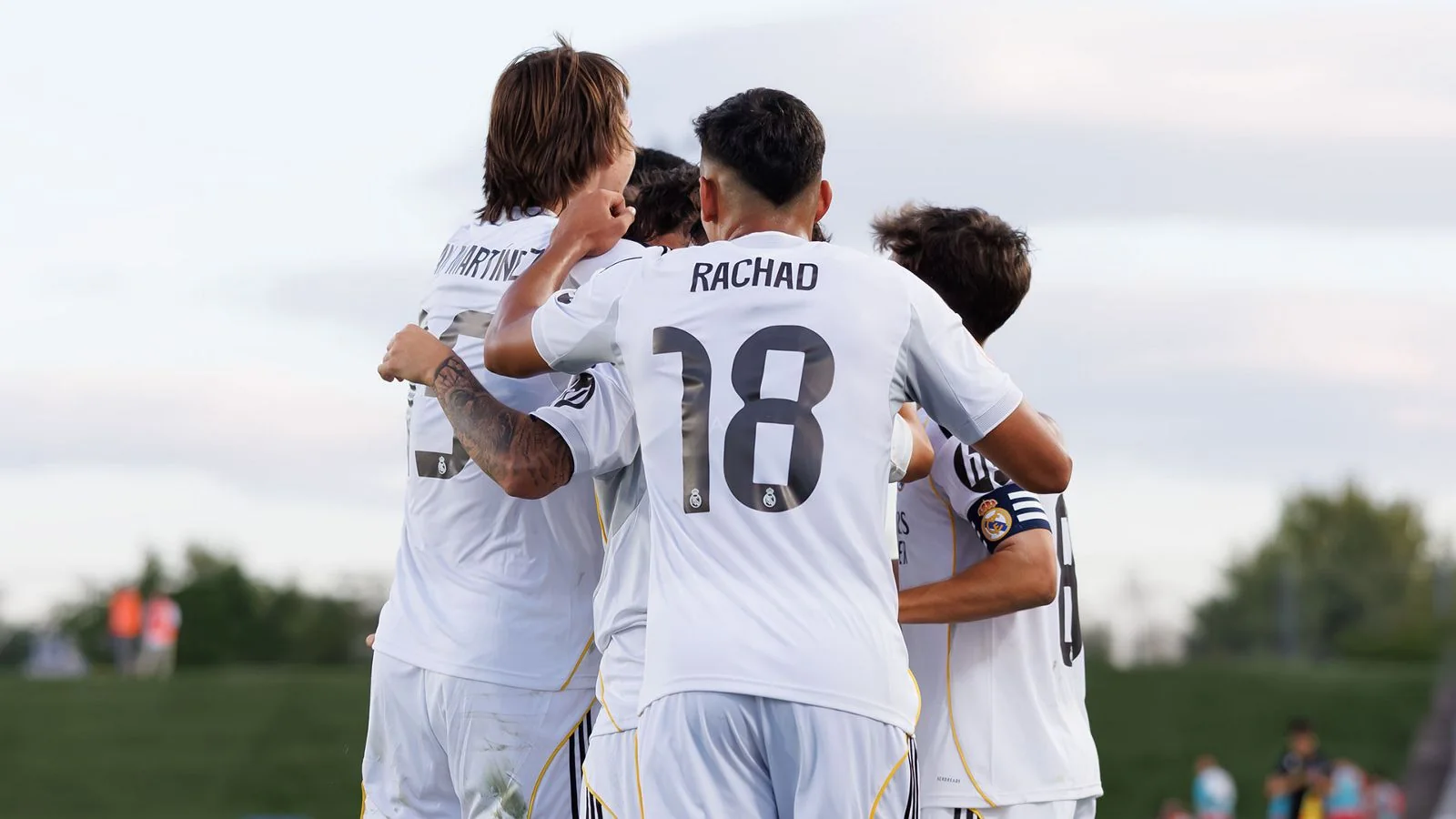
Consider a hypothetical club whose first team is staying in Segunda Division while its reserve side finishes first in Primera Federacion. The reserve cannot move into the same second division, although it can still be recognised as group champion. The regulations pass the blocked sporting right to the next eligible team in that group and adjust playoff participation accordingly.
Timing matters. The rules also allow for cases in which the senior team still has an opportunity to move up when the relevant regular season finishes. Do not announce that a reserve is barred merely because its first team currently appears in the second division; the parent's unresolved promotion position can change the eligibility picture. Conversely, a senior team's relegation into a reserve's division can force the reserve down another level.
For the full conditional wording, use Article 11 of the 2026/27 rules. For supporters, the practical habit is to follow both teams' situations before treating a coloured promotion or relegation marker as a final outcome. A normal-looking points total may sit alongside an important eligibility condition.
Reserve football also has a different sporting purpose. Deportivo's April 2026 account of Fabril's promotion places the achievement within its wider academy project. That is a concrete example of a second side reaching a tougher senior level while remaining part of a player-development pathway.
That context changes how a fan should assess a performance. Winning the league match still matters, but watching how a young defender deals with experienced forwards or how a midfielder handles pressure can be equally revealing. Development and results overlap without being identical goals. A player's progress towards the first team can be meaningful even when club-level restrictions prevent the reserve from taking another promotion.
Use the top-flight club directory for the parent-team context, then follow the reserve under its own full name for this competition. Castilla is a senior reserve side; it is not a label for every Real Madrid youth team, and its fixture should not be confused with a first-team booking.
How to follow a third-tier match as a fan
Start with the RFEF's Primera Federacion competition hub for the calendar, standings and official match records. Use the full team name and the group number, particularly for a reserve side or a club with a similarly named neighbour. A search for “La Liga 3 today” is less precise than the competition and club names.
The season calendar tells you the order of opponents and the scheduled round dates. A dated kickoff announcement tells you when a particular match is actually expected to start. The RFEF publishes separate matchday time and television notices; consult the notice for the relevant round rather than assuming every game is played on the date printed beside the round in the original calendar.
Confirm the competition, venue and kickoff
Reserve fixtures can take you to a different ground from the parent team's famous stadium. Castilla's home is the Alfredo Di Stefano Stadium at Real Madrid City, so a ticket labelled Castilla should not send a visitor automatically towards the Bernabeu. Check the venue stated for the actual fixture before planning the journey.
Tickets also require a match-specific check. Real Madrid's published arrangements for a Castilla home fixture in October 2026 illustrated member eligibility and a separate route for away supporters. That does not establish a universal admission policy for the whole division. Read the host club's current sale conditions, and use the visiting club's instructions if travelling in its allocated section.
A useful example of practical club information is Lugo's match guide for the October 2026 visit of Fabril. It sets out entrances, ticket arrangements and transport information for that game. The lesson is to find the equivalent current guide for your match, rather than transplanting another ground's gate times, prices or travel advice.
For television or streaming, verify the exact match, your country and the current provider's listing. A highlights clip or a programme on a federation channel is not proof that a full live match is available to you. This division has its own arrangements; a subscription that covers top-flight LaLiga should not be assumed to include every third-tier fixture.
If combining the visit with a first-division match, compare the confirmed times against our LaLiga match schedule. Leave room for travel between grounds and for the possibility that the games are spread across the weekend. The top-flight schedule and the Primera Federacion calendar solve different parts of that itinerary.
Once at the match, the table provides the first piece of football context. Identify whether either team is chasing first place, protecting a playoff seed or trying to move clear of the bottom five. For a reserve side, watch how its younger players respond to a senior opponent's physical pressure and game management. Those details make the third tier worth following beyond a familiar club badge.
Comments
Sign in with Google to comment. Keep the conversation useful and football-focused. New comments are reviewed before they appear.
Loading comments…