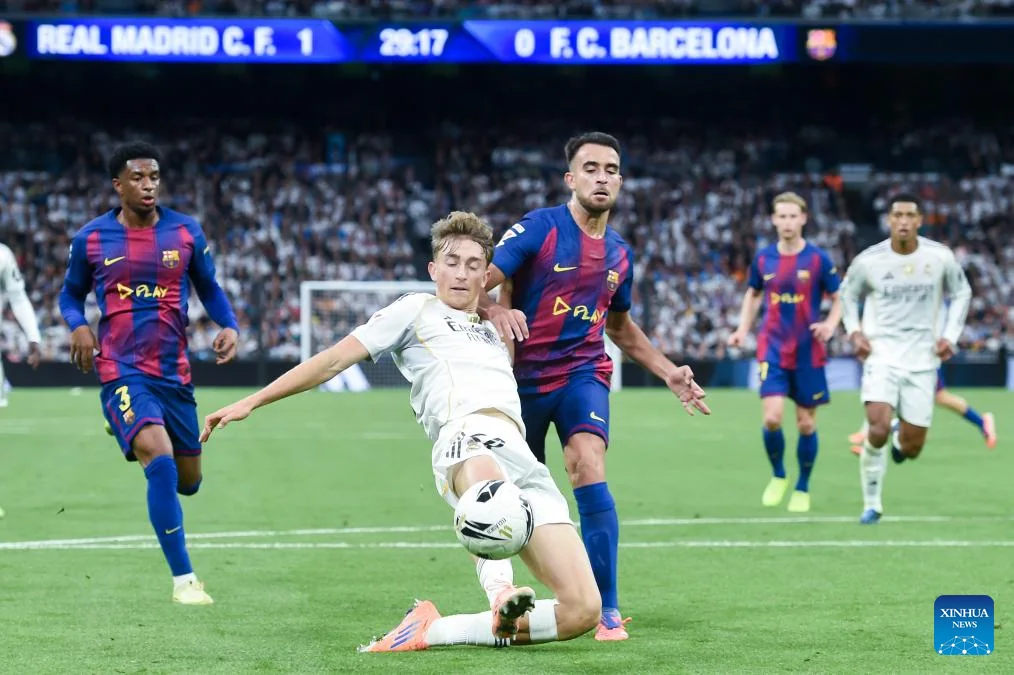
Real Madrid, FC Barcelona and Athletic Club are the only three teams that have played every La Liga season without relegation. That simple answer hides three very different survival stories. One is built around global dominance, another around an evolving football identity, and the third around a deliberately local player policy. This guide explains what the record really means, where each club came closest to losing it, and why permanence tells fans something that a trophy count cannot.
The short answer: Spain’s three ever-present clubs
The complete answer is shorter than many supporters expect: Real Madrid, FC Barcelona and Athletic Club are the only La Liga clubs that have never been relegated. All three entered Spain’s new national championship at its birth in 1929, and all three have remained in the top division for every edition played since. Athletic’s own 2026/27 opponent announcement describes the trio as the competition’s only 96-season ever-presents, which is the cleanest current confirmation of the record.
That wording matters. A club can be one of Spain’s traditional powers, own major trophies and spend almost its entire life in the first tier without being an ever-present. Atlético Madrid, for example, are firmly one of Spain’s giants but played in the Segunda División after relegation in 1930 and again at the start of this century. Valencia and Sevilla also have second-tier seasons in their histories. The distinction is therefore not “big three” status, Champions League pedigree or total titles. It is an unbroken chain of participation in the Primera División.
The chain began with a much smaller competition. The Spanish federation records that the inaugural 1929 league contained ten clubs: Barcelona, Real Madrid, Athletic Club, Real Sociedad, Arenas de Getxo, Real Unión, Espanyol, Europa, Racing Santander and the club then known as Athletic de Madrid. Barcelona became the first champion, Real Madrid finished second, and Athletic soon dominated the early 1930s. Nearly a century later, only those same three leading names have avoided every sporting drop.
For a modern fan, the easiest way to understand the feat is to separate two ideas. “Never relegated” means the senior men’s first team has never finished or been placed outside the top flight for the following season. It does not mean the club has never had a poor campaign, never entered a relegation battle, or never seen its reserve side go down in a lower division. Nor does it mean every season was actually played: national competition stopped during the Spanish Civil War. The record is about retaining top-tier status whenever the championship resumed.
This also explains why the answer will not change simply because a promoted club enjoys a brilliant debut season. A new entrant may be unbeaten as a La Liga member, but it has not participated continuously since 1929. The special company belongs to three founding clubs whose paths could hardly be more different: Madrid’s relentless institutional power, Barcelona’s sporting and cultural scale, and Athletic’s extraordinary ability to compete while following a highly distinctive local-player philosophy. Fans can compare the current field on our La Liga teams page, but the historical ever-present list remains only three names long.
Real Madrid: permanence built on relentless standards
Real Madrid’s place on the list feels inevitable only when viewed from the present. The club’s identity is built around winning, and its official history is crowded with league championships, European Cups and eras of sustained dominance. Yet uninterrupted top-flight status is a different achievement from accumulating silverware. It asks whether an institution can absorb bad recruitment, ageing squads, coaching changes and political or economic upheaval without ever allowing a downturn to become terminal.
Madrid began the inaugural league strongly, finishing behind Barcelona in 1929, and won their first championship in 1931/32. Over time, their financial reach, elite-player pull and expectation of immediate correction created an unusually high floor. A season regarded internally as a failure might still end with Champions League qualification. That modern baseline can make relegation sound absurd, but football history is full of heavyweight clubs—Juventus, Manchester United, Bayern Munich and Atlético Madrid among them—that have experienced the second tier for sporting or administrative reasons. Madrid’s clean league record therefore deserves to be treated as an achievement, not a natural right.
The uncomfortable chapter is 1947/48. Madrid finished 11th, still the lowest final position in their league history. The season unfolded as an older squad struggled for consistency while the club also opened the new Chamartín stadium, the ground later renamed for Santiago Bernabéu. Contemporary retrospectives record that safety was not comfortable until the closing stage. In a 14-team division with the bottom two going down, an April victory over Real Oviedo helped Madrid stay above the relegation places.
That near miss is revealing because the rescue did not immediately look like the Madrid mythology supporters know today. The club had not won the league since the 1930s and would wait until 1953/54 for its next title. The transformation under Bernabéu—stadium expansion, recruitment ambition and the construction of a global sporting institution—raised the club’s competitive floor as well as its ceiling. Great forwards may decide championships, but a never-relegated record is protected by the less glamorous capacity to replace declining cycles before the table becomes unforgiving.
For supporters assessing the current team, the historical lesson is not that the badge guarantees safety. It is that Madrid have repeatedly treated domestic underperformance as an emergency long before survival is mathematically involved. Boardroom pressure, squad turnover and the demand to contend every year can be exhausting, but those same forces have kept the club far from a sustained relegation spiral. The Real Madrid team page provides the current squad and schedule context; the deeper continuity record belongs to an institution that made recovery part of its operating culture.
Barcelona: an unbroken place in the top flight
Barcelona’s uninterrupted membership began with the strongest possible statement: they won the first La Liga title. The club’s official account dates the decisive moment to 30 June 1929, when a 2–0 victory away to Arenas de Getxo took Barça past Real Madrid in the final reckoning. That inaugural championship makes Barcelona’s continuity especially neat. They were not merely admitted at the beginning and then survived; they established one of the standards the rest of the league had to chase.
Across the decades, their protection from relegation has come through changing football identities rather than one permanent formula. Early stars such as Josep Samitier gave way to the Kubala era, then Johan Cruyff altered how the club imagined both football and itself. La Masia became more than a youth system: at its best it supplied technically educated players who could carry a shared positional language from adolescence into the first team. Later, Lionel Messi’s generation turned that framework into one of the sport’s defining peaks. Money and global reach mattered, but coherence between recruitment, academy and style repeatedly helped Barça rebuild.
Continuity, however, was not effortless. The 1941/42 season remains the corrective to any story suggesting Barcelona were always insulated from the bottom. Barça finished 12th in a 14-team league, their lowest final position, and had to contest a relegation playoff. They beat Real Murcia 5–1 to preserve their top-flight place. Under the rules of that season, winning the playoff counted as survival; losing would have ended the record. The club also won the Copa del Generalísimo that campaign, a striking example of cup success and league vulnerability existing at the same time.
For modern supporters, this history changes how the “never relegated” label should feel. It is not simply another line in a trophy comparison with Madrid. Barcelona’s league membership has persisted through civil conflict, dictatorship, financial stress, stadium changes, presidential upheaval and dramatic swings in squad quality. The record belongs as much to teams that steadied the club in difficult periods as to the celebrated champions who played breathtaking football.
It also demonstrates why one bad season should not be confused with relegation destiny. A giant’s resources provide more ways out—a deep academy, valuable players, borrowing capacity and enormous commercial appeal—but those tools still require good sporting decisions. In 1942 the escape had to be won on the pitch. Fans following the present squad can use our Barcelona team page for fixtures and club information; the historical point is that every Barcelona generation inherits a place in the division that previous teams, including imperfect ones, fought to retain.
Athletic Club: the most distinctive survival story
If Madrid and Barcelona represent the power of global sporting institutions, Athletic Club make the never-relegated trio genuinely fascinating. The Bilbao club have protected their top-flight place while voluntarily limiting the pool from which the first team is built. Athletic’s published philosophy allows footballers who were born in the territories of the Basque Country or who developed at academies there, including the Spanish provinces and the Northern Basque territories in France. It is more precise than the common label “Basque-only,” because development can qualify a player as well as birthplace.
That distinction does not make the task easy. Madrid and Barcelona can respond to a weak position by shopping across the international market. Athletic must usually find the solution within a connected regional ecosystem: Lezama, partner clubs, Basque youth football and a smaller set of eligible senior players. When a key centre-forward, goalkeeper or centre-back leaves, there may be no like-for-like replacement available at any price. Squad planning has to look several years ahead.
The philosophy works competitively because it creates counterweights to the restricted market. Academy players see a credible route into the senior side. The club can invest deeply in coaching and identification within its territory. A player who reaches the first team already understands the emotional weight of representing Bilbao and the wider Athletic community. San Mamés then turns that continuity into matchday pressure: intensity, duels and collective effort are not abstract branding but expectations reinforced by the crowd.
Athletic’s record also cannot be reduced to survival. They dominated important stretches of the early league, have won eight Spanish championships and remain high in the historical table. Greats such as Telmo Zarra helped define an attacking age; later title teams showed the model could succeed even as Spanish football became more professional and economically uneven. In recent generations, the production of international-level footballers has kept Athletic capable of reaching Europe and challenging in cups rather than merely defending 17th place.
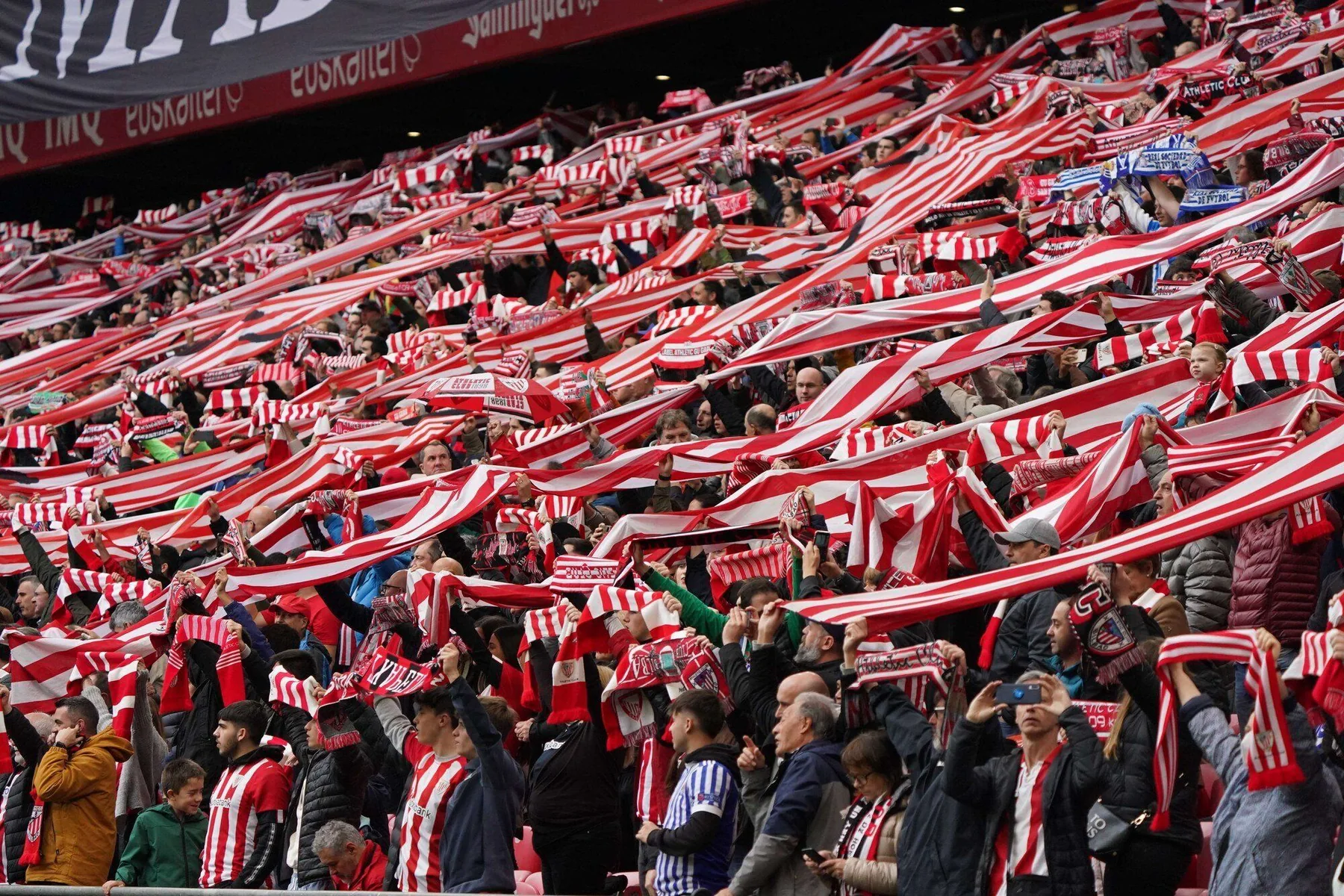
There is a temptation to romanticise the policy and ignore the hard edges. A narrow recruitment base increases the cost of mistakes, creates leverage in contract talks and can leave positional shortages. Precisely for that reason, every season of uninterrupted La Liga membership adds substance to the philosophy. Athletic have not survived because the competition gives them special protection; they have survived because development, retention, tactical adaptability and a fiercely supportive home environment have repeatedly overcome structural limits. See the present-day squad and matches on our Athletic Club team page. Among the three ever-presents, theirs is the story that most clearly turns identity into football operations.
How close have the three clubs come to relegation?
The three clubs’ closest escapes did not occur under one consistent format, so a simple points comparison would mislead. League size changed, wins were once worth two points, and some seasons used relegation playoffs. The useful comparison is competitive jeopardy: did the team reach the final stage with its top-flight place genuinely at risk? For Barcelona in 1941/42, Real Madrid in 1947/48 and Athletic in 2006/07, the answer is yes.
Barcelona’s case was the most explicit because their 12th-place finish sent them into a survival match against Real Murcia. The 5–1 win looks comfortable on a scoreline, but the stakes were absolute. A cup-winning Barcelona side had still placed itself one defeat from the second tier. This is a reminder that knockout football can make a historic record depend on 90 minutes: control the occasion and history remembers continuity; lose it and every later “never relegated” claim disappears.
Madrid’s 1947/48 trouble unfolded in the league itself. They entered the last round without mathematical comfort and beat Real Oviedo 2–0. Finishing 11th was enough, but only after a campaign far removed from the dominance later associated with the white shirt. Because the bottom two went down directly that season, there was no playoff rescue available. Their safety came through taking care of the final competitive obligation.
Athletic’s ordeal is more recognisable to a modern viewer. On 17 June 2007, San Mamés hosted Levante while Celta Vigo and Real Sociedad also fought for survival. Athletic won 2–0 and ended the 38-match season in 17th on 40 points, one ahead of Celta. El País’s contemporary report captured the relief and also the warning from the club’s leadership that two difficult seasons required serious reflection. Survival was not celebrated as a normal achievement for Athletic; it was treated as evidence that the operating model needed correction.
The tactical texture of final-day survival is different from a title chase. Players protect dangerous central zones, every misplaced pass feels heavier, and news from other grounds can change the emotional temperature in seconds. A favourite playing at home may become cautious because the cost of conceding is far greater than the reward of entertaining. That helps explain why judging these matches only by quality misses their significance. The three clubs’ famous continuity includes days when composure mattered more than style.
Fans researching a past escape should always check the rules and table for that particular season rather than applying today’s bottom-three format backwards. Our La Liga results archive helps place completed matches in season context. The central lesson remains stable: none of the three records was protected by reputation alone. Each came close enough to the edge that a single match, and the response to its pressure, became part of the institution’s survival story.
Why an unbroken La Liga record matters
An unbroken top-flight record matters because league membership compounds. Every year in La Liga brings elite opposition, national and international exposure, stronger commercial opportunities and a platform that helps a club retain talent. Relegation interrupts that cycle. Revenue falls, contracts may change, players attract bids, and a squad built for Primera must adapt to the physical and tactical demands of a 22-team Segunda campaign. LaLiga’s own financial documents provide for compensation to relegated clubs precisely because the economic shock is real.
Continuity also gives supporters a shared calendar. Parents and grandparents can connect their matchgoing lives through the same national competition; rivalries recur rather than disappearing for years; away trips and famous fixtures become family landmarks. That is particularly powerful at Athletic, where local development and supporter identity reinforce each other, but it applies to Madrid and Barcelona too. The league record is institutional memory expressed through fixtures.
From a football perspective, the feat measures the floor of a club rather than only its ceiling. A title tells us how brilliant a team was at its peak. Never being relegated tells us how well generations of directors, coaches and players managed the troughs. The RFEF’s historical classification records seasons and matches alongside points for good reason: endurance is part of competitive stature. Deportivo La Coruña have been Spanish champions and later fallen below the second division; Atlético Madrid have won the league repeatedly and still experienced relegation. Honours and permanence answer different questions.
There is pressure attached to that inheritance. Every poor run at one of the three clubs invites the thought that a century-scale record could be placed in danger. Coaches cannot treat survival as an adequate long-term objective, yet they must secure the team’s basic competitive stability while satisfying demands for trophies, Europe and attractive football. The badge supplies resources and belief, but it also magnifies panic. That tension helps explain why near misses such as Athletic’s 2007 escape remain vivid even after later successes.
Quick answers for supporters
- How many La Liga teams have never been relegated? Three.
- Which teams are they? Real Madrid, Barcelona and Athletic Club.
- Has Atlético Madrid ever been relegated? Yes; Atlético are a historic giant, but not an ever-present.
- Did Barcelona play a relegation playoff? Yes, in 1941/42; Barça beat Real Murcia and stayed up.
- Which of the three had the most recent close call? Athletic, who secured safety on the final day of 2006/07.
- Could the list change? It can shrink if one of the three is relegated, but no other club can retroactively become ever-present since 1929.
That last point makes the record unusually fragile and unusually permanent at the same time. New clubs can build long top-flight runs, but only Madrid, Barcelona and Athletic can carry the original unbroken line. Follow the current relegation picture on the La Liga table; positions change every matchday, while the historical standard behind those three names has survived every completed season so far.
Comments
Sign in with Google to comment. Keep the conversation useful and football-focused. New comments are reviewed before they appear.
Loading comments…