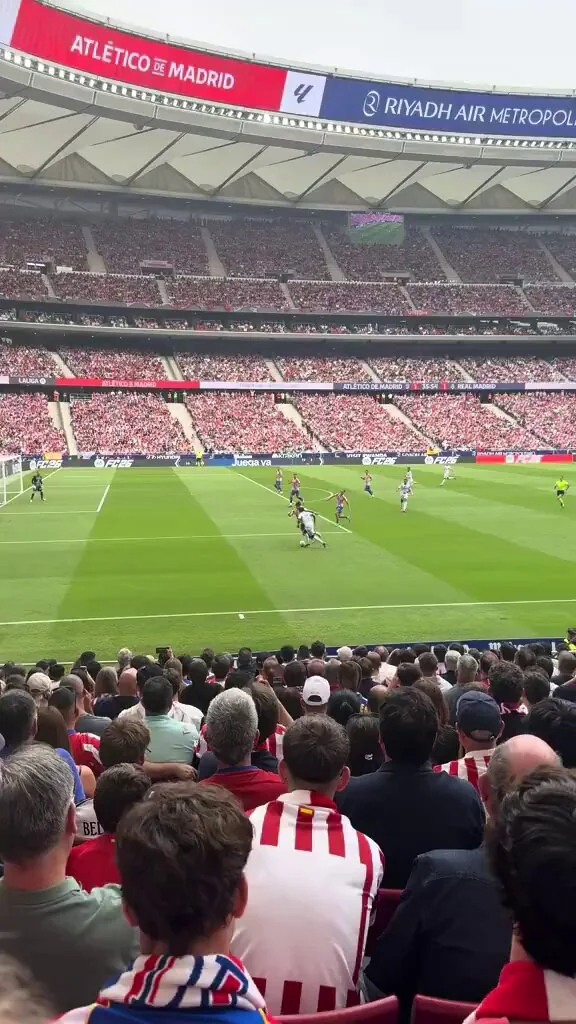
Real Madrid rank first, Barcelona second and Atlético Madrid third in our La Liga-first all-time club ranking. Titles lead the method; sustained top-flight performance, defining peaks, identity and European achievement provide context. The cutoff is the completed 2025/26 season.
- 1 Real Madrid
- 2 Barcelona
- 3 Atlético
- 4 Athletic
- 5 Valencia
- 6 Real Sociedad
- 7 Sevilla
- 8 Deportivo
- 9 Real Betis
- 10 Villarreal
How we ranked the greatest La Liga clubs
“Greatest” is not a statistic, so this ranking begins with a declared method. We give 45 percent of the judgment to La Liga championships and serious title contention, 25 percent to sustained top-flight performance, 15 percent to an era-defining peak, 10 percent to longevity and club identity, and five percent to European achievement as a tiebreaker.
That weighting keeps the list honest to the search. Sevilla's European record is extraordinary, but it cannot automatically outrank clubs with several Spanish championships in an article about La Liga history. Likewise, all-time points reward decades of solid participation; they do not fully capture Deportivo's concentrated peak. Titles lead, consistency tests the title story and context breaks close calls.
Historical tables require care. Spain moved from two points to three for a win, league sizes changed, and clubs have played different numbers of seasons. Some tables recalculate old wins under a modern system; others preserve points actually awarded. We use them directionally—not as a magic score. Current positions belong on the live La Liga table.
Reasonable readers may swap close neighbours, especially Athletic and Atlético depending on early-history weight, or Sevilla and Real Sociedad depending on European weight. The top two are not genuinely close under a league-first method, and Atlético's 11 championships establish third. This ranks clubs, not one-season teams: a perfect campaign strengthens a case but cannot replace generations of work.
The method also separates cultural size from competitive greatness. A vast fanbase, iconic stadium or heated derby can make a club central to Spanish football without placing it above a multiple champion. Conversely, a smaller-market club can climb by repeatedly finishing near the summit. This is not a ranking of shirt sales, social followers or the loudest away end. It asks what each institution has achieved inside the league and how convincingly it sustained that level.
1. Real Madrid and 2. Barcelona: the standard setters
1. Real Madrid
Real Madrid are first because every La Liga-first route leads there. Their 36 championships are the competition record, and success is not confined to one manager. The Di Stéfano and Yeyé periods established mid-century control; Madrid won eight of nine leagues from 1960/61 to 1968/69. The Quinta del Buitre then delivered five straight from 1985/86 through 1989/90. Champions under José Mourinho, Zinedine Zidane and Carlo Ancelotti show an ability to renew the method without losing the expectation.
The 2023/24 crown is a compact example: 95 points, one defeat and the title secured with four rounds remaining. Squad depth, defensive resilience and late-game belief covered absences. Fifteen European Cups/Champions Leagues strengthen rather than create the number-one case; 36 domestic championships and leadership of the historical table do the decisive work.
Madrid's weaker modern stretches still tend to contain runner-up finishes, which matters to the consistency category. The club's standard is so severe that a second-place campaign is treated internally as failure, yet those points keep accumulating in the historical table. Greatness here is not invulnerability; it is the ability to turn one cycle's ending into another cycle's championship.
2. Barcelona
Barcelona are the only credible second choice and the only club that repeatedly changed how the league thinks about football. Their 29 championships begin with 1928/29 and include Cruyff's Dream Team, Guardiola's positional masterpiece and Messi-era sides that won ten titles with the Argentine in the squad. The RFEF credits Barcelona with 13 championships in the twenty-first century, more than any rival in that span.
Why not first? The seven-title deficit remains too large when championships lead. Why comfortably above Atlético? Barcelona lead them 29–11 and combine that total with uninterrupted participation and multiple tactical peaks. Our Barcelona vs Real Madrid title comparison gives the era counts. Madrid own the greater complete league history; Barcelona own the strongest modern response.
Barcelona's special historical contribution is the connection between academy education and first-team method. That link was never perfect or uninterrupted, but at its best it allowed new players to enter a demanding positional structure with shared reference points. The result was not merely attractive possession. It was control durable enough to produce title clusters under Cruyff, Guardiola and later coaches.
3. Atlético Madrid, 4. Athletic Club and 5. Valencia
3. Atlético Madrid
Atlético bridge the two superpowers and everybody else. Eleven titles span the Aviación years, the 1960s and 1970s, the 1995/96 double and Diego Simeone's modern disruption. The 2013/14 champion took the crown at Barcelona on the final day; the 2020/21 side held off Madrid with 86 points. Both interrupted a landscape shaped by the top two.
Simeone made compact defending, transition threat and emotional control repeatable across seasons. Three Europa League titles and Champions League finals raise the ceiling, while 11 domestic championships keep the case La Liga-led. Third is clear.
Atlético's most persuasive trait is resilience across status changes. Relegation at the end of 1999/2000 could have reduced the club to a historical name; instead it returned and eventually rebuilt a championship operation. That recovery gives the longevity category substance: Atlético's story contains genuine collapse, patient reconstruction and renewed elite performance.
4. Athletic Club
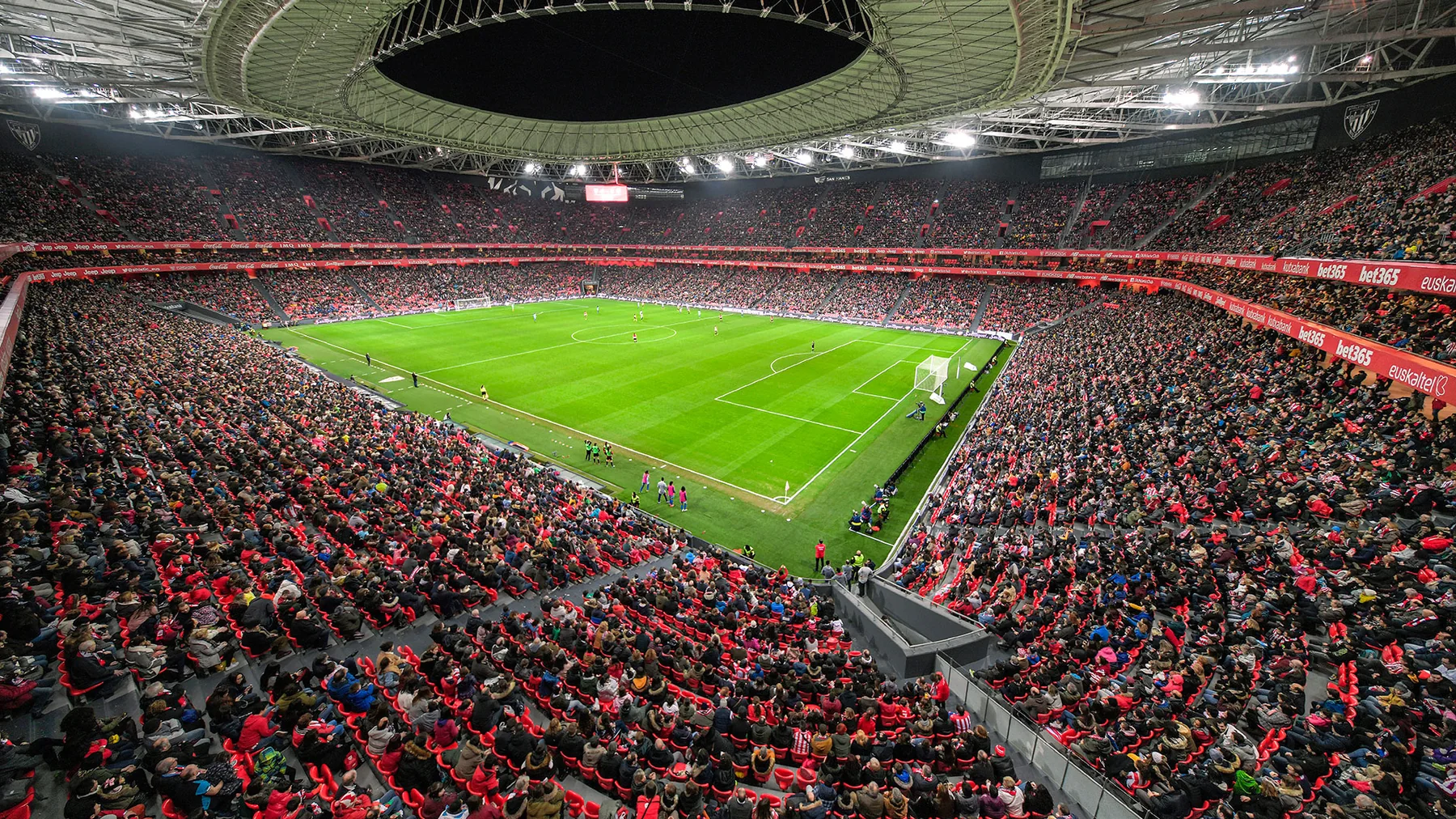
Athletic's eight championships all came by 1983/84, creating the hardest era question near the top. Their case survives because early dominance was enormous and the club have never left the top flight. LALIGA lists four titles before the Civil War, another in 1942/43, the 1955/56 success and Javier Clemente's back-to-back winners in 1982/83 and 1983/84.
Longevity becomes more impressive in the context of Athletic's player philosophy and Lezama academy. It does not earn imaginary bonus trophies, but supplies identity and continuity. Our guide to the clubs never relegated explains more. Athletic edge Valencia because they lead 8–6 and own uninterrupted participation.
5. Valencia
Valencia's six titles came in two genuine golden periods. Three arrived in the 1940s. The second peak ran around the millennium: consecutive Champions League finals in 2000 and 2001, then La Liga wins in 2001/02 and 2003/04 under Rafa Benítez. The 2003/04 side also won the UEFA Cup.
Benítez's team remains one of the strongest challengers to the duopoly in the modern competition. Defensive organisation, midfield balance and collective timing mattered more than one global superstar. Six titles and Mestalla's demanding culture make fifth secure: below Athletic on championships and continuity, above every club with two or fewer titles.
Valencia also demonstrate why a club ranking must outlive current turbulence. A poor recent season does not delete six championships; equally, history cannot earn points in the next match. The all-time placement recognises achievement already secured while leaving today's side to be judged on today's performance.
6. Real Sociedad, 7. Sevilla and 8. Deportivo La Coruña
6. Real Sociedad
Real Sociedad lead this tier because they alone have two championships. Alberto Ormaetxea's team won back-to-back in 1980/81 and 1981/82, surviving final-day tests. Luis Arconada, a locally rooted core and collective defensive confidence made La Real the first half of an extraordinary four-season Basque sequence; Athletic won the next two.
The peak was not purely domestic: Sociedad reached the 1983 European Cup semifinal. Later generations restored regular European qualification and a technical, academy-aware identity. Two titles place them above every one-time champion before secondary criteria enter.
7. Sevilla
Sevilla's league case starts with 1945/46 and long stretches as a substantial top-flight presence. One crown cannot match Sociedad's two, but Sevilla's UEFA Cup/Europa League mastery wins the contest among most one-title clubs. Serial continental success shows specialised recruitment, coaching and knockout expertise across many cycles.
Europe matters only as corroboration. Sevilla repeatedly converted strong Spanish results into qualification, then defeated quality opposition. It does not lift them above six-title Valencia or two-title Sociedad because a tiebreaker cannot overpower the main category.
8. Deportivo La Coruña
Deportivo's case is concentrated and unforgettable. The 1999/2000 winner made A Coruña the home of Spain's first new champion since Athletic in 1984. Javier Irureta's side settled the debt left by near misses: Deportivo had finished second in 1993/94 after losing the crown on a tiebreak and remained near the summit into the new century.
Two Copas del Rey, three Super Cups and a 2004 Champions League semifinal show the title was not a fluke. Sevilla rank higher for a longer institutional run; Deportivo rank above remaining candidates because they won a modern 38-match league and repeatedly returned to the top. Revisit campaigns using our results page rather than nostalgia alone.
9. Real Betis and 10. Villarreal
9. Real Betis
Betis enter because a league title remains the hardest domestic achievement. Patrick O'Connell's 1934/35 side finished one point above Madrid in the old two-points-for-a-win system; a 3–0 victory at Sevilla's Nervión ground was pivotal. Three Copas, a huge supporter culture and recurring attractive sides add depth. Relegations keep Betis below Deportivo and Sevilla; the championship keeps them above the best non-winner.
10. Villarreal
Villarreal are the deliberate exception. They have no title, yet own a 2007/08 runner-up finish, repeated European qualification, Champions League semifinals in 2006 and 2022, and the 2020/21 Europa League. For a club from a city of roughly 50,000, sustaining that ceiling through changing squads is exceptional.
Intelligent trading and coaches capable of organised possession and compact defending made it repeatable. Manuel Pellegrini's teams created the first breakthrough; Marcelino and Unai Emery restored the continental level. The missing championship caps the ranking. Explore current squads in our teams index while judging present performance separately.
The hardest omissions and why the ranking can change
Real Zaragoza are the toughest omission. Six Copas del Rey, the 1995 Cup Winners' Cup and substantial top-flight history make them important. They miss because this method prioritises La Liga: no championship and a long recent top-flight absence weaken the case. A domestic-honours ranking would include them.
Espanyol offer the opposite challenge: enormous longevity, no league crown. LALIGA counted 85 top-flight seasons by 2021. Four Copas and the Barcelona derby matter culturally, yet sustained participation without a title or runner-up peak comparable to Villarreal leaves them outside ten. Celta and Mallorca also own memorable cup and European teams without the decisive league evidence.
Era weighting can move Athletic. Discount early championships and Valencia gains ground; count every official title equally and Athletic's fourth is firm. We do not discount early titles: every rival faced the available rules and environment. Greatness includes dominating the era actually played.
Future results can change the lower order faster than the top. A Villarreal title transforms their case; a sustained Sevilla return strengthens seventh. Moving Madrid or Barcelona requires decades. Treat this as a documented editorial ranking, not an official award, and use the history and records archive to test your preferred weights.
Greatest La Liga teams FAQ
Who is the greatest team in La Liga history?
Real Madrid: 36 championships, first in the historical table and success across multiple dynasties.
Which club is best right now?
That is a live-form question. Check the current table, recent results, injuries and schedule. Barcelona are the latest completed-season champions, not guaranteed to be strongest on a later matchday.
How many clubs have won La Liga?
Nine through 2025/26: Madrid, Barcelona, Atlético, Athletic, Valencia, Sociedad, Deportivo, Sevilla and Betis.
Why are Sevilla only seventh?
Because this is league-first. Their European record lifts them among one-time champions, but Sociedad have two leagues and Valencia six.
What is the difference between greatest club and best team?
A club ranking aggregates generations; a best-team ranking compares individual seasons. The latter might weigh points per game, goal difference, quality of opposition and tactical influence, then ask whether teams from different formats can be compared fairly. A club ranking instead rewards the capacity to rebuild after stars and coaches leave. Famous players explain peaks, but outcomes lead. Pair this list with our top scorers hub for the individual view.
Could a club outside the top ten enter soon?
Yes, although “soon” depends on the evidence. A championship would carry far more weight than one fourth-place finish. Several consecutive European qualifications could also strengthen a non-champion's consistency score. The threshold is high because the present top ten combine either an official league crown or Villarreal's exceptional collection of runner-up and European peaks.
Comments
Sign in with Google to comment. Keep the conversation useful and football-focused. New comments are reviewed before they appear.
Loading comments…