
Pitchwise is set to acquire a 42% stake in Valencia CF, while Meriton remains the majority shareholder and Kiat Lim continues as president. The 23 October 2026 agreement also includes €100 million of new capital. It remains subject to closing conditions, including regulatory approvals; the €1.25 billion enterprise valuation is a separate figure.
Updated 30 October 2026. Here is what the proposal means for control, recruitment, Nou Mestalla and supporters watching for a meaningful change in direction.
What Valencia announced, and what still has to happen
Valencia’s announcement on 23 October 2026 changes the conversation about the club’s future. Pitchwise Holdings has agreed an investment alongside Meriton, the company associated with the Lim family. The proposal brings a substantial new shareholder into a club whose supporters have spent years asking whether ownership decisions match its sporting ambitions. It deserves more careful reading than a headline announcing that Valencia has been sold.
The most useful starting point is the distinction between an agreement and its implementation. The club’s announcement sets out an intended ownership structure and new funding. It also explicitly makes the investment conditional on closing requirements, including regulatory approvals. As of this article’s 30 October cutoff, the evidence reviewed establishes an announced transaction with conditions, rather than a separately confirmed completion notice.
An agreement is different from a completed investment
A supporter does not need to become a corporate lawyer to understand why that final qualification matters. Announcing a deal describes what the parties have agreed to pursue. Closing is the point at which the necessary conditions have been satisfied and the transaction can take effect. A sentence explaining that money will be available for investment should therefore be read alongside the condition attached to the investment itself.
EFE’s account also records that qualification. Headlines sometimes compress the process into a completed sale; the body of an announcement is the better guide to its status. Nothing in that distinction makes the agreement trivial. It simply prevents supporters from counting an approval, a completed cash transfer or a final governance arrangement before those milestones are confirmed.
For fans, three separate questions now have different answers. Has a significant investment been announced? Yes. Does the proposal remove Meriton’s majority? No, according to the stated terms. Has every condition been publicly confirmed as completed? That has not been established here. Keeping those questions separate makes subsequent updates easier to evaluate and avoids turning every delay or board photograph into proof of a completely different deal.
The immediate football test remains the team’s performances. Ownership news does not award league points or settle the next fixture. Follow Valencia’s position through the La Liga table, while assessing the investment through announcements about completion, funding and responsibility. The two stories will interact over time, but they run on different clocks: one changes each matchday, while the other depends on decisions away from the pitch.
Who controls Valencia after a proposed 42% investment?
The central answer is that Meriton is set to remain the majority shareholder, while Kiat Lim stays president. A proposed 42% Pitchwise holding would be significant, but it would not by itself mean that the Lim family’s ownership vehicle has exited. Nor should readers subtract 42 from 100 and automatically assign the whole remainder to Meriton: the headline number is not a complete register of every existing shareholder.
This is why a change in ownership composition and a change in majority control should be discussed separately. A large minority investor can bring influence, expertise and expectations without becoming the majority shareholder. Exactly how that influence works depends on governance arrangements. Supporters should look for clear explanations of who approves budgets and appointments, rather than assuming that the percentage alone answers every operational question.
The people behind Pitchwise
Pitchwise’s own leadership profiles identify Ann Rodriguez and Corey Woolfolk as its general partners. Rodriguez’s background includes sports operations and the development of major sporting organizations. Woolfolk combines professional football experience with business and investment work. Those backgrounds suggest different potential contributions: building commercial operations, understanding football environments and setting a more consistent investment process. Their effectiveness in Valencia must still be demonstrated through decisions.
Forbes reports that the backing includes George Roberts, Henry Kravis and Penner Sports. Support from people associated with famous businesses does not justify calling those businesses the direct owner of Valencia. Likewise, the initials PSG in this context refer to Penner Sports Group; they should not be confused with Paris Saint-Germain. The names explain the consortium’s connections, rather than proving an unlimited spending commitment.
What the public statement does not reveal
The announcement does not publish a full shareholder agreement for supporters to inspect. It does not establish every reserved decision, every voting threshold or an exhaustive division of football responsibilities. There is therefore a limit to what can responsibly be said about how a disagreement would be resolved. Saying that a significant new partner will contribute to the project is justified; inventing specific veto powers or a timetable for a complete takeover is not.
Fans’ concern about continuity is understandable in the context of the club’s longstanding ownership protests. An investor presentation cannot erase that history. A more useful test is whether the new structure makes responsibility easier to identify. When recruitment succeeds or fails, when a key player’s future is decided, or when ticket policy changes, supporters should be able to understand which people made the decision and how it fits the published plan.
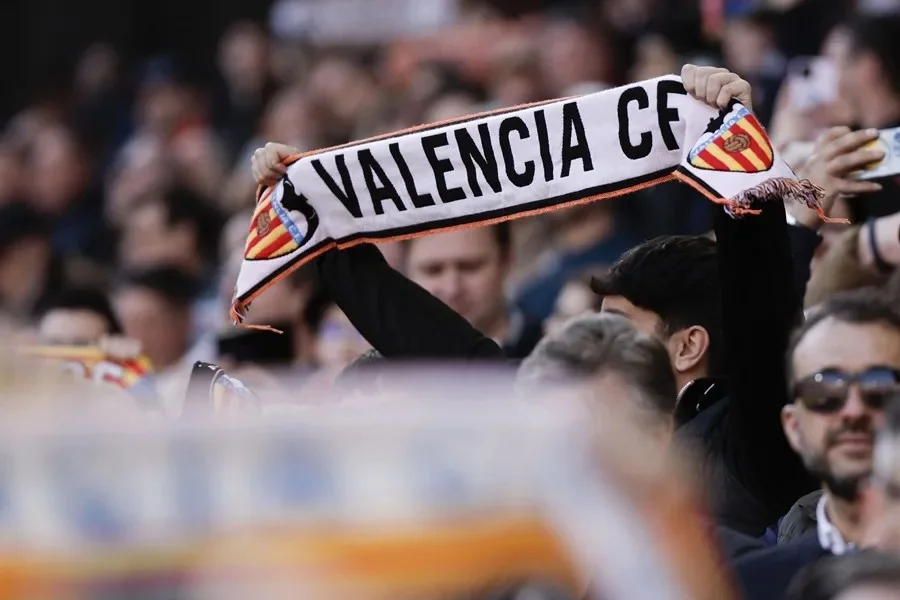
Three different numbers: stake, valuation and new club capital
The deal has produced three large numbers that answer three different questions. Keeping them in separate columns is the easiest way to understand the announcement without accidentally turning the club’s valuation into an available bank balance. Meriton’s legal adviser, Latham & Watkins, describes both the existing-share purchase and the additional capital in its transaction summary.
| Figure | What it describes | What it does not establish |
|---|---|---|
| 42% | Pitchwise’s intended ultimate stake | Every voting right or the exact stake of every other owner |
| €1.25 billion | The announced enterprise valuation | A club cash balance or a transfer allowance |
| €100 million | The announced new capital for investment in Valencia | A promise to spend the entire sum on January signings |
Why €1.25 billion is not Valencia’s transfer budget
Enterprise value describes a business valuation, rather than a payment to the team’s recruitment department. It is different from the value of just the shares and different again from the amount of new money entering the club. Without the relevant transaction adjustments and an agreed breakdown, multiplying the valuation by 42% does not produce a verified purchase price. The public announcement does not disclose the consideration paid to Meriton for its shares.
This matters because a stadium and a football team can support a substantial business valuation while the club still needs to budget carefully. The valuation concerns the wider institution and its assets. It does not mean that the manager can buy players up to that value, or that existing obligations disappear. Fans should be suspicious of any graphic that places the enterprise-value headline next to a list of proposed signings as though the two were interchangeable.
How a share purchase differs from €100 million of new capital
In the basic economic distinction, buying existing shares changes who owns those shares; new capital provides resources to the business. The Valencia proposal includes both elements. They should not be merged into a claim that every euro associated with the transaction will land in the club’s sporting budget. Equally, the new-capital commitment should not disappear from the discussion merely because Meriton also sells shares.
A useful everyday comparison is the difference between buying part of a restaurant from its owner and funding improvements to its kitchen. The first changes ownership; the second can improve the operation. Football adds more complications, including regulation and long contracts, but the central distinction remains helpful. Simpson Thacher’s transaction notice provides a separate adviser’s account of the announced partnership.
For supporters, the next useful disclosure is therefore an allocation plan: how much goes toward sporting needs, facilities and other priorities, and over what period? That question is more informative than guessing at a sale price. Our La Liga squad-cost guide explains another essential distinction: having funds available and having permission to register additional player costs are related, but separate, issues.
What new investment could change on the football side
The most reasonable sporting hope is greater room to make coherent decisions. That might mean strengthening an exposed position, improving facilities used by players, or reducing the need to make a short-term choice for financial reasons. These are possible benefits of investment, rather than confirmed allocations. No responsible assessment can turn the headline commitment into a list of players who have supposedly agreed to join Valencia.
Director general Javier Solís has described both football and infrastructure needs when discussing the money. Mundo Deportivo’s report of his comments makes that split important: the funding has more than one potential use. Investment in the academy or a training environment may be less immediately visible than a striker’s arrival, but it can affect the club’s ability to develop and retain talent.
Registration room must still be established
LaLiga’s squad-cost explanation says that clubs propose their limits and the league’s validation body approves or adjusts them. The system concerns the cost of the sporting squad, rather than simply whether an owner is wealthy. New money can improve a club’s position, but the amount that becomes usable for additional registrations depends on the relevant rules and the club’s circumstances.
A transfer also carries more than its headline fee. Wages and the accounting treatment of acquiring a player influence how expensive a commitment is across a contract. A nominally inexpensive signing may create a substantial recurring obligation; a loan can have costs of its own. Supporters comparing targets should therefore ask whether a player fits the squad and the budget over time, not only whether the announced capital exceeds an advertised price.
That is also why reported estimates of winter spending room should remain estimates until the relevant plans and approvals are established. Even a figure attributed to club calculations is different from a completed signing or a final public league authorization. This article does not convert the commitment into an exact January allowance. The existing salary-cap explainer gives the wider framework without pretending that every club’s confidential calculation is visible.
On the pitch, a sound recruitment process starts with the problem being solved. Does the team need better progression under pressure, more reliable defensive cover or a different attacking option? Those are examples of football questions a technical department should answer before spending. They are not assertions that Valencia has selected a particular target. A credible ownership partnership should make that process more disciplined, rather than encourage expensive moves whose main function is to announce ambition.
Fans can judge the next stage through observable actions: whether the sporting plan is explained, whether contracts fit that plan, and whether resources reach the parts of the club that need them. Meanwhile, the current match schedule remains the guide to the immediate challenge. Investment may change future options; the available squad must still compete in the games already on the calendar.
Nou Mestalla, supporter trust and the milestones to watch
Nou Mestalla is central to the proposed partnership because a stadium changes more than the backdrop to a home game. It affects the number and type of seats, matchday routines, hospitality opportunities and the relationship between regular supporters and the club. Those changes can support future income, but only if they are delivered and operated well. A larger ground alone does not guarantee a stronger football team.
The practical work is already visible in the club’s 28 October update on membership and seat selection. That process concerns how people will attend matches, whereas the investment announcement concerns ownership and resources. Fans should follow both. It is possible to support improvements to the stadium project while still asking difficult questions about affordability, access and the quality of communication during the transition.
Local reporting has also examined the investors’ prospective involvement in decisions concerning Mestalla. Such decisions deserve close attention because land, facilities and football operations are interconnected. Supporters should distinguish an identified option or negotiation from a completed transaction, and ask how major asset decisions contribute to the long-term sporting project rather than treating them as background property news.
A useful set of milestones starts with a clear closing announcement. After that come confirmation of the capital arrangements, an explanation of how responsibilities are divided, and a credible allocation of resources. The next level is sporting execution: coherent recruitment, a workable academy pathway and a relationship between the football leadership and ownership that survives a difficult run of results. These are observable standards, rather than promises of a particular league finish.
- Completion: look for explicit confirmation that conditions have been satisfied, rather than infer it from a headline.
- Governance: identify who takes responsibility for budgets, recruitment and supporter communication.
- Allocation: ask which improvements are funded and what their delivery dates are.
- Supporter experience: judge ticket information, accessibility and the handling of the stadium transition.
- Football progress: follow performances and development decisions over a meaningful period, using the results page alongside the league table.
Trust will not be rebuilt by a single press release, but it need not be measured only through the next expensive signing either. Reliable explanations, consistent priorities and completed commitments are meaningful evidence. The strongest version of this partnership would connect a sustainable football plan with a stadium that remains recognizably Valencia’s home. Until those decisions unfold, the accurate description is a significant proposed minority investment, with Meriton retaining the majority and much of the project’s success still to be earned.
Comments
Sign in with Google to comment. Keep the conversation useful and football-focused. New comments are reviewed before they appear.
Loading comments…