What triggered the latest Valencia protest
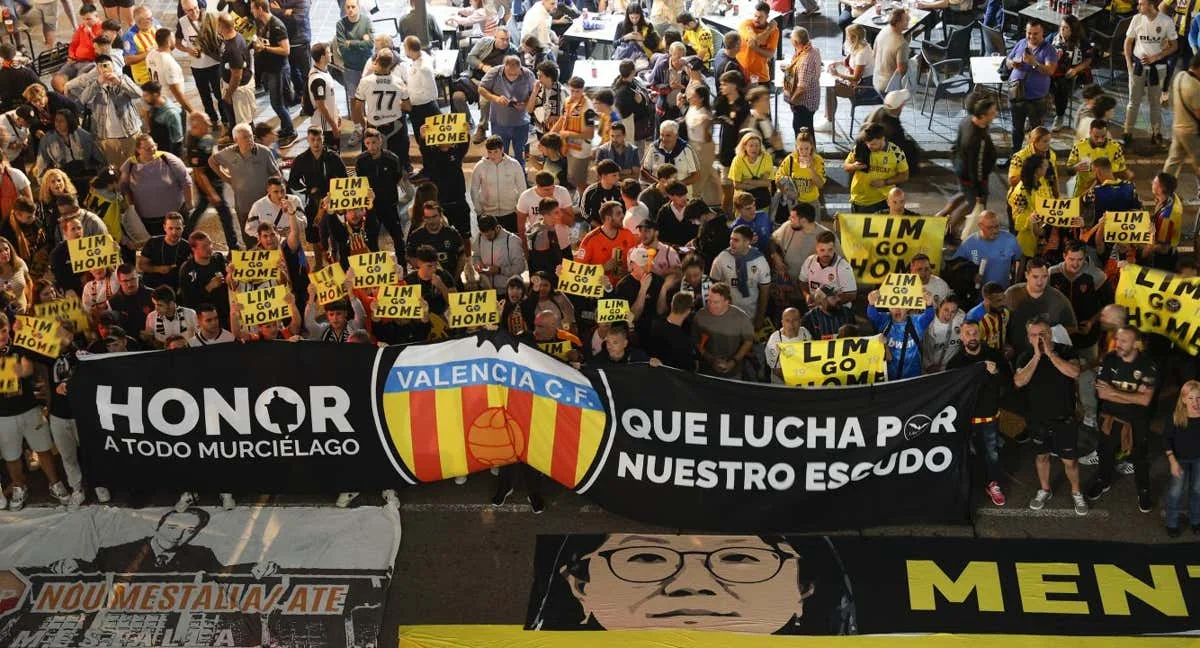
The immediate trigger was a humiliating 5–0 home defeat to Barcelona at Mestalla in September 2026. Supporters did not simply leave at the final whistle. Reports from AP, ESPN and Goal described a confrontation in which anger was directed at the team and at owner Peter Lim, with “mercenaries” among the accusations aimed at players. The result transformed a poor performance into a public judgment on the club’s direction.
The 0–5 defeat and the confrontation at Mestalla
A five-goal home loss to a rival as prominent as Barcelona is emotionally severe at any club. At Valencia, it connected with a decade of grievance. Fans saw a team unable to compete, an ownership they already distrusted and a historic stadium expressing the same frustration. The target was therefore broader than the ninety minutes: the defeat became evidence in an argument supporters believed had been building for years.
It is important to separate verified event from interpretation. The score, the post-match protest and the language reported by major outlets are facts. Claims that every player lacks commitment or that every decision follows one motive are supporter judgments. Some footballers inherited the crisis rather than created it, and public abuse does not explain the structural problem. Yet the intensity reveals how little trust remains between the stands and those representing the club.
The results page records a 0–5. It cannot record what that margin meant at Mestalla. For supporters, it recalled diminished expectations: Valencia once measured seasons through Champions League qualification and trophies, while recent campaigns repeatedly made survival or mid-table stability the urgent objective.
One defeat did not create “Lim Go Home.” It supplied a highly visible moment when sporting humiliation, ownership opposition and anger toward the squad converged. Any explanation beginning and ending with Barcelona’s five goals misses why supporters stayed after the match.
The timing also intensified the message. An early-season collapse removes the comfort of calling the match a tired end-of-campaign accident. It made fans question preparation, squad construction and whether another difficult season was already forming. That fear—not merely embarrassment against Barcelona—turned the final whistle into a demand for answers about the institution.
Why the anger is really about Peter Lim’s ownership
Peter Lim bought Valencia in 2014 with the promise and expectation that new investment could stabilise a heavily indebted club and restore sporting ambition. The relationship deteriorated because many supporters believe control became remote, sporting strategy inconsistent and accountability too weak. “Lim Go Home” is not a reaction invented in 2026; it has been visible at Mestalla across multiple seasons.
From the 2014 takeover to broken trust
The early period included Champions League qualification, and Valencia finished fourth in three of Lim’s first five seasons according to The Independent’s 2024 account. The club also won the 2019 Copa del Rey. Those facts complicate a simple story of uninterrupted failure. The rupture came as successful sporting leadership was dismantled, results declined and fans lost confidence that decisions served a coherent long-term plan.
Previous owners left serious debt and the unfinished stadium problem. Lim did not originate every liability he inherited, and reporting credits his ownership with addressing parts of that debt. Supporters’ complaint is that more than a decade later, inherited difficulty cannot explain every managerial change, recruitment choice or communication failure. Their standard is not merely solvency; it is whether Valencia CF behaves like an ambitious, competently governed football institution.
Distance, decision-making and accountability
Lim’s base in Singapore has become a symbol of distance between owner and city. Physical absence alone does not make ownership ineffective—many clubs are controlled internationally—but it magnifies frustration when local leaders appear unable to explain strategy or act independently. Fans want visible responsibility when sporting plans fail, not another layer of executives through whom authority is difficult to trace.
The reported closeness between Lim and agent Jorge Mendes has also drawn criticism from sections of the support. The concern is less about one transaction than perceived dependency: who defines recruitment, who benefits, and who can be held accountable? These are questions raised by fans and media, not proof that every deal is improper.
Trust breaks cumulatively. A coach departure, player sale or delayed project might be defensible alone. Repetition without a convincing public plan turns each event into confirmation of an existing belief. By 2026, the ownership debate had become the lens through which even a single match disaster was interpreted.
Communication is therefore substantive, not cosmetic. If supporters hear from ownership only during a crisis or through intermediaries, they cannot test promises against a stable strategy. Regular explanations would not make unpopular sales popular, but they would reveal objectives, constraints and responsibility. Silence allows every gap to be filled by the least charitable interpretation.
The sporting decline behind “Lim Go Home”
Valencia’s identity makes mid-table drift feel different from an ordinary rebuilding cycle. The club won La Liga in 2002 and 2004, reached consecutive Champions League finals at the start of the century and remained a credible top-four force much later. Supporters do not expect those achievements automatically to repeat, but they do expect decisions consistent with competing near Spain’s European places.
Coaching turnover and lost Champions League status
Nuno Espírito Santo guided Valencia back into the Champions League before leaving in 2015. Gary Neville’s appointment became an emblem of poor decision-making; The Independent records three wins in 16 league games. Later periods of success did occur, most notably Marcelino’s Copa del Rey-winning team, but the inability to preserve a productive sporting structure deepened mistrust.
Repeated changes force each coach to inherit players selected for another idea. Pressing, possession and counterattacking systems demand different profiles. When recruitment, contracts and academy promotion lack continuity, the squad becomes a collection of compromises. The league position then falls, revenue and attractiveness suffer, and the next rebuild begins with fewer resources. Fans see a cycle rather than one bad appointment.
Why player sales became symbolic
Every football club sells players, and indebted clubs sometimes must. At Valencia, departures came to symbolise an ownership model supporters believed prioritised balancing costs over preserving a competitive core. The criticism intensifies when experienced leaders leave without replacements of similar readiness or when talented academy graduates are viewed chiefly as saleable assets.
Player trading can be responsible if it funds renewal. The question is what follows: Are fees reinvested intelligently? Does the squad retain leadership? Is there a path from academy to first team? Does the coach have time to develop a stable XI? Without credible answers, a sale is interpreted as another reduction in ambition.
The league table is the final public audit. Individual campaigns can be distorted by injuries or close results, but a multi-year absence from expected levels indicates structural weakness. The 0–5 defeat mattered because it compressed that long decline into one scoreboard and one angry night.
Academy success can mask weakness as well as provide hope. A gifted young player may lift the team cheaply, but relying on repeated breakthroughs is not a complete squad plan. Development needs experienced teammates, contract protection and a reason for prospects to believe Valencia can match their ambition. Otherwise each breakthrough restarts the same debate about when the player will be sold.
Nou Mestalla and the unfinished promise
Nou Mestalla is the most visible symbol of Valencia’s unresolved future. Construction began before Peter Lim bought the club, so attributing the project’s origin to him would be wrong. Yet the unfinished structure has remained through his ownership, binding today’s leadership to a problem inherited but still undelivered.
Why the stadium matters beyond construction
A new stadium affects far more than seats. It shapes matchday revenue, hospitality, commercial partnerships, supporter access and the value of the old Mestalla site. Financing one element can depend on another, while agreements with public authorities attach deadlines and community obligations. Delay therefore limits both credibility and the club’s future income plan.
For supporters, exposed concrete became a physical measure of promises. New presentations and revised timelines generate less confidence after years without completion. That does not mean every current construction announcement is false; it means trust must be earned through observable milestones, transparent funding and delivery rather than another launch event.
The club’s official Nou Mestalla materials should be read alongside municipal decisions and actual progress. Capacity, completion date and cost are time-sensitive. Fans should distinguish approved plans from financed work, and financed work from a stadium ready to host a match. The contrast with completed stadium transformations—such as the ongoing return discussed in the Spotify Camp Nou guide—shows why operational milestones matter more than renderings.
Mestalla itself remains emotionally central. A boycott designed to pressure ownership also removes voices from the ground where Valencia’s identity is strongest. Nou Mestalla thus concentrates the movement’s dilemma: supporters want a viable future stadium, but they distrust the authority responsible for delivering it. Concrete progress could rebuild some confidence; another missed promise would deepen the crisis.
The old ground also creates urgency because maintenance, commercial limitations and the value of its land cannot be postponed conceptually forever. Moving too soon without a complete new home is impossible; waiting indefinitely constrains planning. Supporters reasonably ask for a public sequence in which financing, construction, sale arrangements and opening readiness connect rather than appear as isolated announcements.
What the protest movement wants next
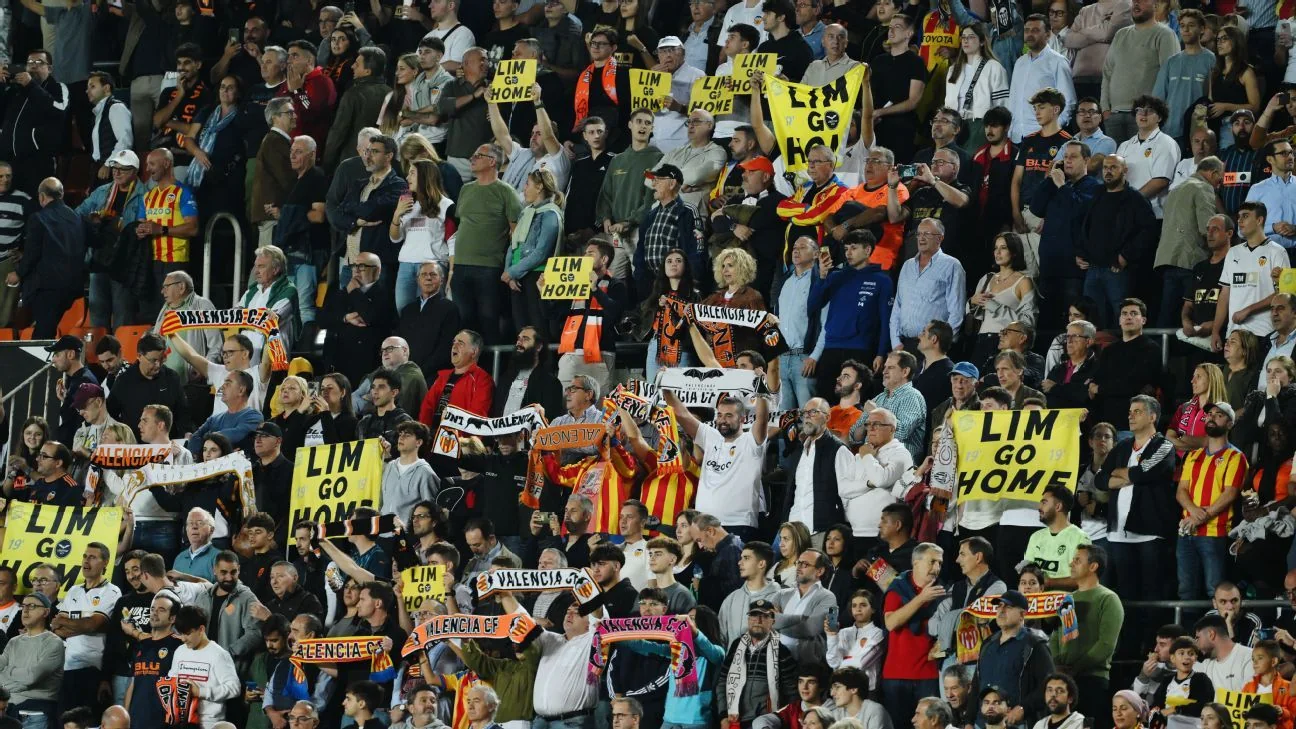
The clearest demand across the long-running movement is ownership change: many organised supporters want Peter Lim to sell. The latest crisis revived calls for stronger pressure, including a radical boycott associated in reports with former Valencia goalkeeper Santiago Cañizares. No public protest, however large, can by itself compel a private owner to accept a sale. Its leverage comes from reputation, commercial pressure and the visibility of an empty or hostile stadium.
Boycott pressure versus supporting the team
Boycott tactics divide supporters who share the same dissatisfaction. Staying away can create a powerful image and deny normal matchday atmosphere. Attending allows fans to support academy players and the badge while protesting ownership through banners and chants. One side fears normal attendance makes the crisis easier to ignore; the other fears abandonment harms the team and weakens the community supporters are trying to protect.
Calling players “mercenaries” demonstrates the emotional break but also risks targeting employees with different levels of responsibility. Senior professionals must answer for performance, yet they do not control ownership, stadium finance or long-term governance. A focused movement gains credibility when it distinguishes poor effort on a particular night from structural decisions made above the dressing room.
What would begin to rebuild trust
A sale is not the only event supporters can measure, even if it remains their preferred outcome. Valencia could publish a stable sporting plan, define executive authority, communicate recruitment priorities, preserve academy pathways and report verifiable Nou Mestalla milestones. Consistent leadership would need to survive more than one transfer window. Independent scrutiny and direct local communication would matter because trust lost over years cannot be repaired by one victory.
Results still matter. A coherent squad competing safely and progressively would give the plan evidence, while another cycle of emergency coaching changes would undermine it. Follow fixtures through the today schedule, but judge reform over seasons rather than a short unbeaten run.
The protest is ultimately about ownership legitimacy in the eyes of a football community. Lim legally controls Valencia; supporters provide its inherited identity, atmosphere and memory. The 0–5 defeat exposed how far those two forms of authority have separated. Until transparent delivery connects them—or ownership changes—the chant is unlikely to disappear.
For neutral readers, that is the essential point. This is not a sudden revolt by fans unable to accept one heavy loss. It is a sustained governance dispute whose latest expression followed an extreme sporting result. Understanding the timeline does not require endorsing every chant; it requires recognising why the same ownership demand survives different coaches, players and seasons.
Comments
Sign in with Google to comment. Keep the conversation useful and football-focused. New comments are reviewed before they appear.
Loading comments…