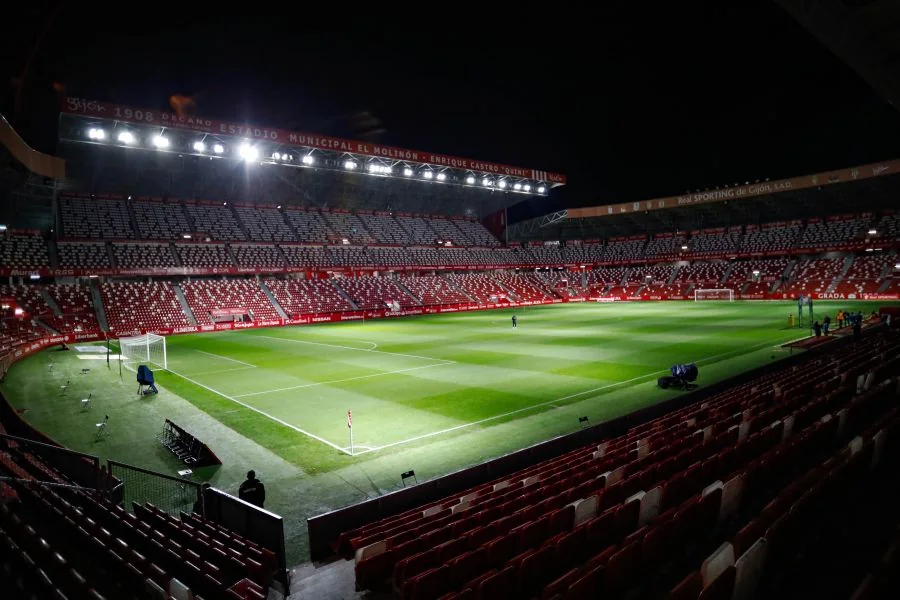
In a completed 38-match La Liga season, Sporting de Gijón’s 13 points in 1997/98 are the low mark under three points for a win. CD Logroñés also finished with 13 in 1994/95, but its wins counted for two points. Here is how those seasons compare with other poor final tables, and how to avoid mistaking a live table for a finished-season record.
Which completed 38-match La Liga season has the lowest points total?
The clean answer needs a denominator. Among completed La Liga seasons with 38 matches, two clubs have finished with 13 points in the official tables: CD Logroñés in 1994/95 and Sporting de Gijón in 1997/98. They did it under different scoring rules. Logroñés played while a win was worth two points, so its two wins and nine draws produced 13. Sporting played after the switch to three points for a win, and its two wins and seven draws also produced 13. Under the modern three-point convention, Sporting is the standout low point in a 38-match season. Recalculating Logroñés's results at three points a win would make 15, but 13 remains its official contemporary table total.
Real Valladolid's 2024/25 campaign is the nearest striking recent comparison in this group: LaLiga itself reported that Valladolid finished last after 38 rounds with 16 points. That is just three more than Sporting's 1997/98 final tally. Yet the two records are not interchangeable. The number of wins, draws, goals scored and goals conceded tells a fuller story, and neither raw total describes an entire club's history. Each figure describes one finished top-flight season.
This guide uses completed 38-match seasons as its main comparison set and states when a two-point table is involved. That choice gives readers a consistent match count and keeps a team with seven games played in the current season out of a list of final records. It is not a claim that no shorter early La Liga season ended with fewer raw points. Spanish top-flight formats changed repeatedly over the decades, so a much shorter campaign creates a different opportunity to earn points. The question worth answering is which fully completed, broadly comparable seasons were exceptionally poor and what the table actually records.
When the term “worst team” appears here, it means an objectively stated single-season measure, primarily final points. It is not a judgment on supporters, the club's historical standing or every player who represented it. A team can have a dreadful campaign and still have significant achievements before and after it. That distinction keeps the answer precise while leaving room to compare other records honestly.
| Club and season | W-D-L | Official points | Win rule |
|---|---|---|---|
| Sporting, 1997/98 | 2-7-29 | 13 | 3 points |
| Logroñés, 1994/95 | 2-9-27 | 13 | 2 points |
| Valladolid, 2024/25 | 4-4-30 | 16 | 3 points |
Sources: 1997/98 final table, 1994/95 final table.
Sporting de Gijón's 13-point season in 1997/98
Sporting de Gijón's 1997/98 final line remains an extraordinary entry in the modern 38-match record. The team finished 20th with 13 points from two wins, seven draws and 29 defeats. Its league goals were 31 scored and 80 conceded, a difference of minus 49. The result was not a narrow miss on survival. Mérida, 19th, finished with 39 points; Oviedo, 18th, had 40; Salamanca, 16th, had 45. Even the next-lowest club was 26 points ahead of Sporting in the final table.
The points arithmetic is simple and useful. Two wins at three points each brought six, and seven draws brought seven more. Over 38 games that is roughly 0.34 points per match, or fewer than one point across every two games. The 29 defeats show how rarely Sporting escaped with any reward. The goals line provides another view: about 0.82 scored and 2.11 conceded per match. Those averages should not be mistaken for a typical individual score, but they convey the imbalance over the full league schedule.
The gap to 19th place matters as much as the ranking itself. A side can finish last on goal difference after a close relegation battle; Sporting's 1997/98 table instead shows a large separation from the teams immediately above it. That does not establish a single cause. A table cannot by itself reveal whether tactical choices, recruitment, injuries, confidence or a difficult sequence of fixtures was decisive. It does establish that the struggle was sustained across the season rather than confined to one poor month.
A fan studying this entry should also remember the club is larger than the entry. Sporting had appeared in the top flight many times before 1997/98, and one season does not erase that history. The accurate record is narrower: in a completed 38-game La Liga season played with three points for a victory, Sporting's 13 points are the low benchmark. Another team may equal the raw figure under a different points system, but its route through wins and draws has to be explained separately. Keeping those limits in view makes the comparison informative instead of a cheap label.
Sources: 1997/98 final table.
CD Logroñés in 1994/95: the same raw total under different rules
CD Logroñés closed 1994/95 with the same raw number seen beside Sporting three years later: 13 points after 38 games. The resemblance ends at the scoring rule. At the time, a victory counted for two points, and Logroñés's record of two wins and nine draws added up to 13. Under a three-point system the identical match results would produce 15. That recalculation does not change the published 1994/95 table; it simply allows a reader to see the effect of the rule before making a modern comparison.
The rest of the final line is stark. Logroñés lost 27 times, scored 15 goals and conceded 79, leaving a goal difference of minus 64. Valladolid, in 19th, earned 25 official points, while Sporting in 18th had 28. The gap from bottom to the club immediately above was 12 points in that year's two-point system. Two wins across 38 fixtures are exactly the same win count Sporting would record in 1997/98, but the draw totals differ: nine for Logroñés, seven for Sporting. Treating both 13s as identical sporting outcomes would hide that difference.
Logroñés's attack offers another clear lens. Fifteen goals over 38 league games is under 0.4 per match. That is fewer than half the 31 Sporting scored in its own 13-point campaign. The goal difference was also 15 worse than Sporting's minus 49. None of these figures by itself measures the quality of every match or the strength of every opponent. Together they show that Logroñés's low total was not merely a quirk of an old points formula; its results and scoring record were severe on several objective measures.
The two-point era is the reason this article keeps Logroñés in view without placing it in a single modern three-point ranking. It is one of the most striking 38-match bottom finishes, and its official tally deserves to be stated accurately. Yet applying the modern rule yields 15, so Sporting's 13 remains lower on the same arithmetic. Readers who see a website claim that the two sides “share the all-time record” should ask what that phrase means. They share a printed final total, not a scoring system. An honest historical comparison can acknowledge both facts at once.
Sources: 1994/95 final table.
Real Valladolid's 16-point season in 2024/25
Real Valladolid's 2024/25 campaign provides a recent reference point for how severe a bottom-place finish can be. LaLiga confirmed that the season was complete after matchday 38 and that Valladolid would go down. The final table shows 16 points, built from four wins and four draws, alongside 30 defeats. Valladolid scored 26 league goals, conceded 90 and ended on a goal difference of minus 64. In a season where a win counted for three points, the arithmetic is 12 from victories plus four from draws.
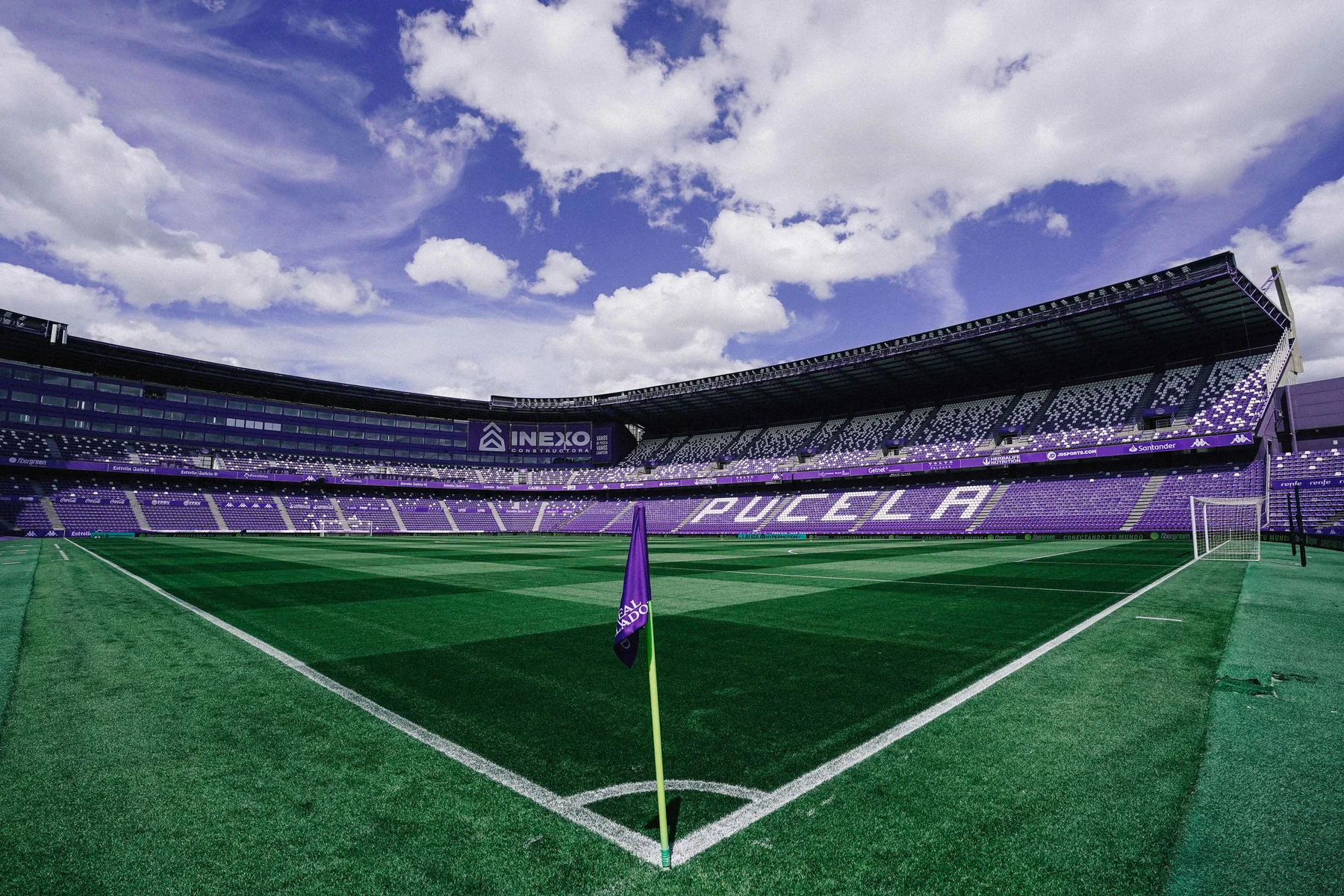
The 16-point tally was three higher than Sporting de Gijón's 1997/98 total, so Valladolid does not displace Sporting as the lowest-scoring team by points in the completed 38-match, three-point group. The comparison is still compelling because 30 losses are even more than Sporting's 29. Valladolid won twice as often as Sporting, but it drew three fewer matches and lost one more. A single number can therefore reverse the reader's impression depending on whether the question is “fewest points” or “most defeats.”
The table also puts the season's isolation in perspective. Las Palmas, immediately above Valladolid in 19th, finished with 32 points, twice Valladolid's total. Leganés in 18th had 40. Relegation was not decided by a tight cluster at the bottom for Valladolid; the final margin to the next club was 16 points. The goals line reinforces the outcome. The team averaged about 0.68 goals scored per match and 2.37 conceded. A minus-64 difference across 38 fixtures is the same numerical goal difference as Logroñés in 1994/95, although the two clubs arrived there through different goals-for and goals-against totals.
It is tempting to use the most recent example as a universal answer to “worst La Liga team.” A cleaner statement is that Valladolid's 2024/25 side was an exceptionally low-scoring modern points team with a 30-defeat final record. It belongs beside Sporting and Logroñés in a discussion of difficult 38-match seasons, but each entry has its own scoring rules and profile. The finished table establishes what happened; it does not, on its own, prove why a team lost so frequently.
Sources: LaLiga relegation report, 2024/25 final table.
Other low totals worth comparing
Sporting, Logroñés and Valladolid are memorable outliers, but several other completed seasons help calibrate what a low La Liga points total looks like. The following examples all ran for 38 matches under three points for a win. They are comparisons, not a claim to list every weak campaign since the competition began. Each finished with a final total in the low twenties, meaning that even a handful of draws or one extra win would change the order.
Granada and Osasuna in 2016/17
Granada finished last in 2016/17 with 20 points: four wins, eight draws and 26 defeats. The club scored 30 and conceded 82, a goal difference of minus 52. Osasuna took 19th with 22 points from four wins, ten draws and 24 defeats. Osasuna scored more frequently, with 40 goals, but also conceded more, with 94. Its goal difference was minus 54, two worse than Granada's despite finishing two points above. The example warns against assuming that the lower points total must also have the worst goal difference.
Both clubs won only four of 38 league matches. Osasuna's extra two draws account exactly for its two-point advantage, because the win counts were equal. Sporting de Gijón, 18th that season, finished on 31 points, so the final table separated the three relegated teams even within the bottom group. Granada's 20 and Osasuna's 22 sit substantially above Sporting's 1997/98 13, but they remain poor full-season returns. Reading all four columns of wins, draws, losses and goals gives much more information than calling either team “the worst.”
The goals conceded line is especially instructive. Osasuna allowed 94, more than the 90 Valladolid conceded in 2024/25, yet Osasuna earned six more points. That combination can happen when a team loses some matches heavily but still collects enough draws and wins elsewhere. A large goals-against number captures defensive outcomes; it does not automatically determine the exact number of league points. The final table documents the relationship here without proving what tactics or personnel produced it.
Almería and Granada in 2023/24
The 2023/24 final table offers a different pairing: Almería and Granada both ended on 21 points. Almería was 19th with three wins, 12 draws and 23 defeats, scoring 43 and conceding 75. Granada was 20th with four wins, nine draws and 25 defeats, scoring 38 and conceding 79. The points formulas are nine plus 12 for Almería and 12 plus nine for Granada. Equal totals came from different mixes of wins and draws, which is why a headline number alone cannot describe each season.
Almería had one fewer victory than Granada but three more draws. It also lost two fewer times and posted a better goal difference, minus 32 compared with Granada's minus 41. Those details explain why the two final lines should be kept separate even though both display 21. Cádiz, the other relegated club, finished with 33 points, and Rayo Vallecano in 17th had 38. Neither 21-point team was one late win away from survival in the completed table.
These pairs help answer a practical question: how much does the point total hide? A 20-, 21- or 22-point season is rare enough to deserve attention, but it may come with different win totals, scoring rates and defensive records. The four examples remain above Sporting's 13 and Valladolid's 16 on the same modern scoring basis. They are useful comparison cases rather than alternative holders of the lowest-point record.
Sources: 2016/17 final table, 2023/24 final table.
Why “worst” depends on the measure
A historical ranking is only as clear as the rule used to build it. “Fewest points” sounds objective, and it is once the competition format and scoring rule are fixed. “Worst team,” by contrast, could mean fewest wins, most losses, fewest goals scored, most goals conceded, worst goal difference or greatest distance from safety. Those measures overlap but do not always produce the same answer. The article's main benchmark is final points from a completed 38-match season, with the scoring era called out explicitly.
Points rules and season length
La Liga's current competition rules set 20 clubs, 38 matchdays and three points for a win, one for a draw and none for a loss. The 1994/95 Logroñés table operated with two points for a win, while Sporting's 1997/98 table used three. Logroñés earned two wins and nine draws, which yielded 13 official points under its era's rule. If those same results are converted to three-point scoring, the club would have 15 points. Sporting's two wins and seven draws produced 13 under the modern rule. The two official totals look equal; the adjusted totals are not.
Re-scoring is an aid to comparison, not a rewrite of history. No match outcome changes, and Logroñés still finished with 13 in the official 1994/95 standings. Nor does the adjustment tell us how a team would have played if the incentives had been different. Coaches and players might have approached a draw differently with an extra point available for a victory. The 15-point figure answers a narrow arithmetic question: what would the recorded wins and draws total under the later formula?
Match count is the second denominator. A club in a shorter historical league season had fewer chances to earn points, so a low raw total from such a season cannot simply be sorted beside Sporting's 38-game figure. Points per match can partly normalize this: Sporting's 13 over 38 is about 0.34, Logroñés's official 13 over 38 is also about 0.34, and its three-point conversion is about 0.39. Even rates need context because opposition, league size and rules varied. A practical historical comparison states the season, match count and scoring rule before displaying a rank.
Wins, goals and goal difference
Wins show another angle. Sporting's 1997/98 and Logroñés's 1994/95 teams each won only twice. Valladolid in 2024/25 won four times yet lost 30, compared with Sporting's 29 defeats. If the measure is sheer number of losses in these examples, Valladolid looks worse; if it is final modern points, Sporting does. Neither interpretation requires guessing at player effort or club management. It requires naming the statistic before making the judgment.
Goals make the contrast sharper. Logroñés scored only 15 in its 38 games, whereas Sporting scored 31. Valladolid conceded 90 in 2024/25, while the 2016/17 Osasuna team conceded 94 but earned 22 points rather than Valladolid's 16. The Valladolid and Logroñés sides each finished at minus 64 goal difference despite appearing three decades apart and operating under different points rules. That shared figure reflects the net gap between goals scored and allowed; it does not make the seasons identical.
Readers can use a short checklist when they see a claim about the “worst” La Liga side: Is the season finished? How many games did each team play? Was a win worth two points or three? Is the claim about points, wins, defeats or goals? Once those questions are answered, the label becomes a testable statement rather than a loose insult. For this article's stated points measure, Sporting's 13 in 1997/98 is the modern 38-match benchmark; for other measures, the reader should consult the relevant final tables before declaring an all-time holder.
Sources: RFEF 2026/27 competition rules.
How to read a current relegation fight against history
A current bottom three can look alarming after only a few rounds, especially when a search result puts its small points total beside historic final tables. The first column to check is matches played. On the research date in September 2026, LaLiga's official 2026/27 standings showed clubs with seven league matches completed; the competition rules call for 38 matchdays. A seven-game total is a snapshot of roughly one fifth of the schedule, not a candidate for a finished-season lowest-points record. The table will change as results arrive.
The quickest comparison is to divide points by games played, while keeping the limitations visible. Suppose a club has five points after ten matches. Its present rate is 0.5 points per game. Multiplying that by 38 yields 19 as a simple pace illustration, but it is not a forecast or a final total. The team could win several games in a row, change its squad, draw more often or fall further behind. Form and fixture difficulty can vary. A projected number tells a fan how poor the start has been on a common denominator; it cannot replace the actual last-day standings.
For the relegation fight itself, compare the club's points to the teams around 17th and 18th and track games played as well as goal difference. The RFEF's 2026/27 rules place the clubs in 18th, 19th and 20th in the relegation positions at the end of the championship. A temporary 18th-place ranking in autumn is an early warning, not a verdict. Follow the live standings alongside recent results and the remaining schedule to see whether the gap is widening or shrinking.
When the season has ended and every club has played its scheduled matches, the final record can be placed in historical context. Before then, use Sporting's 13-point 1997/98 finish, Logroñés's differently scored 13 in 1994/95, and Valladolid's 16 in 2024/25 as completed reference points. Do not put an active team's current points into the same final ranking. That one distinction prevents the most common error in “worst La Liga team” search results and leaves fans with a fairer way to follow a difficult campaign.
Sources: official live standings.
To compare a club in the current season, check the live La Liga table, then review its results and remaining schedule. The historical comparison becomes final only when all scheduled matches are complete.
Comments
Sign in with Google to comment. Keep the conversation useful and football-focused. New comments are reviewed before they appear.
Loading comments…