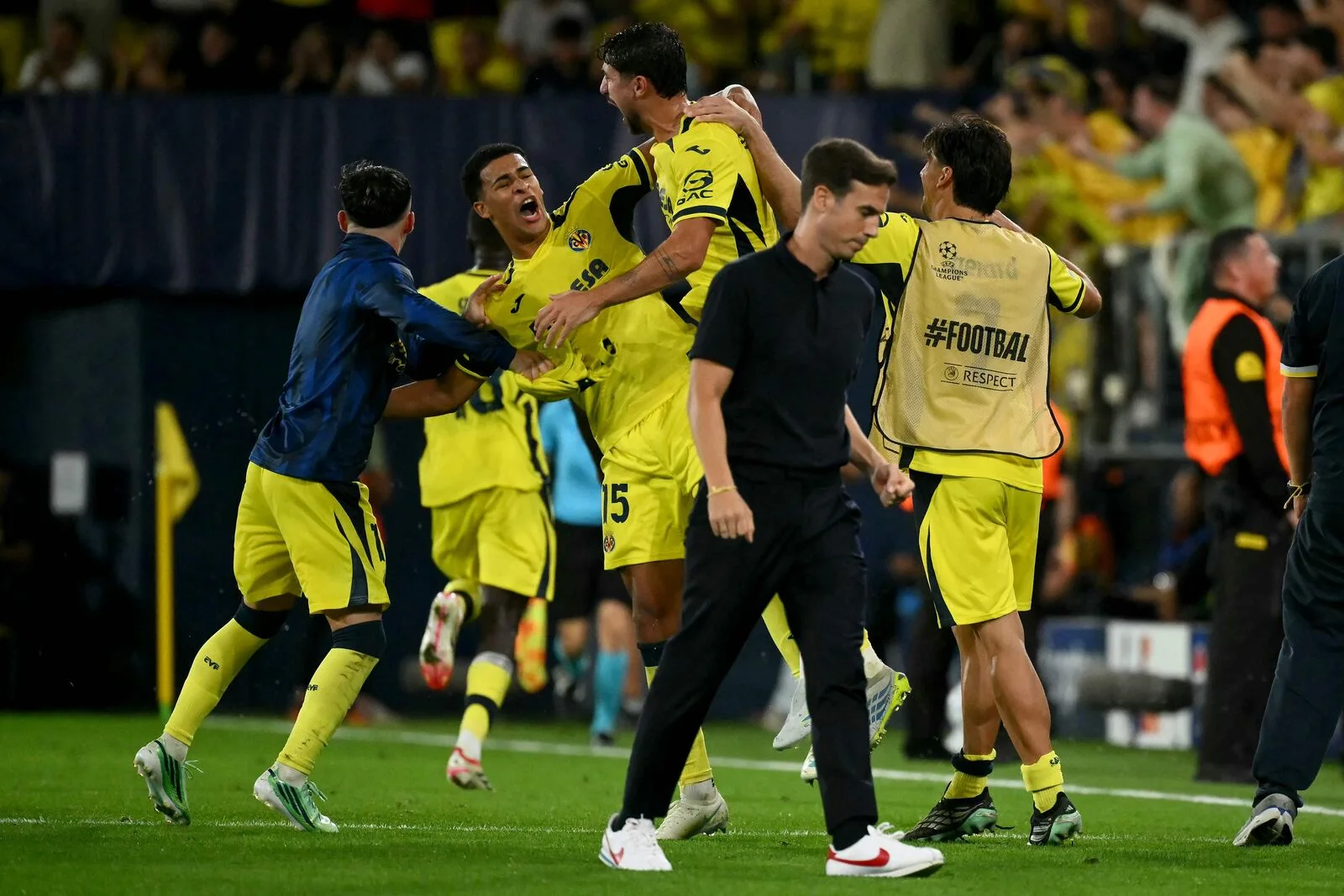
Villarreal’s current squad and shirt numbers
Villarreal’s 2026/27 first-team group contains 24 players, with Iñigo Pérez as head coach and Gerard Moreno wearing number seven. The list below reflects the club’s current player cards, checked on 14 October 2026. It includes the senior goalkeepers, established internationals and academy players who now have first-team numbers.
The positions help identify each player’s usual area of work. Several can move between roles: Buchanan can operate on either flank, while Moleiro can create from a central attacking position or the left. The squad therefore offers more combinations than a single formation drawing would suggest.
Goalkeepers
| Number | Player |
|---|---|
| 1 | Luiz Júnior |
| 13 | Rubén Gómez |
| 25 | Péter Gulácsi |
Defenders
| Number | Player |
|---|---|
| 2 | Logan Costa |
| 3 | Alex Freeman |
| 6 | Pau Navarro |
| 8 | Juan Foyth |
| 12 | Renato Veiga |
| 15 | Santiago Mouriño |
| 20 | Carlos Romero |
| 23 | Sergi Cardona |
Midfielders
| Number | Player |
|---|---|
| 5 | Alassane Diatta |
| 10 | Alberto Moleiro |
| 14 | Santi Comesaña |
| 16 | Carlos Maciá |
| 17 | Tajon Buchanan |
| 18 | Pape Gueye |
| 24 | Nathan Saliba |
Forwards
| Number | Player |
|---|---|
| 7 | Gerard Moreno |
| 9 | Georges Mikautadze |
| 11 | Ilias Akhomach |
| 19 | Nicolas Pépé |
| 21 | Tani Oluwaseyi |
| 22 | Ayoze Pérez |
The official first-team page provides the current shirt-number reference. UEFA’s Champions League registration includes additional academy players beyond this 24-player group. That wider European list and a league matchday selection serve different purposes; the players on the bench for one game will represent only part of the options available across the season.
For supporters learning the team, the numbers make a useful starting point: seven identifies Gerard, nine Mikautadze and ten Moleiro. The sections below explain how the players complement one another. The La Liga teams index supplies the wider club context alongside Villarreal’s league opponents.
Iñigo Pérez and the coaching team
Iñigo Pérez took charge in summer 2026, with Villarreal announcing a three-season agreement until June 2029. He arrived after coaching Rayo Vallecano, where he had previously worked as Andoni Iraola’s assistant before becoming head coach in February 2024. Rayo’s eighth-place league finish in 2024/25 and Conference League final appearance in 2025/26 formed part of the background to his appointment.
Adrián López serves as assistant head coach. Javier Mallo leads fitness work, supported by Fernando Martínez, while Óscar Díaz and Diego Bermúdez are technical assistants. Pepe Alcaide and Pier Luis handle performance analysis. Villarreal’s July staff announcement confirms those appointments and the specialist roles supporting the first team.
Xavier Valero is the goalkeeping coach, with Joel Garzón assisting him. Valero also coordinates goalkeeping methodology across the club. That additional responsibility connects the work around the senior goalkeepers with the development of players coming through the academy, a relevant detail for a squad that includes Rubén Gómez.
The change in approach
At his presentation, Pérez described building on the foundation left by Marcelino rather than starting the team’s development from zero. Villarreal had finished third in the previous league season. His stated challenge included maintaining the team’s identity while balancing domestic football with Champions League demands.
His October preparations for Real Madrid made the intended approach more concrete. In the pre-match press conference, he envisaged pressing high and having spells of control with the ball, while recognising that Madrid would try to attack the space behind Villarreal. Those aims create connected tasks: forwards must apply pressure, midfielders must support them, and defenders must judge when to hold their line or protect depth.
The match ended in a 1-0 defeat. Pérez’s subsequent assessment was that his team had competed well but lacked the finishing touch. That was his evaluation of the performance, separate from the result. For fans assessing this squad, the early question is how its attacking mobility and defensive coverage work together under the new coach, with the quality of chances and final execution still determining whether a promising performance earns points.
Goalkeeping competition and the defensive options
The defensive group combines a new senior goalkeeper, a returning academy graduate and several players capable of covering more than one position. That range matters for Pérez’s approach: a team applying pressure higher up the pitch still needs dependable decisions around its own penalty area and protection when opponents escape the press.
The goalkeeper group
Péter Gulácsi joined from RB Leipzig in August 2026 on a two-season agreement. Villarreal’s signing announcement records 362 appearances over eleven seasons with the German club. At 36, he brings a much longer senior career than the other goalkeepers, including experience of European competition and the Hungary national team.
Luiz Júnior, 25, already had a substantial professional background before arriving in Spain. He made 140 official appearances for Famalicão, according to Villarreal’s biography. The club identifies reflexes and command of his area among his strengths. Gulácsi’s arrival therefore adds an experienced competitor to a department that already contained a goalkeeper with regular first-team football behind him.
Rubén Gómez completes the core first-team goalkeeper list, wearing number 13. The three-player group gives Valero different stages of development to work with. For supporters, the relevant distinction is between the available goalkeeper group and the selection for a particular fixture; the numbers identify the players without deciding the competition between them.
Centre-backs and full-backs
Renato Veiga supplies a left-footed central option. His club profile describes strength in individual duels and the ability to play at left-back or in midfield as well. By this article’s October check, that profile recorded 720 minutes across eight league matches. His presence can provide a left-sided route for building possession, although the direction of any pass still depends on the pressure and the options ahead of him.
Juan Foyth and Santiago Mouriño can both play centrally or at right-back. Logan Costa adds a centre-back whose club biography highlights defensive duels and aerial strength, with Pau Navarro also in the defensive group. That combination offers Pérez ways to alter the back line without treating every defender as an identical replacement.
On the right, Alex Freeman’s profile emphasises athletic power and attacking movement. The United States international arrived from Orlando City after earning the 2025 MLS Young Player of the Year award. His ability to operate further forward on that flank gives the coach an option for adding width and a supporting run outside the attacker.
On the left, Carlos Romero returned after two seasons on loan at Espanyol and renewed his Villarreal contract until 2031. The club’s renewal account confirms both developments. Sergi Cardona provides another left-back option with Las Palmas experience. When either advances, the nearby midfielder and central defender must manage the space behind him; that relationship helps explain how individual attacking qualities fit within the team’s defensive structure.
How the midfield fits together
Villarreal’s central options include Pape Gueye, Santi Comesaña, Nathan Saliba, Carlos Maciá and Alassane Diatta. Their work supports the more advanced creativity of Moleiro and the wide threat of Buchanan. The important relationship is between winning or keeping the ball in the middle and delivering it to players who can advance the attack.
Gueye and Comesaña started together in the opening league fixture at Racing. Gueye’s role extends beyond protecting the defence: he scored a low left-footed shot into the far corner as Villarreal recovered from 2-0 down to draw 2-2. The club’s match account documents that response. His current club profile records three league goals across eight matches, showing an early scoring contribution from a player primarily described as a defensive midfielder.
Saliba adds another way of progressing possession. Villarreal’s August signing announcement emphasises passes through opposition lines and forward runs from deeper positions. He arrived from Anderlecht on a contract until June 2031. The passing quality is relevant when opponents crowd the centre: reaching a teammate beyond the first line of pressure can move the attack into a more dangerous part of the pitch.
Maciá provides an academy-developed option for starting play from deep and recovering possession. The club renewed his contract until 2031 in July, after he had already made his first-team debut during the previous season. He turned 18 in September. Diatta, meanwhile, brings a left-footed passing option and the physical presence described in his club biography. Their inclusion supplies genuine central alternatives alongside the more experienced players.
Moleiro’s principal qualities lie further forward. His close control, vision and dribbling can help him receive between lines or work from the left. That makes his relationship with the central midfielders significant: someone must connect him with possession, while others remain in position to respond if the ball is lost. His number-ten shirt identifies the player, but his movement can take him into several attacking spaces.
The Racing comeback illustrates that this balance has several forms. Gueye’s goal came from midfield, while Pépé supplied the other finish from the attacking group. Keeping central protection and creating forward momentum are therefore shared tasks, with the exact distribution changing according to who starts and how the opponents defend.
Gerard Moreno and Villarreal’s attacking choices
Gerard Moreno remains the central leadership figure in an attack with several different profiles. His finishing and combination play sit alongside Mikautadze’s close control, Ayoze’s movement, Oluwaseyi’s runs into space and the threat supplied by the wide players. The challenge for Pérez is to connect those qualities within a coherent attack.
The captain and the central forwards
Gerard heads a six-player captaincy group that also contains Juan Foyth, Santi Comesaña, Ayoze Pérez, Sergi Cardona and Logan Costa. The August announcement was reported by EFE and AS. Leadership responsibilities therefore extend across the defence, midfield and attack, rather than resting on the availability of a single player.
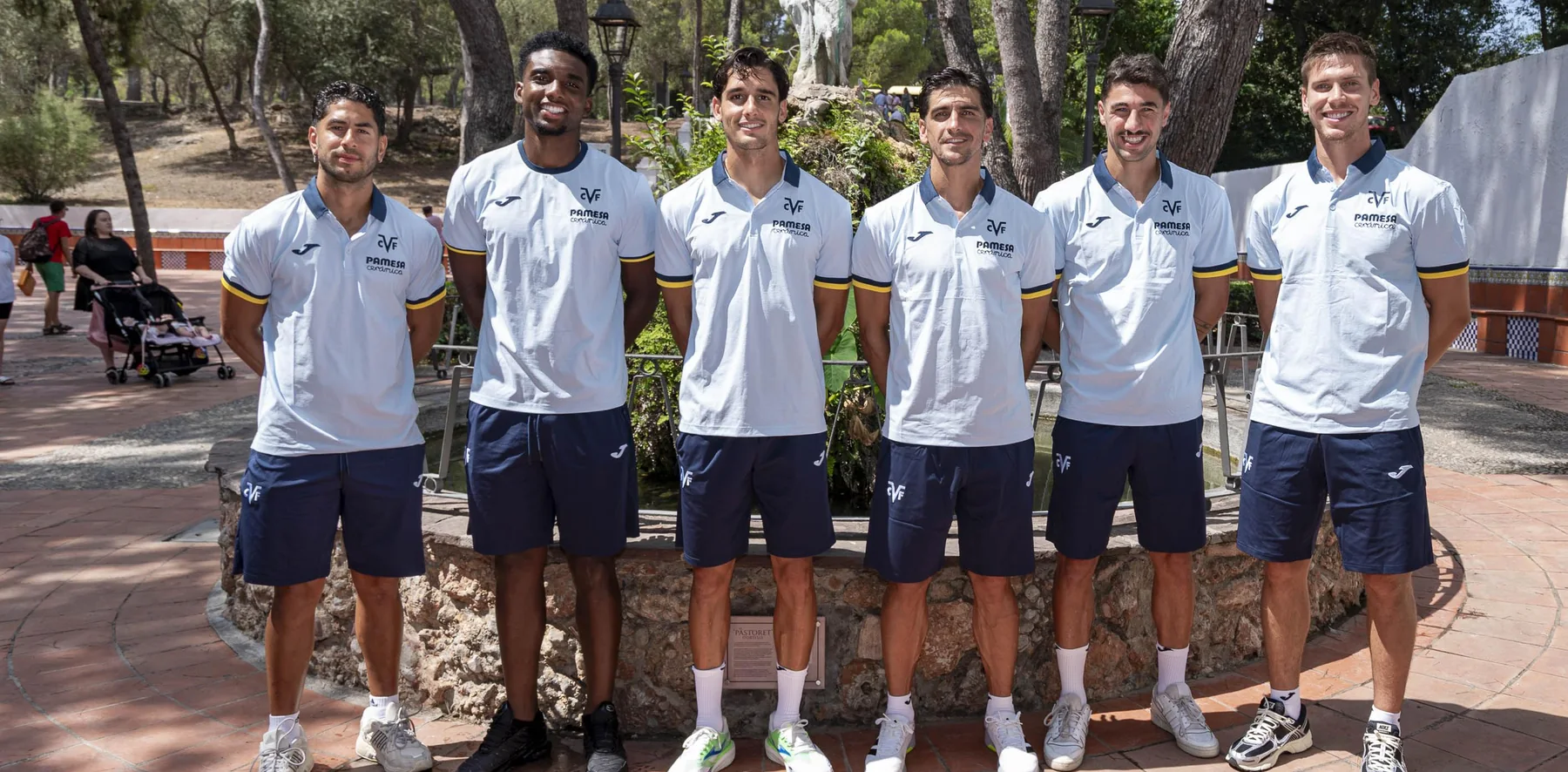
Gerard’s left-footed finishing remains part of his identity, but his club biography also emphasises linking with teammates. His history includes scoring in Villarreal’s victorious 2021 Europa League final. Those qualities make him relevant both as a scoring option and as a player who can connect an attacking move before the final shot.
Mikautadze can play as a central striker or from the left, with vision and ball control among the attributes highlighted by the club. Ayoze offers another mobile forward, capable of working as a striker, behind the striker or moving inside from the left. Oluwaseyi provides physical power, aerial ability and speed when attacking space. The range allows changes in the type of threat, rather than simply replacing one forward with a similar player.
Width and different routes to goal
Pépé adds left-footed dribbling and pace, while Ilias brings technical quality in the final third. Buchanan can contribute from either flank and also cover at right-back. Their movement can stretch the opposing defence and create the space that the central attackers or Moleiro need to receive the ball.
The 3-1 league victory over Levante on 20 September offers a concrete example of those connections. Moleiro’s through ball supplied Ayoze’s opening goal. Ilias then provided the pass for Moleiro to restore the lead after Levante had equalised. In the closing stages, another Moleiro through ball reached Mikautadze, who finished with his left foot. La Liga’s match record documents all three goals and their providers.
Mikautadze had entered for Ayoze in the 67th minute before scoring in the 86th. That sequence shows how the bench could change the finishing option while preserving the connection with the creator behind him. It is a useful illustration of the squad’s attacking depth: a starting forward scored, a creative midfielder scored and supplied, and a substitute striker completed the result.
New arrivals, academy players and the season ahead
Summer additions and departures
Villarreal’s summer brought targeted additions alongside a substantial existing core. Gulácsi joined from Leipzig on a two-season agreement, while Saliba signed from Anderlecht until 2031. Those arrivals address different needs: an experienced goalkeeper and a midfielder capable of helping the team advance possession. Carlos Romero’s return after his Espanyol loan spells also adds a familiar left-sided option rather than requiring the club to recruit an entirely new player for that role.
The goalkeeper changes explain several differences from older squad lists. Villarreal announced Diego Conde’s loan to Real Betis on 20 July and Arnau Tenas’s loan to Mallorca on 25 July, both for 2026/27. Consequently, their continued association with Villarreal through a loan agreement does not make them members of the current matchday goalkeeper group. Júnior, Gómez and Gulácsi are the names to identify on this season’s first-team page.
Academy progression is another part of the refresh. AS’s September account identifies Rubén Gómez, Alassane Diatta and Carlos Maciá as players moving from the B-team environment into the first team. Maciá turned 18 on 1 September and now wears 16, with Diatta taking 5 and Gómez 13. Their development gives Pérez options within the club’s own pathway, although promotion alone does not establish how many league starts any of them will receive.
Domestic and European demands
The clearest recent illustration of the squad’s different contributions came against Napoli on 13 October. Villarreal recovered from an early deficit to win 3–1 at La Cerámica, with goals from Mikautadze, Mouriño and Oluwaseyi. Mikautadze punished an inaccurate backpass; Mouriño drove forward and struck from outside the area. Oluwaseyi then supplied the late finish. The win opened Villarreal’s points account following the earlier 3–2 defeat at Borussia Dortmund.
That match also showed why the list of alternatives matters. Pérez introduced Oluwaseyi, Freeman and Foyth during the second half, bringing fresh attacking movement and defensive options into a contest that remained close. A centre-back scoring and a substitute finishing the closing goal make a useful snapshot of shared responsibility. My reading is that Villarreal’s ceiling depends on contributions across these roles, rather than on expecting the captain or one striker to decide every tight match.
Alongside La Liga and the Champions League, the Copa del Rey adds a different test. Villarreal were drawn away to CD Manacor in a single-match opening tie. Such games can offer opportunities to other squad members, but selection belongs to Pérez and an away knockout match still has to be won. Follow the league table for the domestic stakes and the current La Liga schedule for upcoming league assignments. The useful way to follow this squad is to connect each player’s role with the next opponent and the competition, keeping the current shirt-number list as the starting point.
Comments
Sign in with Google to comment. Keep the conversation useful and football-focused. New comments are reviewed before they appear.
Loading comments…