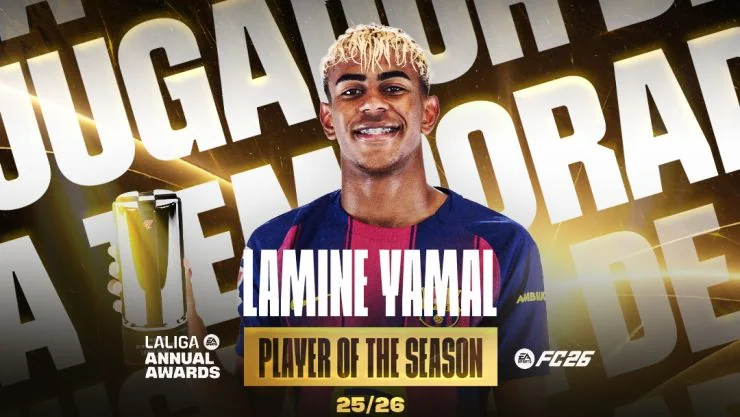
Lionel Messi dominates the history of La Liga’s best-player recognition, but the complete story is more complicated than one neat winners list. The official league awards began with the 2008/09 season, later changed branding and presentation, and coexist with respected media prizes such as Marca’s Alfredo Di Stéfano Trophy. This guide labels those differences, lists the league-era winners, and explains what made each profile valuable to football supporters rather than simply repeating names.
First, define which La Liga player award we mean
“La Liga Player of the Season” sounds like one trophy with an unbroken history, but Spanish football has used several overlapping honours. For this guide, the main list follows the league-organised best-player or player-of-the-season award, beginning with the official LFP awards for 2008/09 and continuing through the modern LaLiga EA SPORTS presentation. Where branding or continuity changes, the table says so instead of quietly substituting a newspaper prize.
The distinction is essential because the Alfredo Di Stéfano Trophy often appears in search results under the same English phrase. That award was presented by the newspaper Marca, not by LaLiga. It has honoured outstanding players and is perfectly legitimate, but it represents a different selection process. Real Madrid’s own annual report, for example, describes Karim Benzema’s 2019/20 Di Stéfano Trophy explicitly as Marca’s award for the league’s best player.
The Don Balón awards create another source of confusion. They pre-date the official league awards and were associated with a football publication. A page that starts its “La Liga player of the year” list in the 1970s is probably combining or following that media honour, not showing official LaLiga winners from an era when the competition did not yet present this prize. The Pichichi, meanwhile, is a goalscoring award; it answers who scored most league goals, not who delivered the best all-round season.
LaLiga’s own records place the first LFP ceremony in October 2009, reviewing the 2008/09 campaign. Active players chose the best player and best coach. By the event for 2012/13, LaLiga described the gala as its fifth edition, confirming the sequence. Later, names, sponsors, categories and selection methods evolved. “Best Player,” “MVP” and “Player of the Season” can describe related league recognition without proving that every intervening year used identical rules.
That means a careful list can be less visually tidy than a viral graphic. It may contain an era break where no directly comparable official season award was presented or readily documented. This is a strength, not a weakness. Fans deserve to know whether they are comparing votes by players, a league-branded panel/fan process or a newspaper jury. For a separate objective measure, our La Liga top scorers page tracks goals and assists; this article focuses on the broader and necessarily judged idea of the season’s best player.
The original official awards, 2008/09 to 2015/16
The original official run covered eight seasons and was overwhelmingly defined by Lionel Messi. He won the best-player honour for each campaign from 2008/09 through 2012/13, regained it in 2014/15, and therefore took six of the first eight awards. Cristiano Ronaldo broke the streak in 2013/14, while Antoine Griezmann won for 2015/16.
| Season | Official best player | Club | Season lens |
|---|---|---|---|
| 2008/09 | Lionel Messi | Barcelona | Creative scorer in a treble-winning attack |
| 2009/10 | Lionel Messi | Barcelona | Goals and centrality as Barça retained the league |
| 2010/11 | Lionel Messi | Barcelona | Chance creation, pressing and scoring in an elite collective |
| 2011/12 | Lionel Messi | Barcelona | A record 50-goal league campaign despite Madrid’s title |
| 2012/13 | Lionel Messi | Barcelona | 46 league goals as Barça reached 100 points |
| 2013/14 | Cristiano Ronaldo | Real Madrid | Elite scoring and all-round attacking threat |
| 2014/15 | Lionel Messi | Barcelona | Creator and finisher in a transformed front three |
| 2015/16 | Antoine Griezmann | Atlético Madrid | Two-way attacking leadership in a title challenge |
Messi’s 2011/12 award is the clearest proof that this was not simply “best player on the champions.” Real Madrid won the league, but Messi scored 50 league goals, a total so extreme that it commanded individual recognition. His game was never just finishing: dropping between lines, carrying through pressure and creating for teammates made him the tactical centre of Barcelona. The award captured influence that a champions-only rule would miss.
Cristiano’s 2013/14 win likewise reflected more than his starting position on the left. By then he had become a devastating penalty-box attacker without losing his threat in transition or from distance. His movement forced defensive lines to retreat, opened lanes for teammates and allowed Madrid to attack with extraordinary vertical speed. Atlético won that league, another indication that voters could separate the season’s strongest individual from the title-winning collective.
Griezmann’s 2015/16 victory was even more instructive. Barcelona were champions and Messi remained the official best forward, yet Griezmann took Best Player. Under Diego Simeone, he linked midfield and attack, supplied goals and participated in Atlético’s defensive structure. His value appeared in actions that raw scoring lists underweight: pressing triggers, counterattacking decisions and the ability to make a low-volume attack dangerous.
The original awards therefore rewarded different types of dominance. Messi’s control of matches, Ronaldo’s overwhelming production and Griezmann’s tactical completeness could all win. Fans revisiting these seasons should pair the award list with completed La Liga results, because title races and decisive fixtures explain why the same numbers can feel more or less valuable in different campaigns.
Messi’s dominance and the MVP years, 2016/17 to 2018/19
From 2016/17 through 2018/19, historical award registers list Lionel Messi as the league’s leading player or MVP in all three seasons. This stretch should be labelled separately because the presentation was no longer the same broad LFP gala that concluded with 2015/16. Recognition appeared through changing league-branded formats and partner events. The football conclusion is clear; the ceremony history is less uniform.
| Season | Recorded league best player / MVP | Club | Key league context |
|---|---|---|---|
| 2016/17 | Lionel Messi | Barcelona | 37 league goals; Real Madrid won the title |
| 2017/18 | Lionel Messi | Barcelona | 34 goals as Barça won with only one defeat |
| 2018/19 | Lionel Messi | Barcelona | 36 goals and 15 assists in another title season |
The first season shows why individual evaluation must remain independent from the champion. Madrid had the deeper title-winning run-in, but Messi finished as the league’s leading scorer with 37. He was Barcelona’s primary creator as well as their most reliable finisher. Defenders could deny his left-footed shooting lane and still be beaten by a disguised pass; sit deeper to close the pass and he could carry into range. The award recognised the scale of an individual season even when the collective finished second.
In 2017/18, Barcelona regained control of the championship and came within one match of an unbeaten league campaign. Messi’s influence was increasingly orchestral. He could begin on the right, move into the number-ten space, or drop alongside midfield to dictate the next phase. AS later reported Javier Tebas presenting him with LaLiga’s 2017/18 MVP recognition. The setting differed from the old LFP gala, but the league connection was explicit.
The 2018/19 campaign may be the strongest illustration of late-prime Messi as an entire attacking system. LaLiga’s own season review credits him with 36 goals and 15 assists. Those numbers captured both sides of the dilemma he posed: step out to stop his creation and leave space behind; stay compact and allow him to receive between lines. Barcelona won the league again, while Messi led the competition in scoring and chance creation.
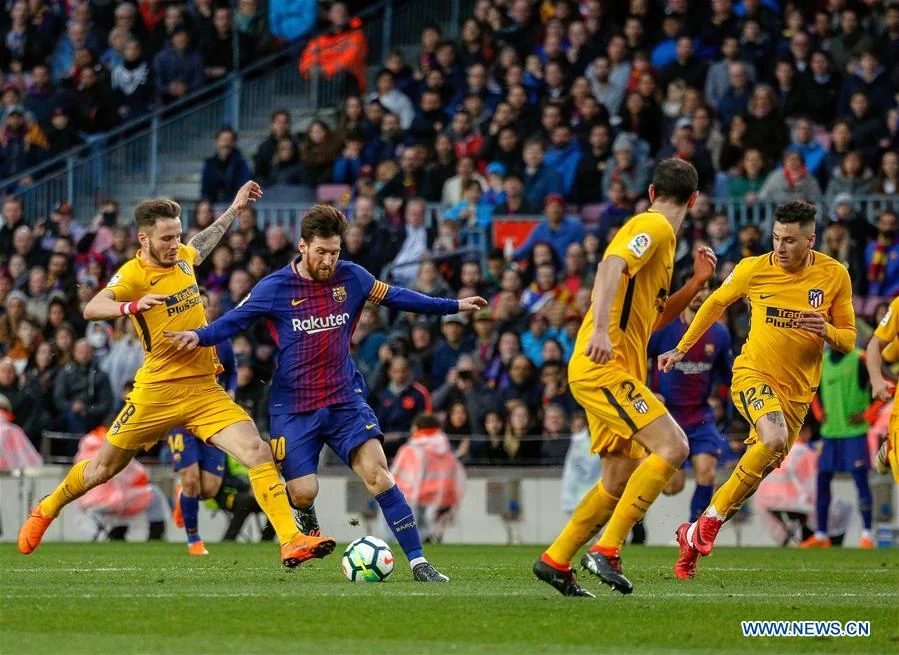
Across the first eleven recorded seasons from 2008/09 to 2018/19, Messi took nine best-player/MVP recognitions. Yet the useful story is not the total alone. He won as a right-sided attacker, false nine, central creator and deeper playmaker; for champions and for a runner-up. Fans can use the La Liga table to understand team outcomes, then read these awards as evidence of how one player’s individual influence could survive repeated tactical reinvention.
The modern Player of the Season winners, 2021/22 to 2025/26
The clearest bridge into the modern awards is Jan Oblak in 2020/21. Atlético’s official announcement says LaLiga named him the season MVP after a title-winning campaign in which he kept 18 clean sheets and conceded 25 goals. A goalkeeper winning matters: it signals that prevention, high-leverage saves and security across 38 matches can outweigh the glamour of an attacker’s totals.
For 2019/20, Karim Benzema won Marca’s Alfredo Di Stéfano Trophy. Because that is a separate media award, this guide does not silently present it as the same LaLiga-organised trophy. Benzema appears in the league best-player sequence for 2021/22, when the distinction fits a dominant championship: he led the league scoring race, acted as Madrid’s attacking reference and connected midfield runners rather than behaving as a penalty-box-only number nine.
| Season | League best player / Player of the Season | Club | Why the profile mattered |
|---|---|---|---|
| 2020/21 | Jan Oblak | Atlético Madrid | Title-winning goalkeeper with 18 clean sheets |
| 2021/22 | Karim Benzema | Real Madrid | Top scorer, connector and leader of the champions |
| 2022/23 | Marc-André ter Stegen | Barcelona | Goalkeeper central to an exceptional defensive season |
| 2023/24 | Jude Bellingham | Real Madrid | Midfield arrival whose goals repeatedly changed matches |
| 2024/25 | Raphinha | Barcelona | Relentless running, creation and end product in a title team |
| 2025/26 | Lamine Yamal | Barcelona | One-versus-one threat and creative responsibility at a remarkable age |
Ter Stegen’s 2022/23 recognition made it two goalkeepers in three seasons. Barcelona’s defensive record was collective—compact rest defence, improved control and committed centre-backs all mattered—but the goalkeeper turned difficult moments into clean sheets. His distribution also changed how opponents pressed. Rewarding him acknowledged that a goalkeeper can influence both ends of a possession game.
Bellingham offered the opposite kind of novelty in 2023/24. LaLiga’s official award announcement named him Best Player after his first season in Spain. He arrived as a midfielder, played high between the lines and repeatedly entered the box at exactly the moment defenders lost track of him. His goals were not ornamental additions to a finished title race; many altered close games while Madrid’s new attacking structure settled.
Raphinha won the official 2024/25 award from a finalist field that included teammates and major Madrid stars. His case combined output with the work that makes aggressive football function: pressing, repeated sprints, direct runs behind the line and chances created after regains. In 2025/26, Lamine Yamal became the official winner. His left-footed creation from the right, ability to beat a set defender and comfort carrying a huge share of Barcelona’s attacking imagination made the award more than a celebration of youth.
The sequence shows why supporters should not reduce “best player” to the Golden Boot. Two goalkeepers, a centre-forward who organised attacks, a goal-scoring midfielder, a high-work-rate winger and a teenage creator can all be the league’s defining player. Use the final La Liga table to see the collective outcomes, then judge whether the winner’s role explains how those outcomes were achieved.
What the winners tell us about how La Liga values greatness
The winner is not produced by one permanent equation. The inaugural LFP best player was chosen by active footballers, while LaLiga says the 2023/24 annual awards combined voting from fans, club captains and an expert committee. Sponsors and category structures also changed. Comparing eras therefore requires modesty: the name at the top is meaningful, but the electorate and framing around that name are not identical.
Modern mixed voting has useful checks and tensions. Captains understand which opponents are hardest to control on the pitch. Experts can value tactical responsibilities that highlight reels miss. Fans bring the emotional memory of decisive goals and standout performances, but larger supporter bases can also mobilise more votes. Combining groups aims to balance those perspectives; it does not remove subjectivity.
A five-part way to judge any winner
- Production: goals, assists, saves, progression and chance creation appropriate to the position.
- Tactical responsibility: how much of the team’s structure depends on the player.
- Decisive moments: performances in tight matches, title pressure and major fixtures.
- Availability: sustained influence across the campaign rather than a spectacular short burst.
- Team outcome: titles matter, but they should contextualise individual quality rather than automatically decide it.
This framework explains both recurring patterns and surprising winners. Attackers dominate because goals and creation are visible, measurable and often decisive. Messi’s record is exceptional because he led both categories at once. Yet Oblak and ter Stegen show that a goalkeeper can become the clearest explanation for a champion’s consistency. Bellingham demonstrates the premium placed on important goals from a role not traditionally expected to provide them. Raphinha’s recognition rewards repeatable intensity as well as final actions.
The winners also remind us not to judge old seasons through later reputation. A famous player’s career peak may have come outside Spain, while a less globally celebrated rival may have been more influential over those particular 38 matches. Griezmann in 2015/16 is a good example: the award describes his league campaign, not an all-time ranking against Messi and Ronaldo. Awards should preserve seasonal memory rather than flatten every debate into career greatness.
For the same reason, the current winner should not be treated as an objective answer beyond discussion. Football roles are interdependent, public metrics remain incomplete, and voters value different things. The productive fan argument begins after the list: which matches changed the race, what problem did the player solve, and could his team function the same way without him? Revisit those games through the results archive, use the seasonal context, and the award becomes a route into understanding football rather than merely another trophy count.
Comments
Sign in with Google to comment. Keep the conversation useful and football-focused. New comments are reviewed before they appear.
Loading comments…