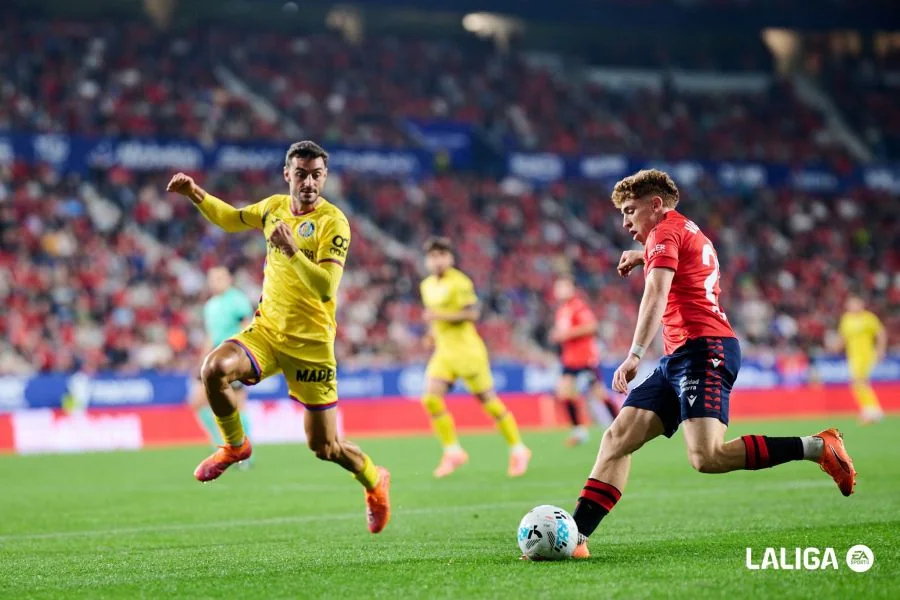
In a La Liga match, MVP means the player judged most valuable in that particular game. LaLiga has used the term in reports about individual fixtures, but available public information does not establish one universal 2026/27 selection rule for every match. Use the fixture, award title and named source to identify a winner accurately.
What does “La Liga match MVP” mean?
“MVP” means most valuable player. In a La Liga match discussion, it points to the player judged to have made the most important overall contribution to one specific game. English coverage may say “player of the match” or “man of the match”; Spanish coverage often uses “MVP del partido” or “mejor jugador del partido.” The phrase answers a narrow question about a single fixture. It does not mean the player leads the league, won the game alone, or received LaLiga's Player of the Month award.
The label is real in LaLiga's own editorial coverage. An official 2025 article about goalkeeper Joan Garcia's Save of the Month calls him the MVP of a Rayo Vallecano–Barcelona match. A 2023 LaLiga article about Memphis Depay's Goal of the Month says his display against Granada earned him MVP of the Match. These examples show how the league uses match-level language. They do not, by themselves, document one permanent 2026/27 voting system that covers every fixture. A reader should therefore look at the source attached to any specific winner rather than treating the letters MVP as a complete attribution.
A match MVP can play for the team that wins, draws or loses. A keeper who preserves a point with several decisive saves may have as strong a case as the scorer at the other end. A midfielder who controls the tempo and creates the decisive chance may be overlooked by a simple goals list. Equally, a spectacular individual action does not automatically make its creator the most influential player across 90 minutes. The match and the selection method matter.
If a post says “La Liga MVP” without a date or fixture, its meaning is incomplete. It may refer to one match, a matchday, a month or a season-long award. To make the claim useful, identify the teams, the match date, the exact award title and the organization or broadcaster naming the player. Those details also let a fan find the result and judge whether the performance description fits the game. This guide focuses on single-match MVP claims and explains where official evidence stops.
Sources: LaLiga Joan Garcia report, LaLiga Memphis Depay report.
Is there an official MVP for every 2026/27 La Liga match?
The safest answer is specific. LaLiga has called individual players match MVPs in its own published stories, but a public first-party rule page establishing one universal MVP selection system for every 2026/27 La Liga EA SPORTS fixture was not found in research on 29 September 2026. That means a reader can confidently say the term appears in league coverage; a reader should not assume that every match claim shares the same selector, sponsor, vote or archive. This is a limit of the publicly verified evidence, not proof that no match recognition exists.
The distinction matters because several nearby labels coexist. LaLiga's Joan Garcia story says he was MVP of the Rayo Vallecano–Barcelona match, while its Memphis Depay story uses “MVP of the Match” for his performance against Granada. Both are concrete examples tied to fixtures. Neither article supplies a general 2026/27 rulebook explaining who chooses a winner after all 380 top-flight fixtures. A fan looking for a player in one game can use a report as evidence for that game without extrapolating a competition-wide selection method.
Sponsorship can also be misread. LaLiga's current sponsors page lists Mahou as a global sponsor and EA SPORTS as its principal sponsor. It does not say in that listing that Mahou chooses every match MVP, that fans vote for every one, or that a particular graphic equals an official league award. An association between a brand and football coverage may be relevant to a specific presentation, but the award mechanism needs its own source. An older sponsor arrangement or a social post is not a substitute for a current rule.
By contrast, the league gives a clearly titled, documented Player of the Month prize. Its September 2026 report named Raphinha the August winner and described a final vote against named nominees. That is useful evidence for a monthly award, not for a match MVP. A player might win a monthly prize after several games and still have no documented match MVP for the fixture someone asks about.
If a specific broadcaster, club or sponsor names a player of the match, report the attribution plainly: “Club X named Player Y its MVP for this fixture” or “the broadcaster's player of the match was Player Y.” If a first-party LaLiga page makes the claim, say that LaLiga called the player MVP in that report. This phrasing preserves what the evidence actually supports and leaves room for different outlets to choose different players after the same game.
Sources: LaLiga sponsors, LaLiga August 2026 Player of the Month.
Where to find a match MVP reliably
Finding a named MVP starts with finding the right match. A club may face the same opponent home and away, and a player may be praised in multiple competitions in the same month. Before accepting a graphic or a quote, check the competition, teams, date and final score on the official LaLiga results page. That page is a reliable fixture identifier; it is not a guarantee that every fixture displays a match-MVP award. Once the fixture is fixed, look for a first-party story that actually names the player and the context.
League and club reports
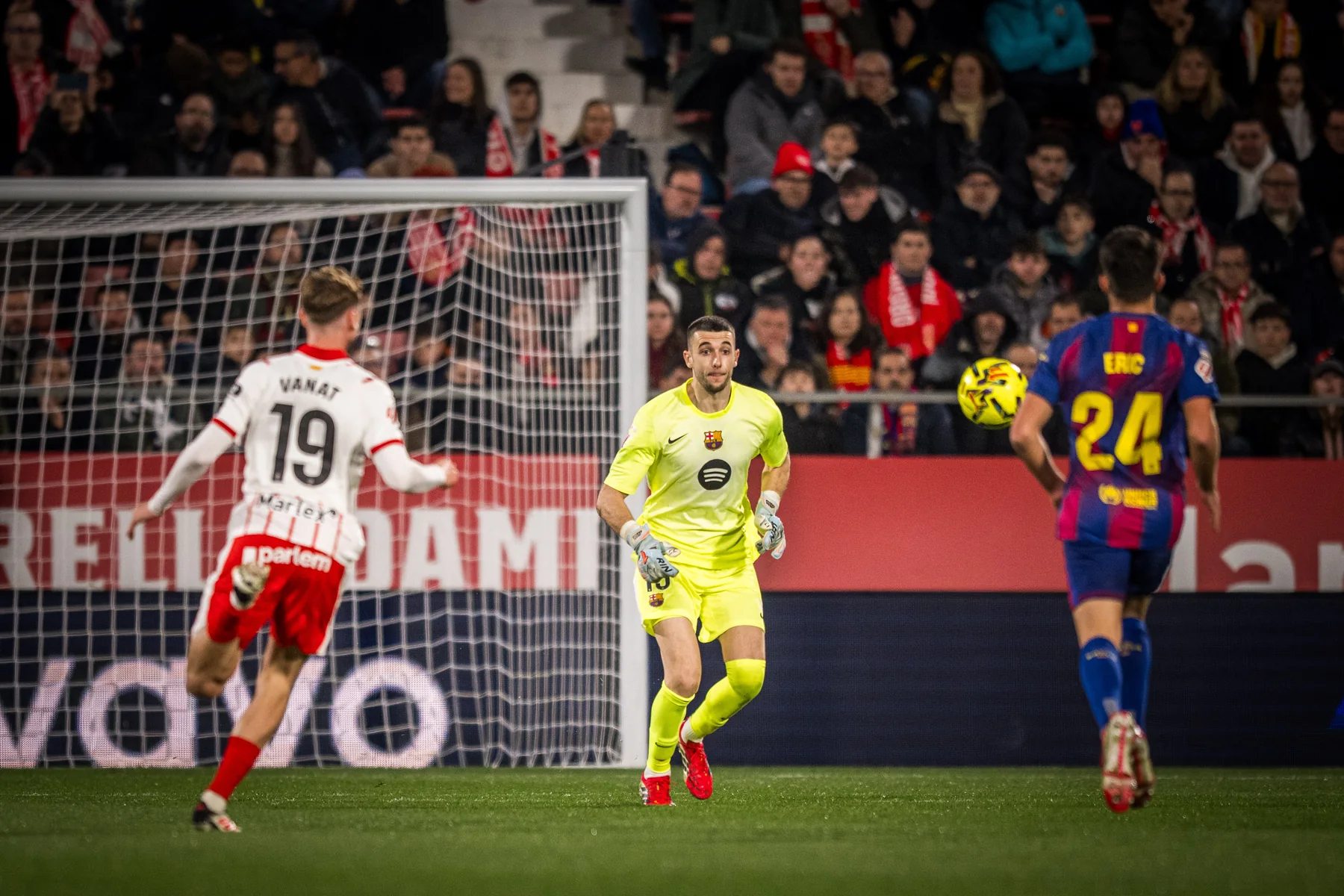
LaLiga's news pages can provide direct evidence when they explicitly call someone an MVP of a named match. Its Joan Garcia report links a goalkeeper's save award to his performance against Rayo Vallecano and calls him that game's MVP. A club's own match report can add detail. FC Barcelona published a February 2026 article naming Garcia MVP despite the team losing at Girona. The story says he made seven saves and explains that the recognition was his third league Man of the Match honour since joining the club. The club source is strong evidence of what Barcelona reported; the reader should still avoid turning one report into a claim about every match or every selector.
Look for wording that makes the claim unambiguous. “Was named MVP” is different from “played like an MVP,” which might be a writer's opinion. A photograph of a player holding a trophy can help, but the accompanying caption should identify the fixture and prize. A post-match interview is useful context but does not, without an award statement, prove the interviewee was selected. These distinctions prevent a fan from mistaking a prominent player for the officially recognized one.
Broadcast and third-party labels
A television feed, broadcaster website, club social channel or scores app may also nominate a standout player. Such information can be useful, particularly if it appears immediately after the final whistle. It should be attributed to the outlet that made the choice. A broadcaster's “player of the match” graphic means that broadcaster identified a player; a club's MVP post means the club presented that label. Neither automatically establishes a universal LaLiga decision. Different organizations can value different performances and may publish at different times.
A numerical player rating is another distinct product. Ratings may combine event data such as shots, passes, tackles, saves and errors using an outlet's own weighting. A high score can support a performance discussion, but it is not proof of a separate award unless the source says the highest-rated player receives that prize. In close matches, a rating model may prefer a scorer while a human judge prefers a goalkeeper who prevented several clear chances.
The practical method is to save the exact source and date with the name. If two credible outlets pick different players, report both with attribution. There is no need to force a single answer from two separately labelled choices. For fans asking about “last night's La Liga MVP,” identify the fixture first, then show who named whom.
Sources: LaLiga 2026/27 results, FC Barcelona Joan Garcia report.
What makes a player stand out in one match?
There is no single statistic that describes the best performance in every football match. A penalty scorer may decide the result, but another player may have created three clear chances, stopped repeated attacks or kept the score level long enough for a comeback. The framework below is a way for fans to evaluate a claim. It is not presented as LaLiga's official MVP formula, since no universal current formula was verified. Start with the match report, then ask how the player's actions changed the opportunities available to both teams.
Decisive actions in attack
Goals are the most visible contribution because they directly alter the score. Their value in a particular match can depend on timing and context: an equalizer late in the game may carry a different narrative weight from a goal scored when one side already leads comfortably. Assists and the pass before an assist can matter too. A player may draw defenders, break a press or deliver the ball into a dangerous area before the final touch. Those actions do not always appear beside the goalscorer's name in a brief scoreline.
LaLiga's Beyond Stats project is useful for understanding why an attacking player may be influential without scoring. It describes dangerous possessions that end in an unblocked shot or an own goal and tracks carries and actions that create pressure. Its reporting on Isco has highlighted passes in the final third, dribbles, crosses, assists, shots and high-impact actions as separate parts of his contribution. None of these figures alone makes him MVP of a particular game; together they show how to ask a more complete question than “who scored?”
Memphis Depay's 2023 match against Granada illustrates the simpler end of the spectrum. LaLiga reported that his powerful strike helped Atlético de Madrid go ahead and that his performance was recognized as MVP of the Match. In that case the decisive goal and recognition appear in the same league report. For a different match, a player might have no goal yet set up the chance that decided it. The proper evidence always belongs to the exact fixture being discussed.
Defensive work and goalkeeping
Defensive impact is easy to understate when attention stays on the ball near the opposite goal. A centre-back can clear a dangerous cross, intercept a through ball, block a shot or prevent an attacker from receiving in a threatening position. A full-back may repeatedly stop a winger while also helping the team advance. Ball recoveries can be more or less useful depending on where they happen and whether the team can attack immediately afterward. Beyond Stats describes recoveries in advantageous positions precisely because the location and players ahead of the ball affect what comes next.
Goalkeepers provide the clearest counterexample to a goals-only MVP rule. FC Barcelona's February 2026 account says Joan Garcia made seven saves against Girona and was named MVP even though Barcelona lost. An award or recognition can therefore reflect the player who kept a team competitive, not simply someone on the winning side. To evaluate such a case, consider the difficulty and timing of saves as well as how often the keeper was called upon. A high saves count can mean exceptional work, but it can also reflect that the opponent created many chances; the match footage or report supplies the needed context.
Match context beyond a stat line
A strong judgment combines events with the match state. Was the player effective while the game was level, or mainly after the opponent had fallen behind? Did the team need to defend for a long period? Did the player come off the bench and change the pattern, or influence the whole game? Did a late intervention preserve a draw or win? These questions make the same numerical line more meaningful without pretending to measure every tactical action exactly.
Compare two candidates by explaining what each contributed, not by counting only one category. A forward with a goal and an assist may be the obvious choice. In a tight draw, a goalkeeper with several difficult saves or a defender who repeatedly stopped a dangerous flank may have a credible claim. An observer can still disagree with a broadcaster or club selection. The key is to separate that personal football judgment from the documented fact of who actually named the MVP.
Sources: LaLiga Beyond Stats, FC Barcelona Joan Garcia report.
Match MVP is different from other La Liga awards
The same player can be praised after one match, over a calendar month and across a full season. Those are different questions with different evidence. A “match MVP” describes a particular fixture. A monthly award aggregates a run of performances and may involve nominees and a vote. A season prize covers a much longer period. The labels may sound similar in a search result, especially if the word MVP appears without the rest of the award name, but a fan should retain the complete title.
Player of the Month and Player of the Season
LaLiga's September 2026 announcement named Raphinha its EA SPORTS LALIGA Player of the Month for August. The article describes his scoring and assisting over several games and says he beat a group of named finalists in the final vote. That outcome does not identify the MVP of every match Barcelona played in August. A player can be consistently excellent without being singled out in each fixture; a teammate can be the most important performer in one game during the same month.
The season award extends the window further. LaLiga's official news index lists Lamine Yamal as its EA SPORTS Player of the Season for 2025/26. The designation refers to a completed league campaign and cannot be transferred to one particular match without a match-specific source. Likewise, topping the goals or assists list is a measurable statistical achievement, not automatically the same thing as being selected for an MVP prize. The criteria and the awarding body have to be checked separately.
The easiest way to sort these claims is to look for time words in the title: “of the Match,” “of the Month,” and “of the Season.” Then ask whether the competition is La Liga EA SPORTS, La Liga Hypermotion, a cup or an international tournament. A star who plays for a La Liga club may also earn a Player of the Match honor in the Champions League or a national-team game; that is not a La Liga match award. The player's club affiliation does not change the competition in which the performance occurred.
SPORTY LALIGA MVP
Another possible source of confusion is the SPORTY LALIGA MVP. LaLiga described Villarreal's Pape Gueye as the 2025/26 winner and explicitly defined the award as recognizing the best African player in La Liga EA SPORTS for that season. The published selection involved expert journalists and fans across Africa. That is a named, season-long award with a particular eligible group. It cannot tell us who was MVP of an ordinary Villarreal fixture, nor is it the same prize as the general EA SPORTS Player of the Season.
An article or social graphic that says only “La Liga MVP” therefore needs a second look. A fixture date and opponent suggest a match award; a month and list of nominees suggest a monthly prize; a season and eligible group point to a different competition-level honor. Reporting the full name preserves the achievement and prevents a fan from attaching the wrong claim to the wrong game.
Sources: LaLiga August 2026 Player of the Month, LaLiga SPORTY MVP report.
A practical checklist for fans
When you want the MVP of a particular La Liga match, begin with a precise fixture rather than a broad search for “La Liga MVP today.” First, record the season, date, home and away teams and final score from a reliable results page. If the match has not ended, any MVP mention may be a live opinion or an early graphic rather than a final selection. The teams may meet again later in the season, so a date is essential.
Second, find the source that names the player. A LaLiga report, a club report, a broadcaster's post and a ratings app should be identified separately. Copy the full award wording if it is short and clear, or paraphrase it with the attribution: “Barcelona reported that Joan Garcia was named MVP against Girona.” That sentence is stronger than “Garcia was the official La Liga MVP” if the source does not describe the league-wide awarding body. The distinction is small in wording but significant in accuracy.
Third, check that the claim belongs to the correct competition. A Real Madrid or Barcelona player may appear in a La Liga game, a domestic cup tie and a European fixture within a short span. A Man of the Match headline for the Champions League cannot answer a question about the league game. Likewise, a Player of the Month story may mention several opponents without naming a match winner. Use the exact fixture label rather than assuming that every mention of a club applies to La Liga.
Fourth, read the performance explanation. Did the chosen player score or assist, make important saves, break up attacks or repeatedly create chances? The official match account or club report can provide that context. Barcelona's Joan Garcia example shows that a losing player can still be recognized after a seven-save display. A top scorer does not automatically receive a match MVP, because a goals leaderboard and a match-specific selection answer different questions.
Finally, keep the date of verification with the answer. Posts can be edited, clips can circulate long after the game, and social captions can omit the awarding body. If the available material does not name a selector, say so rather than filling the gap. A useful fan answer can be modest: “This club report named Player X for Match Y; I did not find a current league-wide selection rule.” The result, source and performance are then clear, while the unresolved part remains honestly marked.
Sources: LaLiga 2026/27 results, FC Barcelona Joan Garcia report.
For a specific fixture, start with the La Liga results and then check the named league or club report. For matches still to be played, use the daily schedule. A goals leaderboard answers a different question from a match MVP selection.
Comments
Sign in with Google to comment. Keep the conversation useful and football-focused. New comments are reviewed before they appear.
Loading comments…