Getafe's European campaigns at a glance
Getafe has played European football in four seasons: 2007/08, 2010/11, 2019/20 and 2026/27. The first three belong to the UEFA Cup and Europa League story; the latest is the club's first Conference League campaign. Getafe's official announcement of its 2026 return supplies that four-season sequence, bringing the history beyond the familiar nights against Bayern Munich, Ajax and Inter.
The distinction between competition names matters. The 2007/08 tournament was called the UEFA Cup. UEFA now includes that campaign in its Europa League historical archive, so a search can show “Europa League 2007/08” on a match page without changing what the competition was called at the time. The 2010/11 and 2019/20 entries were Europa League campaigns. Conference League participation extends Getafe's European history, but it is a separate competition rather than a fourth Europa League appearance.
| Season | Competition | Getafe's progress |
|---|---|---|
| 2007/08 | UEFA Cup | Quarter-finals |
| 2010/11 | Europa League | Group stage |
| 2019/20 | Europa League | Round of 16 |
| 2026/27 | Conference League | Qualified for the league phase; season ongoing |
The completed stages in the first three campaigns are recorded by UEFA's Getafe history page. The quarter-final appearance remains the club's deepest finish among those completed campaigns. It also explains why Bayern dominates recollections of Getafe in Europe: the club was close to reaching a semi-final on its debut, against an opponent with a much longer continental pedigree.
That famous tie should be placed within the whole run. Getting to a quarter-final involves surviving earlier opponents, different grounds and more than one type of round. Likewise, the later Ajax victory sits inside a campaign that began with group matches and ended in an unusual single-game knockout during the pandemic. Following each season in order makes those isolated highlights easier to understand.
These appearances also answer a common Champions League question. The club's four-campaign list contains UEFA Cup, Europa League and Conference League entries; it does not contain a Champions League season. Playing a famous club that has won the Champions League is different from playing in that tournament. Bayern's stature and Ajax's history should therefore add context to Getafe's achievements without changing the competition label.
For supporters following the club now, European progress and domestic league position remain separate records. Use the La Liga table for the current Spanish campaign and read European results within their own tournament. An early continental win cannot be converted into league points, while an older knockout exit tells you little about the present squad's next league match. The timeline below explains what each European campaign actually contributed to Getafe's story.
The 2007/08 UEFA Cup debut and the Bayern heartbreak
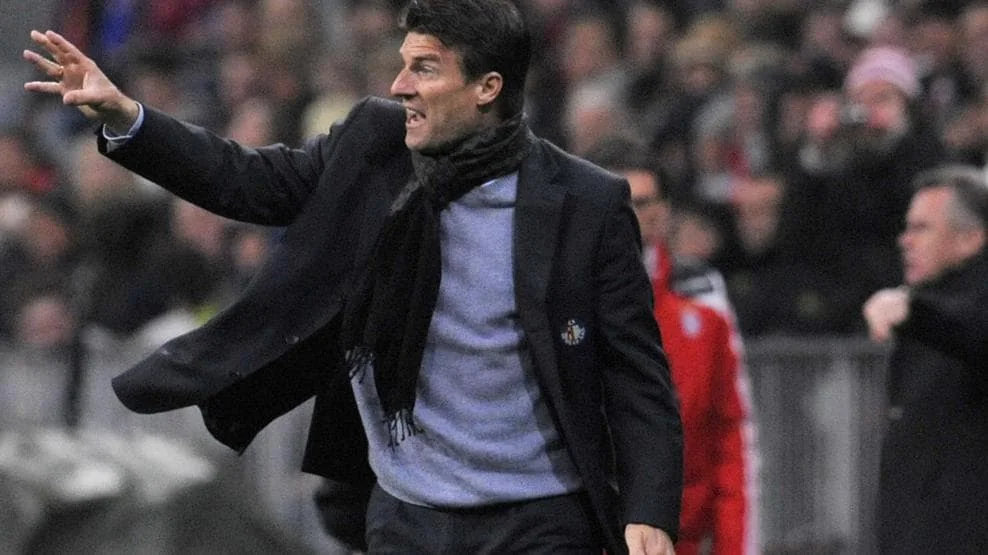
Michael Laudrup's Getafe made its European debut a journey rather than a brief appearance. By the time Bayern arrived for the quarter-final, the club had already earned its place against several opponents. UEFA's contemporary preview describes the momentum that had developed since the opening tie against Twente, and the support gathering around a European newcomer.
How Getafe reached the quarter-finals
The route went through Twente, a group stage and knockout opponents AEK Athens and Benfica. That variety matters to the achievement: Getafe did not reach the final eight through one fortunate result against a big name. The team had to negotiate the rhythm of group football, then produce enough across two matches to eliminate opponents with substantial European experience.
Benfica provides a particularly clear example. Getafe won 2-1 in Lisbon and then 1-0 at home to advance 3-1 on aggregate. Juan Albín scored in the return match. UEFA's March 12 report also records nine absences, through injury or suspension, for that home game. The result therefore reflects more than the availability of a preferred starting eleven.
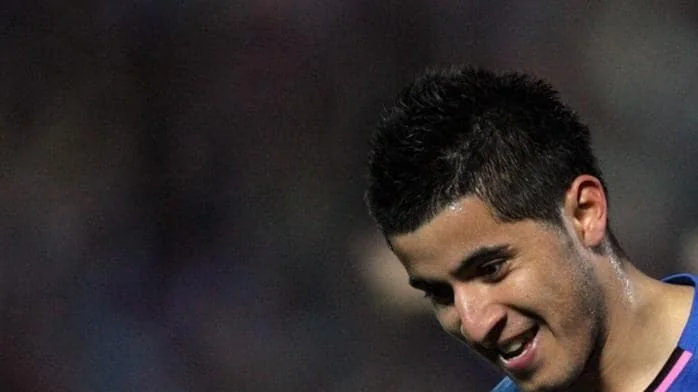
For a supporter watching the run unfold, each completed round changed the scale of the next occasion. A quarter-final brought the possibility of a semi-final, but the earlier Benfica tie had already demonstrated that Getafe could control a decisive home match while carrying a lead earned away. That is a useful background to the confidence and tension of the Bayern meeting.
Why a 4-4 aggregate score sent Bayern through
The first leg in Munich finished 1-1. In the April 10 return, Rubén de la Red's early dismissal left Getafe with ten players, yet Cosmin Contra put the home side ahead before halftime. Franck Ribéry's late equaliser forced extra time. Javier Casquero and Braulio then gave Getafe a 3-1 lead before Luca Toni's two late goals made the final score 3-3. Those turning points are documented in UEFA's match report and Bayern's contemporary account.
The arithmetic is straightforward even though the emotions were not: 1-1 in Munich plus 3-3 in Getafe produced 4-4 overall. Bayern had scored three away goals, including the extra-time goals, while Getafe had scored one. The away-goals rule broke the aggregate tie in Bayern's favour. It did not change the recorded score to give either team an extra goal, and there was no penalty shootout.
That rule also explains why the final equaliser was decisive rather than simply an invitation to more football. At 3-2 on the night Getafe would have advanced; at 3-3 Bayern held the deciding away-goal advantage. UEFA abolished away goals from 2021/22, but that later change does not rewrite the 2008 result. Watching the old tie with today's rule in mind can otherwise make its ending difficult to follow.
The quarter-final remains memorable because Getafe repeatedly moved close to progression while playing almost the whole evening short-handed. The exit was painful, yet the circumstances give the debut campaign its enduring place in the club's history. A 4-4 aggregate elimination describes a remarkably competitive tie, not a heavy defeat hidden behind a famous opponent's name.
The 2010/11 Europa League return
Getafe's next European season came under Míchel, following the sixth-place domestic finish in 2009/10. The club's official history records both that league achievement and the return to continental competition. This time the tournament carried the Europa League name, and reaching its group stage became an achievement distinct from the quarter-final run of three seasons earlier.
The opening hurdle was APOEL in a qualifying play-off. Getafe advanced, with Cata Díaz scoring in extra time in the deciding away leg, before meeting Stuttgart, Young Boys and Odense in Group H. The 2026 retrospective from AS also places the Míchel campaign within the club's longer European sequence. A successful qualifier secured the group fixtures; it did not ensure progression from them.
That is the useful distinction when reviewing this season. A group offered several opportunities to earn points, but it also required Getafe to keep pace with more than one rival. Results elsewhere could alter the importance of a draw or defeat. Unlike a two-leg knockout in which the calculation is between two teams, the position in Group H depended on the developing records of all four.
The decisive night came on December 1 in Denmark. Pedro Ríos gave Getafe a first-half lead against Odense, but Hans Henrik Andreasen equalised in added time for a 1-1 finish. Young Boys beat Stuttgart 4-2 in the other match. UEFA's contemporary report confirms that the combination ended both Getafe's and Odense's chances of reaching the knockout stage.
For Getafe, the late goal changed more than the mood of the journey home. Holding the lead would have kept the campaign alive; the draw, combined with the Swiss result, removed that possibility before the final round. It is therefore misleading to remember the closing fixture as a must-win opportunity for qualification. By then the opportunity had already gone.
The final game still produced something worthwhile. Getafe beat Young Boys 1-0 at the Coliseum on December 16, with academy forward Adrián Sardinero scoring after an Albín assist. UEFA's match account records a positive finish to a campaign that would stop at the group stage. For a young player, a European winning goal remained a significant occasion even without an additional round attached to it.
This second campaign is often overshadowed by the Bayern tie and the later Ajax matches. Its quieter place in memory should not erase the successful qualifying tie, the group opponents or the manner of elimination. Together they show a different side of European football: a club can win its final match and still leave the competition because the decisive points were lost earlier.
Ajax, Inter and the interrupted 2019/20 campaign
José Bordalás took Getafe back into European football after the fifth-place La Liga finish in 2018/19. The group-stage route to the next round was built on four wins: two each against Trabzonspor and Krasnodar. Basel beat Getafe in both meetings and finished above them. UEFA's contemporary campaign summary establishes the second-place qualification that set up the Ajax tie.
Those results are useful context because the knockout success was earned after a complete autumn campaign. Getafe collected twelve points through victories, rather than through an unbeaten group run. The two defeats to Basel did not prevent qualification: winning the other four fixtures created the required platform.
Beating Ajax across two different kinds of match
Getafe won the February 20 first leg 2-0 at home through Deyverson and Kenedy. Kenedy's added-time goal widened the lead immediately before the return in Amsterdam. It gave Getafe more room to absorb a difficult away match, while leaving Ajax with a substantial deficit to overcome.
The return began with Jaime Mata scoring for Getafe, before Ajax recovered to win 2-1 on the night. The Dutch club's own report describes both the early setback and the home side's unsuccessful attempt to score enough goals. Across the two legs, Getafe won 3-2. The home defeat for Ajax and their home victory therefore led to one outcome: Getafe progressed.
Mata's goal illustrates how an away strike could change the chasing team's task under the rules then in force. Ajax now needed four goals on the night to overturn the tie without losing on away goals. But the completed 3-2 aggregate was not itself decided by that tiebreaker: Getafe had scored more goals overall. Keeping those two ideas separate makes the story clearer than simply saying Getafe “won on away goals”.
The two matches also show why a knockout run cannot be assessed from the return score alone. Getafe could lose the second game by one goal because the earlier 2-0 win had created a cushion. In Amsterdam, every additional Getafe chance still threatened to make Ajax's target harder. Protecting an advantage and threatening to extend it were compatible aims, rather than evidence that the away side needed to repeat the first-leg score.
A single knockout game against Inter
The next round brought a radically different situation. The planned Inter tie was postponed before either leg was played during the COVID-19 disruption. When the competition resumed, Getafe faced Inter in a single game at the Arena AufSchalke in Gelsenkirchen on August 5. The contemporary restart guide from AS explains the neutral venue and the replacement of the unplayed two-leg tie with one match, behind closed doors.
Inter won 2-0 through Romelu Lukaku and Christian Eriksen. Between the goals, Jorge Molina missed a penalty that could have brought Getafe level. Both Inter's official match record and UEFA's report identify the goals and that important missed opportunity. There was no return match at the Coliseum in which Getafe could try to overturn the score.
This makes the end of the campaign different from 2008. Against Bayern, two legs and extra time produced an aggregate tie; against Inter, a single neutral match settled the round. The long interruption is essential to understanding the venue and timing, but it does not prove what would have happened under the original schedule. Getafe's actual achievement was reaching the round of 16 after eliminating Ajax, followed by defeat in the altered format.
The completed campaign contained nine played matches: six in the group, two against Ajax and one against Inter. The postponed, unplayed leg should not be counted as an additional match. That distinction keeps the European record connected to football that actually took place.
The 2026/27 Conference League return
Getafe's fourth European campaign adds a new competition to the timeline. The club qualified for the 2026/27 Conference League league phase after eliminating Partizan. A 3-1 home win was followed by a 2-1 defeat in Belgrade, producing a 4-3 aggregate victory. Partizan's official return-leg record and the contemporary AS account confirm the result that completed the tie.
Once again, an away defeat did not mean elimination. The home advantage in the aggregate score survived a difficult second match, allowing Getafe to reach the main stage of a continental competition for the first time since 2019. That connection with the older campaigns is useful: qualifying remains a task of its own, even when the subsequent competition has a different name and format.
As of October 14, the league phase is about to begin. Getafe's published fixture announcement lays out the six scheduled matches below. These are upcoming fixtures, not completed results.
| Date in 2026 | Opponent | Getafe home or away |
|---|---|---|
| October 15 | Universitatea Craiova | Away |
| October 22 | Lugano | Home |
| November 5 | Brighton & Hove Albion | Home |
| November 26 | Iberia Tbilisi | Away |
| December 10 | Inter Escaldes | Home |
| December 17 | Ajax | Away |
What the new competition changes for supporters
The Conference League uses six different opponents, with three home matches and three away. All 36 clubs share one table. Under UEFA's 2026/27 Article 17, the top eight advance directly to the round of 16, positions nine to 24 enter knockout play-offs and positions 25 to 36 are eliminated.
For Getafe fans, that means the league phase offers one meeting with each listed club. There is no second trip or return fixture against the same opponent within this stage. The away match at Ajax therefore reconnects with the 2020 history in a different setting: it is one points-bearing fixture within a shared table, rather than half of an immediate knockout tie.
The home nights also involve three different visitors, giving supporters a wider range of opponents while reducing the chance to adjust after a first meeting. A result must be understood alongside Getafe's place in the overall table, rather than a four-team group. The route after December will depend on that final ranking; qualification for the league phase does not itself establish a place in the next round.
Keep the club's current European notices alongside the La Liga schedule when arranging a match trip. Confirm the competition, home or away designation and final travel details before treating a date as a Coliseum visit. The club's European story now reaches beyond its old UEFA Cup and Europa League appearances, but the 2026/27 finish remains to be earned on the pitch.
Comments
Sign in with Google to comment. Keep the conversation useful and football-focused. New comments are reviewed before they appear.
Loading comments…