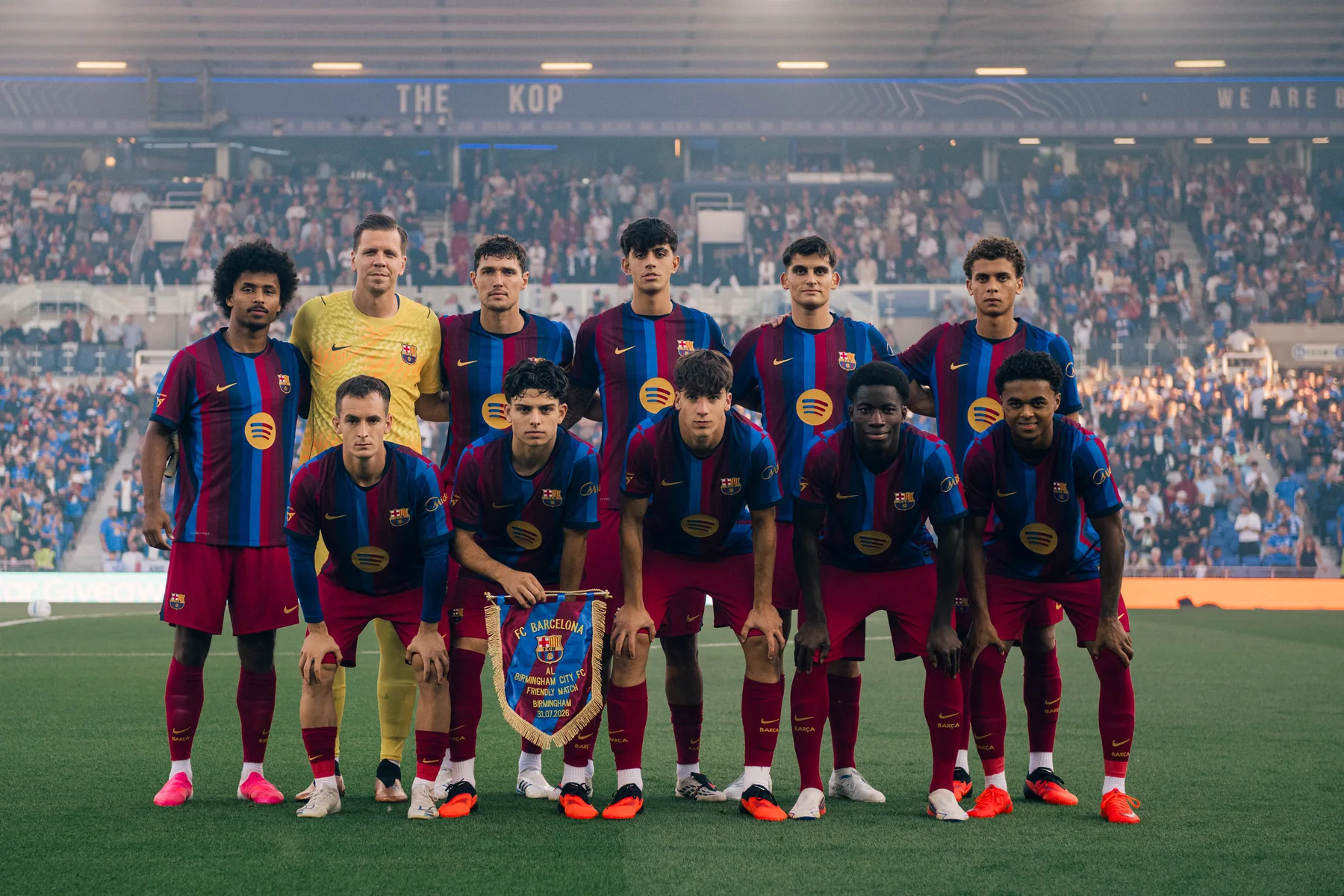
Barcelona's current 2026/27 squad at a glance
As of September 29, 2026, Barcelona's official first-team page and the club's September 2 shirt-number announcement provide the clearest public snapshot of its 2026/27 men's squad. The club lists Hansi Flick as coach and groups players by position. The number announcement names 27 footballers, with numbers 1 through 25 plus development players Jesse Bisiwu at 27 and Hamza Abdelkarim at 29. LaLiga's own club page is labeled for the same 2026/27 season. These sources give a strong answer to “who is in Barcelona's squad?” They do not promise that all 27 will be selected for any one league match.
In goal, the club's current page lists Joan García, Wojciech Szczęsny and Dominik Livaković. Across the back, it lists João Cancelo, Alejandro Balde, Pau Cubarsí, Xavi Espart, Andreas Christensen, Gerard Martín, Jules Koundé and Eric García. The midfield group on that page is Brian Fariñas, Gavi, Fermín López, Pedri, Rodri, Dani Olmo, Frenkie de Jong and Marc Bernal. The forward group is Gabriel Jesus, Lamine Yamal, Raphinha, Karim Adeyemi, Anthony Gordon, Roony Bardghji, Jesse Bisiwu and Hamza Abdelkarim. Those groups reflect the club's presentation on the check date, not a claim that each player has a single fixed tactical position.
The distinction matters because readers often use “registered players” to mean several things at once. A club's first-team profile tells you who it presents as part of the group. Its confirmed numbers tell you the shirts allocated after the summer window. The league's squad page identifies the team in the competition. A matchday list, issued later, answers who may feature in a specific fixture. This guide will read the roster as a football squad and explain where to verify the narrower administrative and matchday questions.
Treat the names above as a dated snapshot. Mid-season arrivals, departures and changing roles can alter it. For Barcelona's next opponent and kickoff, use our current La Liga fixtures; for the broader club context, the teams index links the roster question to results and standings. A list is most useful when it helps you understand what Flick can choose from, not when it is mistaken for a predicted starting eleven. The following sections break down the options by line and explain what those combinations could mean on the pitch.
Goalkeepers and the back line
Barcelona's official squad page presents three senior goalkeepers and eight defenders. The number allocation is straightforward: Joan García wears 1, Wojciech Szczęsny 13 and Dominik Livaković 25. Across the back the page shows João Cancelo 2, Alejandro Balde 3, Pau Cubarsí 5, Xavi Espart 12, Andreas Christensen 15, Gerard Martín 18, Jules Koundé 23 and Eric García 24. These are club-listed roles and shirt numbers as checked on September 29, not a projected lineup for the next match.
Three goalkeepers with different matchday roles
The club itself described Joan García as its first-choice goalkeeper when marking his 50th Barcelona appearance in September 2026. That helps explain the hierarchy without pretending it cannot change. Szczęsny and Livaković give Flick experienced alternatives. A goalkeeper decision can affect more than shot stopping: a side that builds from deep needs angles for its centre backs and composure when an opponent presses the first pass. Which keeper starts a specific fixture still depends on selection and availability. The September 19 Sevilla squad announcement, for example, reported a slight knee issue for Joan and named others for that trip. It was a match-specific update, not a permanent rewrite of the season roster.
An overseas fan looking only at the shirt numbers might assume 1 always starts and 25 is merely emergency cover. Numbers are a useful index, but the official lineup decides the match. This is particularly relevant during dense runs of league and European fixtures, when recovery and risk management can alter an otherwise settled pecking order. Check the current fixture and then the club's latest announcement before treating a goalkeeper as certain.
Full backs and central defenders
The outfield names give Flick several ways to balance width and central protection. Balde and Cancelo can provide attacking width from full-back areas, while Koundé, Cubarsí, Christensen and Eric García offer different pairings and positional flexibility behind them. Gerard Martín and Xavi Espart widen the defensive choices; the club's number announcement explicitly identified Espart as a new arrival to the first-team squad. The tactical reading is an inference from those listed players and positions: a more adventurous full-back combination can stretch a compact opponent, while a cautious setup may protect transitions against fast counters.
The key for supporters is to watch the relationship between the full backs and the midfield rather than merely counting defenders. If both outside backs advance, the central players and holding midfielder must cover larger spaces when possession is lost. If one stays back, the other flank may become the main overload. The same named back line can therefore play differently from week to week. A roster tells you the range of choices; a confirmed lineup and the first minutes of play tell you which choices Flick actually made. Avoid reading a substitution bench as a verdict on a player's registration or long-term standing. It may be the tactical response to the opponent, workload or a recent fitness issue.
Midfield balance under Hansi Flick
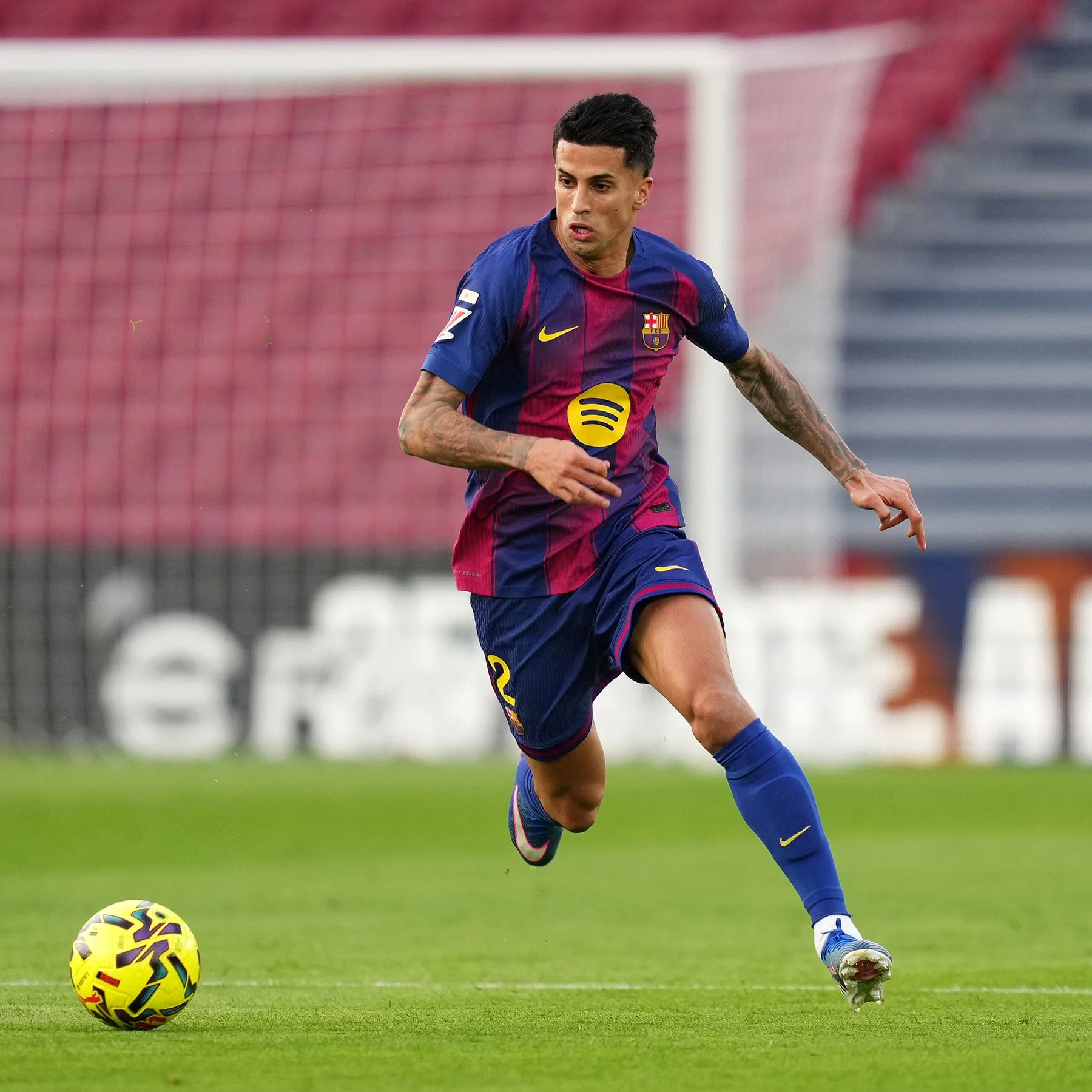
The official Barcelona first-team page places eight names in midfield: Brian Fariñas, Gavi, Fermín López, Pedri, Rodri, Dani Olmo, Frenkie de Jong and Marc Bernal. The September 2 number announcement confirms Rodri at 16 and Fermín at 7, with the others listed at 4, 6, 8, 20, 21 and 22 respectively. This is a deeper midfield than any single starting shape can accommodate. Its value lies in the different tasks those players can perform around the ball and when Barcelona loses it.
Build-up and ball retention
Pedri and Frenkie de Jong are natural reference points when discussing how Barcelona can progress possession through pressure. Rodri and Bernal are listed among the same midfield group, giving Flick alternatives for a deeper platform. That is a tactical reading of their roles, not a claim that a particular pair must start. Against a side that presses high, a midfielder who can receive while facing his own goal and find the next pass can prevent the attack from becoming a sequence of rushed long balls. Against a team defending deep, the same player may instead be asked to circulate possession quickly enough to move the defensive block.
The choice also affects the defenders discussed above. A stable central midfielder can offer a short passing outlet when the full backs advance, while a more aggressive midfield selection may place greater recovery demands on the centre backs. If Barcelona's first pass is secure, Lamine Yamal or Raphinha can receive higher and closer to the opponent's box. If it is not, even an impressive list of forwards may be starved of useful touches. This is why simply ranking the midfielders by fame gives less insight than asking how Flick wants to reach his attackers.
Runs between the lines
Gavi, Fermín and Dani Olmo broaden the ways Barcelona can attack the space between an opponent's midfield and defence. Fermín's forward runs can give a possession-heavy team a runner beyond the ball; Olmo can help link combination play around the area. Brian Fariñas adds another listed option, while Pedri's ability to shift the point of attack can make the same front line look very different. These descriptions are football analysis based on the roster, not a forecast of the next XI. The actual combination depends on availability, opponent and fixture load.
That availability caveat is concrete. Barcelona's official September 2026 Levante squad notice said Frenkie de Jong was missing through injury for that particular fixture. It would be wrong to delete him from a seasonal squad guide because he missed a game, just as it would be wrong to promise his return for the next one without a fresh update. Midfield is often where such distinctions become most visible: a coach can replace an unavailable player with someone who changes the rhythm rather than one who reproduces the same role. Read the next fixture, watch for the dated squad announcement, and only then evaluate the midfield selection in its match context.
The forward options and attacking choices
Barcelona's official first-team page groups Gabriel Jesus, Lamine Yamal, Raphinha, Karim Adeyemi, Anthony Gordon, Roony Bardghji, Jesse Bisiwu and Hamza Abdelkarim as forwards. The September 2 shirt-number article sets out numbers 9, 10, 11, 14, 17, 19, 27 and 29 for them in that order. The final two are explicitly described by the club as development players in and around the first team. That distinction keeps the roster readable: being part of the club's forward picture does not mean receiving the same minutes or matchday role as an established starter.
Wide threat and combinations
Yamal and Raphinha offer different ways to create from the flanks, while Adeyemi, Gordon and Bardghji expand the choices for pace, directness or combination play. Those are possible functions drawn from the players' profiles and the positions the club lists, not a prediction that a specific trio will start the next league game. The underlying football question is how Barcelona will create separation. Against a deep defensive line, width can pull a full back away from the centre and open a passing lane for an arriving midfielder. Against a pressing opponent, a quick forward can make the run behind that punishes a high line.
Raphinha's and Yamal's effectiveness also depends on service. The midfield must find them in areas where they can turn or attack a defender, rather than sending the ball wide after the defence has already settled. Likewise, an overlapping full back may create a two-against-one but can leave space behind. Flick can therefore change the attack by changing the balance elsewhere on the pitch. A list of eight forwards is impressive, but it is the arrangement of full backs, midfield support and central runs that makes the names work together.
Central finishing and rotation
Gabriel Jesus wears 9 in the club's published list and offers a central option. Barcelona's September 9 club report gives a concrete example of a different use: he came on for Dani Olmo in a Champions League match and scored after a Lamine Yamal cross. That is evidence of a past substitution and goal, not a basis for predicting a starting place in LaLiga. It does show how an attacker arriving later in a match can change the penalty-area target while the wide creators stay on the field.
The development names deserve careful treatment. Bisiwu and Hamza Abdelkarim are on the club's number announcement, but their numbers 27 and 29 do not by themselves establish a guaranteed weekly place. They are possibilities for a longer season in which injuries, rotation and form matter. If you are evaluating Barcelona before a specific match, check the official squad announcement and lineup. If you want to compare which Barcelona players have actually scored in the league, use the La Liga top scorers page and verify the season shown. That tells a different story from a roster: who has delivered goals in this competition so far, rather than who could theoretically be selected.
What the official lists do and do not prove about registration
Barcelona's roster can be described accurately without treating every public list as an official certificate for every possible match. The club's first-team page says who it currently presents as its players. Its September number announcement records the shirts it assigned after the summer window and explicitly calls Bisiwu and Hamza Abdelkarim development players in and around the first team. LaLiga's club page connects the team to the 2026/27 league season. These pages are related, but they answer different reader questions.
Registration is an administrative process. LaLiga's institutional explanation says the league processes footballer registrations for member clubs and gives obligatory prior approval of licences for professional competition. Its squad-cost explanation describes the 2026/27 club-level limit on spending, covering the first team and other football areas. Neither a published financial limit nor a club video of a new arrival lets a reader determine an individual player's exact status without more specific evidence. In particular, a high or low squad-cost figure is not a player-by-player eligibility list.
This precision is valuable in Barcelona coverage because registration questions can dominate headlines. A fan may see a new signing announced, a shirt number allocated, a season squad page updated and a match squad released on different dates. Reporting all four as though they were interchangeable makes the story less clear. Say exactly what you can verify: “Barcelona's September 2 number announcement lists Gabriel Jesus at 9” is a claim tied to a dated club page. “He is definitely in the next league lineup” would require a different, later source. The same rule applies to the youth players wearing numbers above 25. Their visibility in the club's plans is meaningful, but it does not guarantee a league appearance next weekend.
For a reader who wants the step-by-step source route, our guide to LaLiga's official registered-player pages explains which site to use for a season roster, a transfer or a match sheet. The practical lesson here is simpler: name the source, keep its date, and keep its scope. That approach is more honest than a static roster article claiming to be a real-time legal determination. It also preserves the football point. Flick has a set of options across goal, defence, midfield and attack; the number he selects for one opponent is a separate match decision.
How to check Barcelona's next match squad
If your real question is whether one of these Barcelona players will feature in the next league match, a season roster is only the first stop. Open the club's schedule and locate the relevant fixture. Then watch for a dated squad announcement and, closer to kickoff, the official lineup showing starters and substitutes. That sequence sounds basic, but it prevents a common error: turning a player's presence in a 2026/27 roster into an assertion that he is fit, selected or starting on a particular date.
A dated match squad is a narrower answer
Barcelona's September 19 squad for the trip to Sevilla is a useful example. The club named a specific travelling group and explained that Joan García was unavailable for that fixture because of a slight knee problem. It also included Iker Rodríguez, whose name is not in the club's September 2 first-team number list. This is exactly why a static season list should not be treated as the complete matchday answer. Coaches can call on suitable young players, while a senior roster member can miss one game. The official match sheet then narrows the question further by identifying who starts and who is among the substitutes.
The date matters as much as the names. The Sevilla article describes a September 2026 match that has already passed. It cannot tell us the goalkeeper or back line for Barcelona's next game after the international break. The club said the 2026/27 break spans two consecutive weekends without domestic football, with many players away on international duty. Availability may change as those players return. A supporter looking ahead should therefore treat the earlier squad as an example of the process, not as a reusable prediction.
When you check the next fixture, compare the opponent and venue with the likely demands on the squad. An away game after international travel can raise different rotation questions from a home match following a full training week. A side that defends deep may invite more creative midfield and full-back combinations; a side with pace on the break may call for a different balance. These are factors to watch, not reasons to declare an XI before it is announced. The club's current schedule and our La Liga match list identify the match; the pre-match squad and lineup supply the player-specific answer.
Finally, keep a habit of checking the season label and publication date when you share a squad. The internet preserves old player lists long after they stop being current. Barcelona's 2026/27 roster is a useful picture of the team's options as of September 29, 2026, while each match produces a narrower, later piece of evidence. Read the roster to understand Flick's choices, then read the match-specific information to see which choices he actually makes.
Comments
Sign in with Google to comment. Keep the conversation useful and football-focused. New comments are reviewed before they appear.
Loading comments…