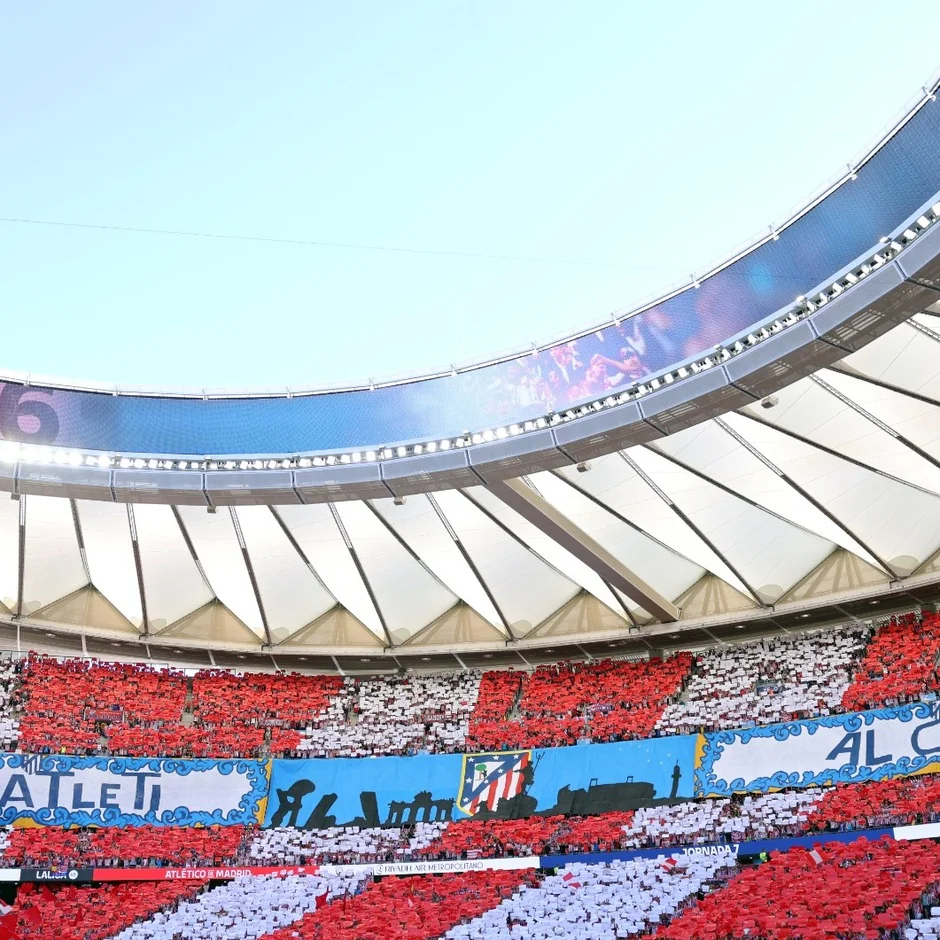
As of 29 September 2026, Atlético de Madrid's published 2026/27 squad combines long-serving players with a significant summer intake. This guide names the current group, explains what the official listings can and cannot establish about registration, and shows how to check a confirmed matchday selection.
The 2026/27 squad at a glance
The short answer is that Atlético de Madrid's 2026/27 men's first-team page contains Jan Oblak, Juan Musso and Esquivel in goal; Hancko, Marc Pubill, Romero, Grimaldo, Robin Le Normand and D. Martínez in the defensive group; a large midfield group headed by Koke, Pablo Barrios, Marcos Llorente, Álex Baena and new arrival Morten Hjulmand; and an attacking group that includes Alexander Sørloth, Ademola Lookman, Jonathan David and Julián Álvarez. This is a snapshot of the club's published squad as checked on 29 September 2026, not a prediction of Diego Simeone's next eleven. Club lists and matchday selections can change independently.
The most conspicuous 2026 summer additions are easy to verify on LaLiga's dated transfer page. Hjulmand appears on 31 July, Alejandro Grimaldo on 14 August, Cristian Romero and Kang In Lee on 18 August, and Jonathan David on 1 September. The same page records David as a loan from Juventus, a detail that matters when a supporter tries to distinguish a season-long squad option from a permanent transfer. In the club's presentation, the new names sit beside a familiar core: Oblak, Koke, Barrios, Llorente, Le Normand, Sørloth and Álvarez. There is continuity, but the balance and possible combinations have changed.
The list needs careful reading. A player called a midfielder on one page might cover a flank in a particular game; a centre-back may start in a back three or a back four. The presence of a name on a public roster also says less about that weekend's lineup than many search results suggest. Coaches choose from eligible, available players after considering fitness, opponents, travel, and the week's other fixtures. The useful question for a fan is therefore both who belongs to the current group and which jobs the available players can fill. The sections below use the club list as a starting point, while leaving match eligibility and confirmed selection to the appropriate official match records.
Goalkeepers and the defensive line
Goalkeepers and available cover
The club currently places Juan Musso, Jan Oblak and Esquivel in its goalkeeper group. A published squad is a depth chart in the broadest sense, but it does not guarantee who is fit or selected for a particular game. The season opener against Málaga on 19 August gives one concrete example of the gap between a roster and a match sheet: LaLiga's official page lists Oblak as a starter and Musso among the substitutes. That is evidence about that match, not a rule for every week of the season.
For supporters, the goalkeeper choice changes more than the name at the bottom of a team graphic. It influences how confidently the back line can hold a higher position, how the side responds to crosses, and what passes are available when opponents press. Those are football questions to examine after the coach publishes the eleven. A squad page by itself cannot tell you how many saves a goalkeeper will make or whether the team will build short from the back. It is best to check the confirmed lineup shortly before kickoff and then read the match details in context. Esquivel's appearance in the club group is useful for understanding available cover, while match involvement should be checked on the official fixture page rather than assumed from the shirt number.
Centre-backs, full-backs and wide protection
Atlético's club list puts Dávid Hancko, Marc Pubill, Cristian Romero, Alejandro Grimaldo, Robin Le Normand and D. Martínez in the defensive group. This is a meaningful mix of central and wide options, even though the website's single label, defender, does not describe every assignment a player might receive. Romero was recorded as an August arrival on LaLiga's transfer page; Grimaldo was added there earlier in the month. In the Málaga opener, Hancko and Le Normand appeared among the starters, while Pubill and Grimaldo were listed on the bench. A later club match report against Sevilla includes Grimaldo, Hancko, Romero and Pubill, illustrating why a September reader needs a dated snapshot rather than an opening-day lineup treated as permanent.
The tactical issue is the shape of protection around the ball. A wing player who advances high can give the attack width but leaves a larger recovery run if possession turns over; a central defender may need to cover that channel. Alternatively, a narrower full-back can help preserve rest defence while a forward stays wide. These are possible patterns to look for, not claims about Simeone's next selection. Which pattern appears depends on the opponent, the midfield pairing, and whether Atlético are defending a lead or chasing one. Fans comparing the published squad with the next team sheet should therefore watch both personnel and the jobs assigned to them. The name of a new defender matters, but the distance between defenders and midfielders often explains the actual quality of a defensive performance.
Midfielders and the balance behind the attack
Central midfield roles
Midfield is the largest grouping on Atlético's current club page. It includes Koke, Pablo Barrios, Morten Hjulmand, Johnny, Mendoza and Obed Vargas, along with players whose match roles can carry them much wider or higher. A list that simply says midfielders misses the choices Simeone must make: who receives under pressure, who protects the space behind the ball, and who arrives near the box when an attack develops. The central combinations matter especially because they decide whether Atlético can advance with controlled possession or must spend long periods defending second balls.
The Málaga opener offers an example of how a squad turns into a particular game plan. Koke and Barrios were named in the starting eleven on LaLiga's match page, while Hjulmand began as a substitute and came on for Koke in the 78th minute. That one substitution should not be stretched into a season-long hierarchy. It does show why there is value in seeing both the initial shape and the timing of changes: a player may be part of a match plan without starting. Hjulmand was listed as a 31 July arrival, so supporters tracking how he settles in can compare later selections and minutes against that first competitive reference point rather than assuming a new signing automatically owns one role.
Width, ball carrying and transitions
The club's same midfield group contains Kang In Lee, Álex Baena, Marcos Llorente, Arnau Ortiz and Giuliano. Their inclusion under one administrative heading does not mean they occupy one strip of the pitch. A player receiving near the touchline asks a different question of an opposing full-back than one receiving between the lines; a runner starting wide can also attack space behind a centre-back. Atlético's 2–0 win against Málaga is a useful illustration of the variety. LaLiga recorded Kang In entering from the bench and scoring in the 70th minute, while Álex Baena scored in the 85th. The goals are match facts; any larger conclusion about a permanent attacking arrangement would require more matches.
When comparing selections, watch how the midfield supports a wide defender. If Grimaldo or Pubill pushes up, someone must help cover the lane opened behind. A wide midfielder can either stay high to stretch the opponent or drop to protect that space. A central player can slide across, but then the middle may become easier to counter through. These are basic tradeoffs visible on a live match, and they explain why the same names can produce different-looking Atlético performances. Llorente's and Giuliano's placement on a roster gives a fan a starting point; the confirmed match sheet and the first few minutes reveal the actual roles. A good squad guide therefore names the players and gives readers a way to judge what they do, rather than treating the club's position labels as a formation diagram.
Forwards and the choices around the front line
Atlético's club page groups Alexander Sørloth, Ademola Lookman, Jonathan David and Julián Álvarez as forwards. It is a short list of names with several possible attacking configurations. Sørloth offers a reference point higher up the pitch; Álvarez can be involved in combinations close to the box; Lookman brings a different way to attack a defender; and David is another central scoring option. These descriptions are football interpretations of the squad, not a claim that all four will always appear together or that each is locked to a single channel. A supporter should begin with the confirmed eleven, then see whether the players occupy spaces that suit the opponent's weaknesses.
David's first weeks provide the clearest dated event in this group. The club announced his loan from Juventus for 2026/27. On 21 September it reported that he had scored in each of his first three Atlético league appearances, against Real Sociedad, Osasuna and Real Madrid. LaLiga's derby page records his goal in the 59th minute of the 2–1 win over Real Madrid on 20 September. That streak is a strong opening, but three appearances are not a reliable forecast of a full-season scoring total. For fans following the Golden Boot race, the productive comparison is between his actual future league goals and the live scoring table, not a straight-line projection from a small sample.
The options also change how Atlético might respond within a match. A side struggling to retain the ball high up may want a different outlet from a side finding plenty of chances but failing to turn them into goals. A forward running behind can stretch defenders and open a pocket for a teammate; a player receiving to feet can draw a marker forward and create a lane for a runner. Which option is useful depends on game state, opposition line, and the midfield support described above. It is possible for a forward to improve the attack without scoring, just as a goal can come from a brief substitute appearance. These are reasons to read appearances and minutes alongside goals rather than reduce the squad to a ranking of strikers.
The club and LaLiga lists are the right place to identify current names; the match page is where a particular game becomes concrete. A fan who sees David on the club page should still check the team sheet before a fixture and the official match details afterwards. The same principle applies to Sørloth, Lookman and Álvarez. It avoids a common mistake in roster articles: presenting a useful season list as if it were tomorrow's chosen lineup.

What “registered player” actually tells you
Club squad, league listing and match sheet are different checks
Searches for “Atlético registered players” often lead to a club squad page, and that is a useful first stop. It tells a reader whom the club is presenting as part of its first-team picture. LaLiga's official 2026/27 squad page adds a league-facing list. Neither page should be read as an unconditional promise that every displayed footballer can appear in every competition or on every date. The legal and sporting question of a licence is more specific. The RFEF's 2026/27 competition rules say in Article 22 that a First or Second Division club may register a maximum of 25 first-team player licences. Article 23 describes two request periods and a process in which LaLiga initially grants provisional clearance before the federation issues a definitive licence once its requirements are satisfied.
A third check is the individual match sheet. Article 24 requires the referee to receive the list of starters and substitutes before the game. Atlético's official call-up for the September derby against Real Madrid shows how the club can publish a fixture-specific group. The confirmed LaLiga match record goes one step further by showing the actual starters, bench and substitutions. For a fan asking “Will this player play today?”, that is far more useful than a static squad page. Even a call-up is not the starting eleven. For a fan asking “Who is part of Atlético this season?”, the squad and transfer pages are the better starting points.
Youth numbers, transfers and changing availability
The 25-licence maximum also explains why counting every name on a public page can mislead. A club can show academy-linked or developing players alongside familiar senior names. The RFEF rules set conditions for fielding players who are not in the category squad; Article 24 says no more than four such footballers may be on the pitch at once after the match begins. It would be wrong to infer from a number above 25, or from a name on a club page, that Atlético has exceeded its senior licence limit. Equally, a name missing from one matchday sheet does not prove a registration problem. Selection and availability have many possible causes, and a public page rarely identifies all of them.
Transfers create a second source of confusion. Jonathan David joined for 2026/27 on loan, according to both the club announcement and LaLiga's movement record. That establishes the transaction and explains why he appears in the current attacking group. The detail a fan might actually need next depends on the question: the league list helps identify the squad, while a match sheet confirms participation in a specific fixture. The registration windows in the RFEF document are dated, so a claim about a future addition must be checked against the applicable window and an official announcement. This guide does not label an individual “unregistered” just because a website has not yet refreshed or because he was absent from a particular game. The safest reading is a layered one: identify the club's current group, confirm league listing or official transfer information, then check the relevant match record when the fixture arrives.
How to follow the squad through the season
A squad guide is most useful when it helps a supporter follow the next game. Start with the fixture rather than an old lineup graphic. LaLiga maintains separate pages for Atlético's next matches and completed results, while the club publishes its own first-team calendar. The league list marks competitions separately and leaves some future kickoffs unconfirmed. That is a reminder that a match date can be visible before its final local time or a complete broadcast assignment is published. Check the fixture again as matchday approaches.
Next, compare the current club squad and LaLiga player list with the official call-up if Atlético publishes one. Once lineups are confirmed, use the match page for starters and substitutes. This order answers three different questions without mixing them up: who is in the season group, who has been selected for the fixture, and who actually played. If a name is missing, the article should not invent a reason. An absence could reflect selection, fitness, suspension or another matter; use a direct club or league statement before assigning a cause.
After the game, read the result and then put any individual performance beside the broader season. The live table shows whether three points affect a title challenge, European position or the gap to rivals. The top-scorers page lets supporters track David, Álvarez, Sørloth and other finishers over a meaningful span rather than one highlight. A defender's work may be better understood by looking at opponent chances and the shape in which the team defended, while midfield minutes and substitutions help explain how a game changed.
Finally, remember the date on this guide: 29 September 2026. The RFEF rules provide a second 2026/27 registration window in January and February, and the squad can change again. A new arrival, a loan return or a youth player's increased involvement may make a September name list incomplete. The best habit is to use this article as a map of Atlético's current options, then return to official squad, transfer and match pages for the latest decision. That way the roster gives context without pretending to be a live team sheet.
Comments
Sign in with Google to comment. Keep the conversation useful and football-focused. New comments are reviewed before they appear.
Loading comments…