La Liga relegation is direct, but promotion is not quite as simple. The bottom three clubs leave Spain’s top flight; Segunda’s top two come up automatically; and four more clubs fight for the last place through a two-round playoff. This guide explains the whole route, including the unusual tiebreak that rewards regular-season position.
The complete three-down, three-up system
Spain’s current exchange between the top two divisions is a balanced three down, three up system. The clubs finishing 18th, 19th and 20th in La Liga are relegated to the Segunda División, commercially branded LaLiga Hypermotion. They are replaced by the top two teams in Segunda and the winner of a four-club promotion playoff.
The most important correction is that the playoff does not involve a struggling La Liga team. Once a Primera club finishes in the bottom three, relegation is direct. The playoff is contested entirely by Segunda clubs finishing third, fourth, fifth and sixth. Those four play two rounds to determine the third promoted side. Older Spanish seasons used other arrangements, which is why historical references to top-flight survival playoffs can confuse modern fans.
La Liga 18th–20th
Three clubs are relegated directly.
Segunda 1st–2nd
Two clubs earn automatic promotion.
Segunda 3rd–6th
Four clubs play for one final promotion place.
The arithmetic keeps both professional divisions at their intended size. La Liga contains 20 clubs, so three departures and three arrivals leave the field unchanged. Segunda contains 22 and plays a 42-match regular season, making automatic promotion a reward for surviving a longer schedule with one of its two best records. The playoff gives the next four teams a route upward without diluting the value of first and second.
For supporters, the system creates two different endings at once. The Primera relegation fight usually concludes with Matchday 38, where one goal can move several clubs around the bottom. Segunda’s automatic places are decided through Matchday 42, but its season continues into June for the playoff qualifiers. A third-place team can therefore finish well ahead of sixth and still face a high-pressure knockout path.
The simplest way to follow the movement is to keep the two tables separate until both competitions end. First mark La Liga’s bottom three. Then mark Segunda’s top two and bracket places three to six. Do not “pair” a relegated club with a playoff winner; all three promoted sides replace the collective bottom three. Our La Liga table shows the top-flight side of the equation, while this guide explains the extra matches that complete the field for the next season.
How relegation from La Liga is decided
La Liga relegation is decided by the final table after 38 matches. Positions 18, 19 and 20 go down directly; 17th is safe. LaLiga dates this three-direct-relegation model to 1999/2000. There is no safety playoff for the 18th-placed club and no special exemption for a historically large team.
A club becomes mathematically relegated when it can no longer finish above the bottom three after accounting for remaining points and applicable tiebreakers. That can happen weeks before the final day if the gap is too large, or in stoppage time on Matchday 38 when the table is compressed. In 2025/26, LaLiga’s season review confirmed Real Oviedo, Girona and Mallorca as the relegated three once the 38th round was complete.
Supporters following the live table should pay attention to head-to-head results, not only overall goal difference. Spanish league ordering prioritises the records between teams tied on points before the broad goal-difference comparison in the usual two-team scenario. Multi-team ties require a mini-table logic. This is why a television “as it stands” graphic can shift unexpectedly when another match changes which teams are level.
There is no permanent safety target such as 40 points. That phrase is a useful rule of thumb, not a regulation. The required total depends on how evenly the lower half distributes points. LaLiga noted that only six points separated 11th and 18th late in 2024/25, creating a fight in which half the division still felt exposed. In other seasons, one or two struggling teams can lower the line.
Tactically, a compressed relegation race creates risk-management football. A team level late in a match may be safe on current results but vulnerable to a goal elsewhere. Chasing a winner can create counterattacking space; protecting the draw can fail if a rival scores. Coaches need accurate information and players need a plan that does not change chaotically with every crowd reaction.
For fans, the reliable method is to use the current La Liga standings, check points remaining and review head-to-head context for teams that can finish level. Avoid declaring survival from an overall goal-difference advantage alone. The bottom three after every tie has been resolved are relegated, and the drama belongs to the table—not to a later playoff that might rescue them.
How automatic promotion from Segunda works
Automatic promotion is the reward for finishing first or second in Segunda after 42 matches. There is no extra final and no playoff opponent: once a club is mathematically guaranteed a top-two finish, its place in the following La Liga season is secured. The league champion and runner-up take two of the three available promotion places.
That direct route is especially valuable because Segunda is a 22-club competition. Each team faces every opponent home and away, producing four more regular-season matches than La Liga. Promotion therefore asks a squad to handle a long calendar, injuries, suspensions, changing pitch conditions and repeated short turnarounds. A side that remains in the top two has already survived the division’s broadest test.
The clinching calculation is simple in principle. A club is promoted when the team in third can no longer catch it on points, with the relevant league tiebreakers considered if the totals could finish level. Supporters should compare the points gap with the number still available, then check head-to-head context rather than relying on overall goal difference alone. LaLiga’s coverage of the final two rounds in 2023/24, for example, described Leganés and Valladolid chasing mathematical confirmation while the remaining direct-promotion contenders watched results elsewhere.
The difference is larger than the table suggests. A second-place club can begin planning for Primera as soon as promotion is confirmed. A third-place club may have produced an almost identical league campaign but still needs to navigate four high-pressure matches. One red card, one goalkeeping error or one badly timed injury can overturn ten months of consistency. That is why players and coaches celebrate automatic promotion with the intensity of a trophy.
Finishing first also brings the Segunda title, but first and second have the same fundamental reward: La Liga football. The promoted clubs then face a separate summer challenge—building a squad capable of surviving at the higher level without losing the identity that earned promotion. Fans can use our La Liga teams guide to see the clubs in the current top flight; the promoted pair join that list when the next season’s field is confirmed.
How the four-team promotion playoff works
The promotion playoff begins once Segunda’s 42-match table is final. Third plays sixth, while fourth plays fifth. Each semifinal has a first leg and a second leg, and the two winners meet in another two-legged tie. That means the eventual promoted club plays four extra matches after an already demanding regular season.
The lower-ranked team hosts the opening leg in every tie. The better regular-season finisher hosts the return, so third and fourth are guaranteed the second leg at home in the semifinals. In the final, whichever finalist finished higher in the league receives that same advantage. There is no random draw to decide the bracket or home order.
- Semifinal A: sixth hosts third, then third hosts sixth.
- Semifinal B: fifth hosts fourth, then fourth hosts fifth.
- Final: the lower regular-season finisher hosts first; the higher finisher hosts the return.
- Promotion: the final winner takes the third and last place in La Liga.
Scores are combined across the two legs. If a team wins 2–0 at home and loses 1–0 away, it advances 2–1 on aggregate. Away goals do not provide a separate tiebreak. If the aggregate score is level after 90 minutes of the second leg, the tie goes to 30 minutes of extra time.
The next rule surprises fans accustomed to UEFA knockout football: if the aggregate score is still level after extra time, the better-ranked club from the Segunda regular season advances. The current system does not use a penalty shootout to separate those teams. League position is therefore a genuine competitive reward. Third carries that ordering advantage over sixth in the semifinal and over any lower-ranked finalist; fourth holds it over fifth and sixth.

The practical fan checklist is therefore: note the league seeds, add both leg scores, expect extra time if aggregate is level, and remember which club finished higher. A 0–0 first leg is not neutral in the same way it would be in a tie headed for penalties. The lower seed knows that another aggregate draw will eliminate it, so at some point it must create a scoring edge.
Dates vary by season because the playoff begins after the Segunda regular season and must fit around the national calendar. In 2026, for instance, the bracket ran in June after Matchday 42. Use our La Liga schedule for top-flight fixtures and the official LaLiga channels for the season-specific Hypermotion playoff dates and kickoff changes.
Why the playoff is such a different football test
League football rewards accumulation. A draw away from home can be useful, a poor weekend can be repaired seven days later and a coach can rotate with the next month in mind. The promotion playoff removes that breathing room. Four matches over roughly two weeks decide whether an ambitious Segunda season ends in La Liga or exactly where it began.
The schedule changes preparation immediately. In 2026, the semifinal first legs were played on June 6 and 7, with the returns on June 9 and 10. The final followed on June 14 and June 20. Coaches had only a few days to review one leg, assess injuries and alter their plan. There was little time for exhausted players to recover and almost none for a team to rebuild confidence after a damaging result.
Aggregate state also changes the meaning of the score. In the first leg, a lower seed may want home advantage to produce a lead, because a level aggregate after extra time ultimately favours the higher-ranked club. Yet attacking too aggressively can concede an away goal that the opponent can protect in the return. In the second leg, every tactical substitution must account for the combined score and the possibility of 30 extra minutes.
The higher seed’s advantage is substantial but not a free pass. Hosting the return brings familiarity and crowd energy, and the draw resolution rewards league position. It also creates pressure: supporters expect the better regular-season side to finish the job. The lower seed can play with the emotional clarity of a team that knows it must win the tie rather than wait for penalties.
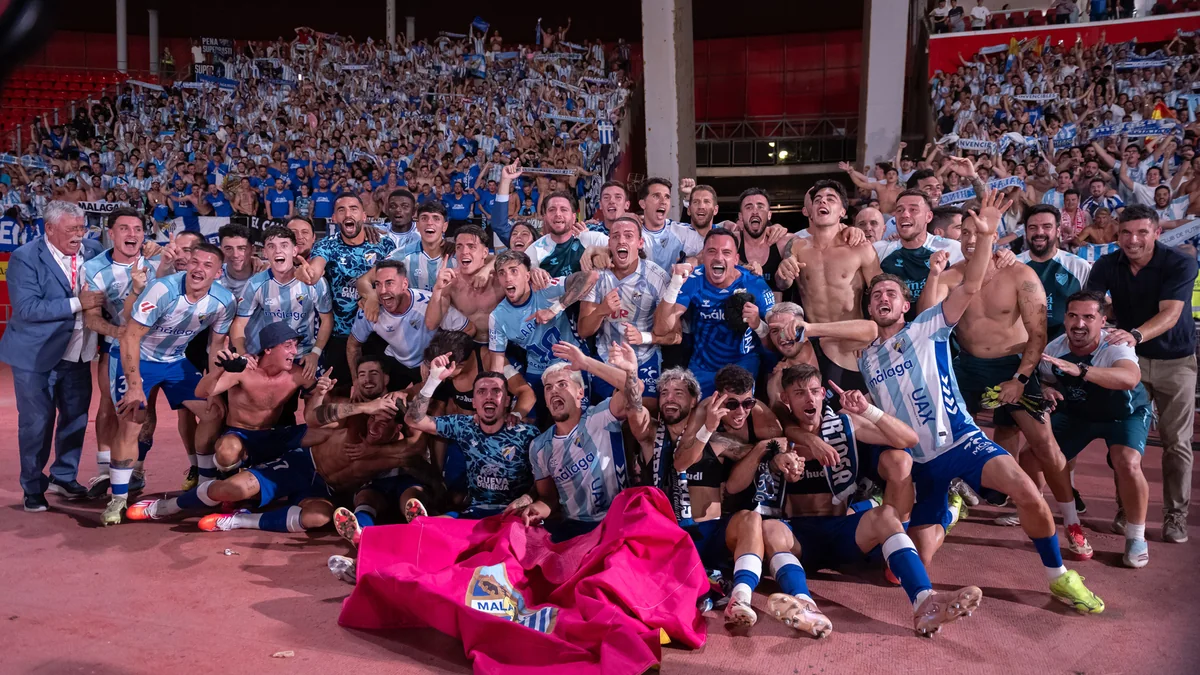
Málaga’s 2025/26 route is a useful example. The club finished fourth with 73 points, then eliminated Las Palmas in the semifinal. A goalless first leg against Almería left the final balanced before Málaga won 2–1 away in the return. Four playoff performances turned fourth place into a return to Spain’s top flight after eight years. The case shows why the playoff should not be described as a consolation prize: it is a separate, compressed competition layered on top of the league.
For supporters, the best way to read these matches is to ask four questions: Who finished higher? What is the aggregate score? Where is the second leg? What result does each side actually need? A late equaliser can be enough for the higher seed after extra time but insufficient for the lower seed. A cautious first-leg draw may be an excellent result for one club and a missed opportunity for the other.
That mixture of sporting merit and knockout jeopardy is the format’s attraction. The league determines who earns a place in the bracket and who owns the tiebreak advantage; the playoff still demands that one team survive two opponents. After the final whistle, our La Liga results page helps fans follow the promoted club when its top-flight campaign begins, while official LaLiga channels remain the definitive source for each season’s Segunda playoff results.
Comments
Sign in with Google to comment. Keep the conversation useful and football-focused. New comments are reviewed before they appear.
Loading comments…