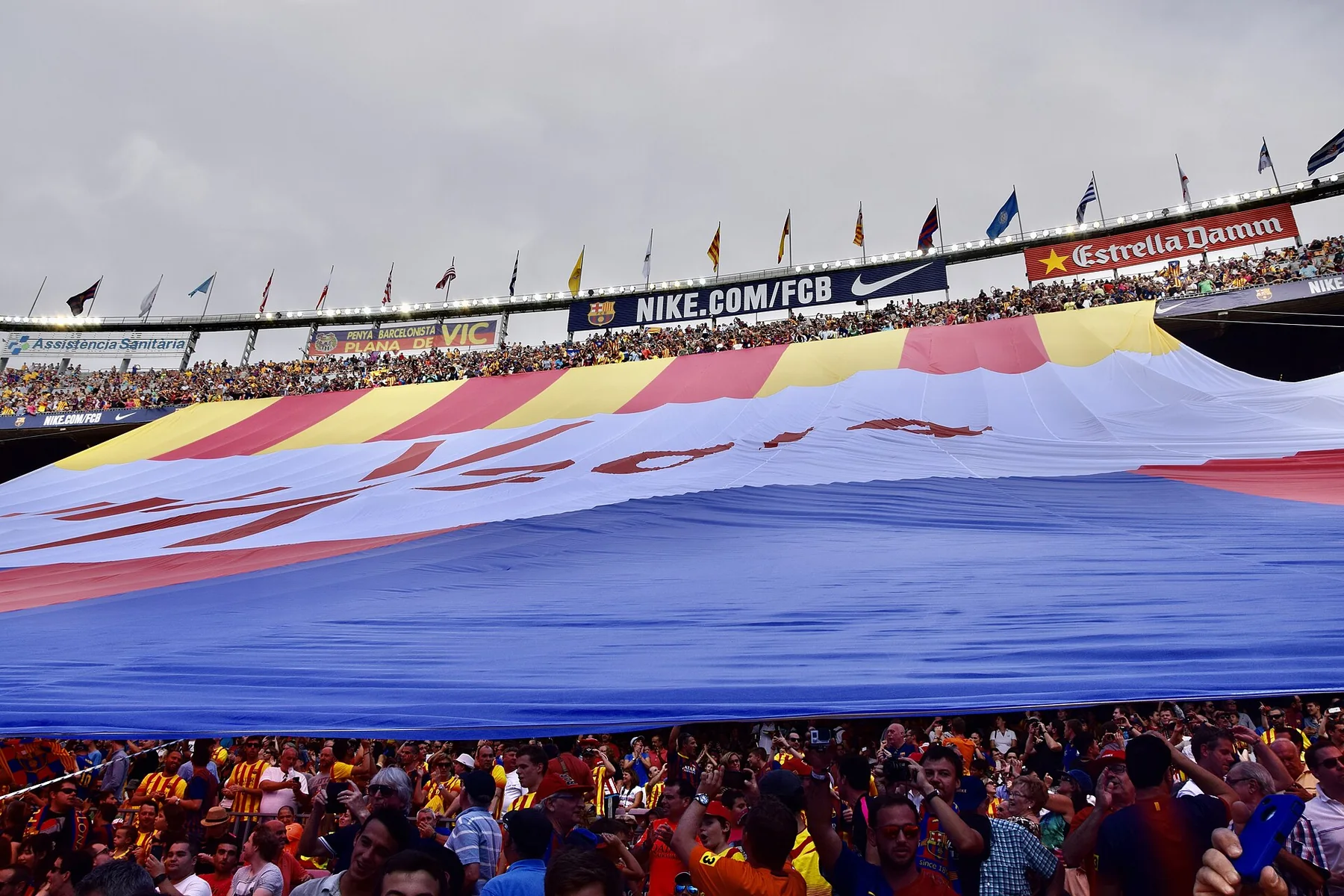
Barcelona won La Liga 2022/23 with 88 points, ten ahead of Real Madrid. Xavi Hernández's side conceded only 20 goals, Robert Lewandowski won the Pichichi with 23, and Real Valladolid joined Espanyol and Elche in relegation.
Champion
Barcelona, 88 points
Top scorer
Robert Lewandowski, 23
Survival line
Almería, 41 points
La Liga 2022/23 final table at a glance
Barcelona finished the 2022/23 La Liga season as champions with 88 points, ten clear of Real Madrid. Xavi Hernández's side won 28 of 38 matches and conceded only 20 goals, the number that most clearly separates the champion from the rest of the table. Madrid actually scored five more goals than Barcelona, but conceded 36; Atlético de Madrid scored the same 70 as Barça yet conceded 33. The title was therefore not simply a story of superior attacking output. Barcelona repeatedly protected small leads and made ordinary scoring totals worth more.
| Pos | Club | P | W-D-L | GF-GA | GD | Pts | Outcome |
|---|---|---|---|---|---|---|---|
| 1 | Barcelona | 38 | 28-4-6 | 70-20 | +50 | 88 | Champion, UCL |
| 2 | Real Madrid | 38 | 24-6-8 | 75-36 | +39 | 78 | UCL |
| 3 | Atlético de Madrid | 38 | 23-8-7 | 70-33 | +37 | 77 | UCL |
| 4 | Real Sociedad | 38 | 21-8-9 | 51-35 | +16 | 71 | UCL |
| 5 | Villarreal | 38 | 19-7-12 | 59-40 | +19 | 64 | UEL |
| 6 | Real Betis | 38 | 17-9-12 | 46-41 | +5 | 60 | UEL |
| 7 | Osasuna | 38 | 15-8-15 | 37-42 | -5 | 53 | UECL |
| 8 | Athletic Club | 38 | 14-9-15 | 47-43 | +4 | 51 | — |
| 9 | Mallorca | 38 | 14-8-16 | 37-43 | -6 | 50 | — |
| 10 | Girona | 38 | 13-10-15 | 58-55 | +3 | 49 | — |
| 11 | Rayo Vallecano | 38 | 13-10-15 | 45-53 | -8 | 49 | — |
| 12 | Sevilla | 38 | 13-10-15 | 47-54 | -7 | 49 | — |
| 13 | Celta Vigo | 38 | 11-10-17 | 43-53 | -10 | 43 | — |
| 14 | Cádiz | 38 | 10-12-16 | 30-53 | -23 | 42 | — |
| 15 | Getafe | 38 | 10-12-16 | 34-45 | -11 | 42 | — |
| 16 | Valencia | 38 | 11-9-18 | 42-45 | -3 | 42 | — |
| 17 | Almería | 38 | 11-8-19 | 49-65 | -16 | 41 | Safe |
| 18 | Real Valladolid | 38 | 11-7-20 | 33-63 | -30 | 40 | Relegated |
| 19 | Espanyol | 38 | 8-13-17 | 52-69 | -17 | 37 | Relegated |
| 20 | Elche | 38 | 5-10-23 | 30-67 | -37 | 25 | Relegated |
The top four qualified for the next Champions League through league position. Villarreal and Betis earned Europa League places, while seventh-placed Osasuna took the Conference League berth. At the other end, only three points separated 14th-placed Cádiz from Valladolid in 18th, evidence of how little breathing room existed below mid-table.
For current rather than historical positions, readers should use the live La Liga table. The 2022/23 standings are a record of a completed season, while qualification labels and club membership change from one campaign to the next.
How Barcelona won the 2022/23 La Liga title
Barcelona's first league title under Xavi was grounded in control without the ball as much as identity with it. The champions conceded 20 goals across 38 matches and kept 26 clean sheets. Marc-André ter Stegen was charged with 18 of those goals in his 38 appearances and equalled Paco Liaño's long-standing league record of 26 clean sheets. Opponents almost never found a cheap route back into matches.
Defensive control under Xavi
Xavi often used an extra midfielder instead of treating both wings as fixed forward positions. That choice could put four natural midfielders around the centre, support shorter passing options and leave the team in better positions to press after losing possession. The exact shape moved with the ball—full-backs could advance or tuck in, and a midfielder could appear higher between the lines—but the practical benefit was stability. Barcelona could circulate until an opening appeared while limiting the space for the first counterattack.
Personnel gave that structure authority. Ronald Araújo supplied recovery pace and one-against-one strength, Andreas Christensen read danger calmly, Jules Koundé could defend centrally or from the right, and Alejandro Balde offered speed on the left. Sergio Busquets remained the reference in front of them. When the first pressure was beaten, Ter Stegen completed the chain with an exceptional season.
Seventy goals was a strong total, but not the league's highest. What changed the mathematics was the frequency with which one goal was enough. A 1–0 win earns the same three points as a 4–0, and a defence that preserves those margins removes the need to chase another goal every week. That explains why the campaign could feel tense in individual games but decisive across eight months.
The derby night that clinched the championship
The release came away to Espanyol on 14 May 2023. Barcelona won the city derby 4–2 at the RCDE Stadium, with Robert Lewandowski scoring twice, and made the title mathematically secure with four fixtures remaining. It was the club's 27th league championship and its first since 2018/19. Winning it in a derby intensified the emotion; an assertive first half also gave the clinching night a different tone from the many low-scoring victories that had built the lead.
The final ten-point margin should not erase the work behind it. Barcelona reached the top in matchday seven, negotiated a mid-season World Cup interruption and responded to European disappointment by protecting their domestic advantage. Readers looking for the club's current squad and fixtures can use the Barcelona team page, but the defining image of 2022/23 remains a side that made defensive security a platform rather than an apology.
Real Madrid, Atlético and the race for Europe
The positions behind Barcelona were decided by very different kinds of season. Real Madrid finished second with 78 points, Atlético de Madrid were only one point back in third, and Real Sociedad completed the Champions League places on 71. The closeness between the two Madrid clubs contrasts sharply with the ten-point gap between first and second.
Why Madrid finished second
Real Madrid led La Liga for goals with 75, five more than the champion, but eight defeats prevented Carlo Ancelotti's side from sustaining a title defence. Madrid's attack could produce the league's biggest total, yet the team conceded 16 more goals than Xavi's side and lost two more matches. When the champion was so reliable at protecting leads, each dropped result became harder to recover.
Madrid were simultaneously defending their European title, reached another Champions League semi-final and won the Copa del Rey. That does not turn league losses into an accident, but it helps explain the strain of competing deep into several competitions. Their league finish was confirmed with a 1–1 draw against Athletic Club on the last day. Atlético's own 2–2 draw at Villarreal left Diego Simeone's side one point short of second.
Atlético's third place was built through a much stronger post-World Cup run than their uneven autumn suggested. They ended with 70 goals—level with Barcelona—and 77 points. Antoine Griezmann provided creativity and scoring influence, while a more fluid attacking structure helped Atlético recover from early setbacks. Their Champions League qualification was the club's 11th in succession, a measure of Simeone's consistency even in a campaign that began awkwardly.
Real Sociedad's Champions League breakthrough
Real Sociedad supplied the freshest top-four story. Imanol Alguacil's team finished fourth with 71 points after 21 wins, eight draws and nine defeats. They scored 51 and conceded 35, remaining in the top four from matchday 14 onward. Qualification was not stolen by one late run; La Real occupied the position for most of the meaningful race and kept Villarreal seven points behind by the end.
Their Champions League place became mathematically secure on matchday 37 in unusual circumstances. Real Sociedad lost 2–1 away to Atlético, but Villarreal's defeat at Rayo Vallecano meant fourth could no longer be taken from them. It was the San Sebastián club's first return to the Champions League in a decade.
Villarreal settled for fifth and the Europa League on 64 points, six ahead of sixth-placed Betis. Osasuna's 53 points earned seventh and a Conference League route, complementing a memorable run to the Copa del Rey final. Those outcomes rewarded several identities: Villarreal's technical quality, Betis's continued top-six stability, Osasuna's resilience and Real Sociedad's season-long structure. The current La Liga teams index shows how today's membership differs from this snapshot.
Relegation went to the final day
Barcelona wrapped up the title early, but the struggle to remain in La Liga stayed unresolved until the final minutes of matchday 38. Elche had long been condemned and Espanyol's relegation was confirmed on the penultimate weekend. The third place sat beneath a cluster in which one result could redraw several positions.
Elche and Espanyol fall
Elche ended the season 20th with 25 points, twelve behind Espanyol and fifteen behind Valladolid. Their five wins and 67 goals conceded describe a campaign in which recovery never became plausible. Espanyol's problem was different. They scored 52 goals—more than any club in the bottom eight—but conceded a league-high 69. That imbalance repeatedly turned promising attacking work into draws or defeats.
Espanyol's 2–2 draw at Valencia on matchday 37 made survival mathematically impossible. The outcome carried a painful symmetry: Barcelona had clinched the title at Espanyol's stadium two weeks earlier, and a late concession at Mestalla closed the remaining escape route. On the final day, already relegated Espanyol still influenced the battle by drawing 3–3 with Almería.
Valladolid lose the last survival fight
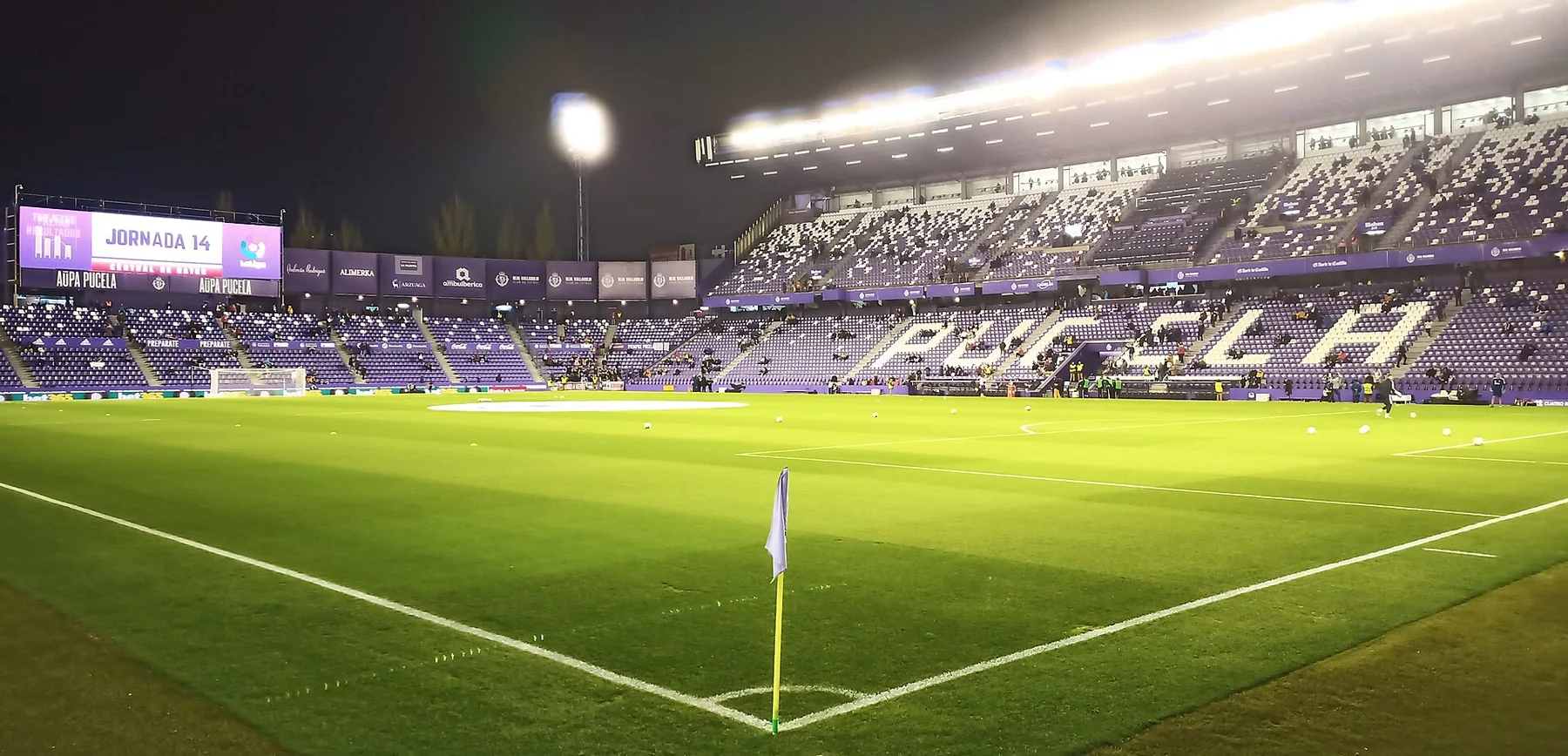
Real Valladolid entered 4 June 2023 with their future open. Their home fixture against Getafe was effectively a survival match, but the 0–0 draw suited the visitors and left Valladolid in 18th on 40 points. The club's own account described a sterile score: plenty of urgency, no goal and no result elsewhere strong enough to rescue them. Valladolid went down only one season after promotion.
The other scores explain why watching only one game could not capture the tension. Almería's 3–3 at Espanyol took them to 41 points. Celta Vigo beat the already crowned Barcelona 2–1 to remove doubt. Cádiz drew 1–1 at Elche, Valencia drew 1–1 at Betis, and Getafe protected the point they needed. Almería, Cádiz, Getafe, Valencia and Celta survived; Valladolid were the one club from that last-day group to fall.
This is the clearest illustration of the table's compression. Cádiz in 14th and Valladolid in 18th were separated by only two points after the final round. A side could have a poor overall season and still save itself with one disciplined performance. Conversely, Valladolid's 3–1 victory over Barcelona on matchday 36 was not enough because a league rewards accumulation, not the drama of one upset.
The La Liga results archive provides the match-by-match context behind a final table that otherwise looks static. The relegation line is only one horizontal boundary; on 4 June it represented simultaneous pressure in multiple cities, changing with every goal.
La Liga 2022/23 top scorers and attacking trends
Robert Lewandowski won the 2022/23 Pichichi Trophy with 23 league goals in 34 appearances. It was his first season in Spain, and his total placed him four clear of Karim Benzema. Barcelona therefore took both headline individual prizes: Lewandowski led the scoring while Ter Stegen won the Zamora for goalkeeping.
| Rank | Player | Club in 2022/23 | Goals |
|---|---|---|---|
| 1 | Robert Lewandowski | Barcelona | 23 |
| 2 | Karim Benzema | Real Madrid | 19 |
| 3 | Joselu | Espanyol | 16 |
| =4 | Antoine Griezmann | Atlético de Madrid | 15 |
| =4 | Vedat Muriqi | Mallorca | 15 |
| =4 | Borja Iglesias | Real Betis | 15 |
| 7 | Enes Ünal | Getafe | 14 |
| =8 | Taty Castellanos | Girona | 13 |
| =8 | Álvaro Morata | Atlético de Madrid | 13 |
| 10 | Iago Aspas | Celta Vigo | 12 |
Lewandowski delivers in his first Spanish season
A new centre-forward had to become the reference for a reshaped Barcelona attack, give the team a reliable target in the penalty area and convert enough chances for the defensive model to pay off. Lewandowski's two goals in the title-clinching derby captured that relationship: control created the platform, but the striker still had to turn superiority into a decisive score.
Twenty-three was not an enormous Pichichi total by the extraordinary standards set during the Lionel Messi and Cristiano Ronaldo era. That comparison can mislead. A scoring crown is won against the players and conditions of its own season, and Lewandowski finished four goals ahead despite making four fewer appearances than the maximum. His contribution was especially valuable because no other Barcelona player approached his league total.
The chasing scorers and what their totals reveal
Benzema's 19 helped Real Madrid produce the league's highest team total. The most striking name beneath him is Joselu. His 16 goals made him the third-highest scorer even as Espanyol finished 19th. Scoring and team success are related but not interchangeable: Espanyol's attack was productive for a relegated side, yet 69 conceded goals erased too much of that value.
The three-way tie on 15 shows the variety of effective forward play. Griezmann linked midfield and attack for Atlético; Muriqi gave Mallorca a focal point for direct play and crosses; Borja Iglesias led the line for a possession-capable Betis. Enes Ünal's 14 were crucial to low-scoring Getafe's survival, while Castellanos announced himself with 13 in promoted Girona's adventurous team.
Goals were distributed across clubs with radically different objectives. The race included a champion's elite No. 9, a relegated team's finisher and several forwards carrying mid-table attacks. Use the current La Liga top scorers table for live totals; this list is the completed 2022/23 record.
Results and moments that defined the season
A season review needs more than final numbers. Certain results altered belief, exposed weaknesses or turned a mathematical possibility into an emotional certainty. In 2022/23, the two league Clásicos provide the clearest spine, but the campaign also gave promoted Girona a historic night and pushed survival to the last whistle.
Clásicos, narrow wins and turning points
Real Madrid won the first league Clásico 3–1 at the Santiago Bernabéu on 16 October 2022. Karim Benzema, Federico Valverde and Rodrygo scored, and Madrid moved top. At that stage, the reigning champion looked capable of setting the season's terms. Barcelona's response was not one spectacular week; it was the accumulation of results that followed, particularly the narrow wins made possible by their defence.
The return Clásico on 19 March became the symbolic transfer of control. Ronald Araújo's own goal put Madrid ahead, Sergi Roberto equalised, and Franck Kessié finished a stoppage-time move for a 2–1 Barcelona victory. Barça moved 12 points clear with 12 rounds remaining. Madrid had briefly appeared to score a late winner before Marco Asensio's effort was ruled out for offside, making Kessié's finish feel like a six-point swing compressed into minutes.
Barcelona's many one-goal victories were not all classics, but they were collectively decisive. Winning 1–0 at Atlético in January, then beating Getafe and Girona by the same score, turned the first weeks after the World Cup into a statement of repeatable control. The ability to win below one's creative best is often the mechanism that prevents a rival closing the gap.
Girona's 4–2 win over Real Madrid on 25 April offered the season's outstanding upset. Taty Castellanos scored all four goals at Montilivi, becoming the first player in more than 75 years to hit four against Madrid in a La Liga game. It was not merely a curiosity. Promoted Girona played with courage, finished tenth and scored 58 goals—more than every club outside the top five.
What the 2022/23 campaign left behind
The championship was secured in a more emphatic way than Barcelona's typical scoreline: 4–2 at Espanyol on matchday 34. Behind them, Atlético's recovery nearly took second, Real Sociedad returned to the Champions League, and Osasuna paired seventh place with a Copa del Rey final. On the last day, Valladolid's goalless draw completed a bottom-table story that remained live after the title race had ended.
The legacy is broader than “Barcelona won.” Xavi found a domestic formula based on midfield control and elite prevention; Lewandowski supplied a scoring reference; Real Sociedad proved a coherent project could enter the top four; Girona showed ambition could reward a promoted side; and the survival race showed how thin the margins were for nearly half the league.
Fans checking a historical score can use the La Liga results page alongside this narrative. The result tells what happened; the sequence explains why it mattered. In 2022/23, Barcelona's sequence was the most sustainable one, and the final ten-point margin was its consequence.
Comments
Sign in with Google to comment. Keep the conversation useful and football-focused. New comments are reviewed before they appear.
Loading comments…