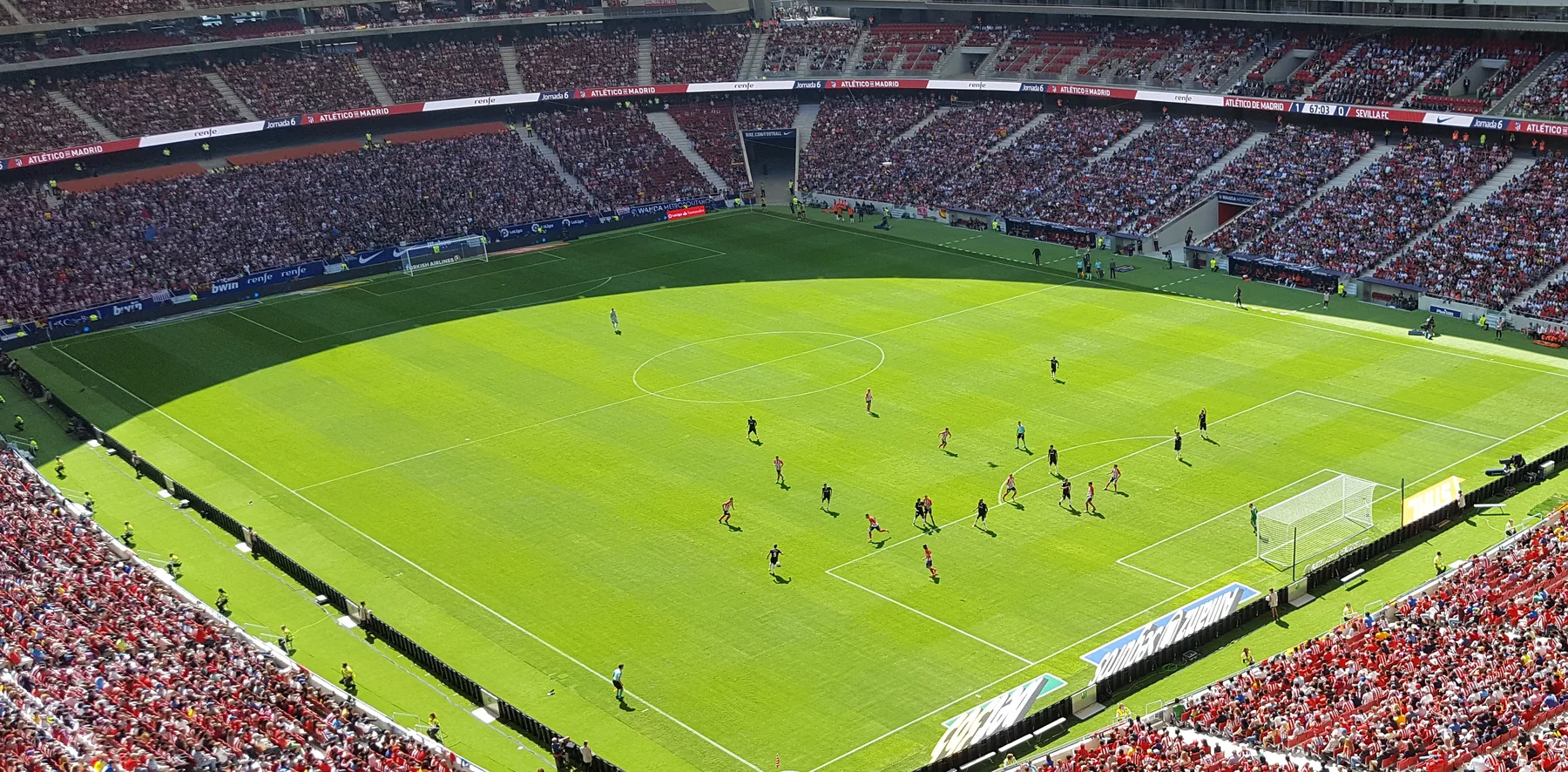
Atlético Madrid won La Liga 2020/21 with 86 points, two ahead of Real Madrid. Diego Simeone's side conceded a league-low 25 goals, Luis Suárez scored 21, and Lionel Messi claimed the Pichichi with 30 in his final league season for Barcelona.
Champion
Atlético Madrid, 86 points
Top scorer
Lionel Messi, 30
Survival line
Elche, 36 points
La Liga 2020/21 final table
Atlético Madrid won La Liga 2020/21 with 86 points, two ahead of Real Madrid. Both clubs scored 67 goals and lost four matches. Atlético's advantages were small but decisive: they won one more, drew one fewer and conceded 25 to Madrid's 28. Barcelona scored a league-high 85 yet finished third on 79, while Sevilla remained in the race late enough to finish fourth on 77.
| Pos | Club | P | W-D-L | GF-GA | GD | Pts | Outcome |
|---|---|---|---|---|---|---|---|
| 1 | Atlético Madrid | 38 | 26-8-4 | 67-25 | +42 | 86 | Champion, UCL |
| 2 | Real Madrid | 38 | 25-9-4 | 67-28 | +39 | 84 | UCL |
| 3 | Barcelona | 38 | 24-7-7 | 85-38 | +47 | 79 | UCL |
| 4 | Sevilla | 38 | 24-5-9 | 53-33 | +20 | 77 | UCL |
| 5 | Real Sociedad | 38 | 17-11-10 | 59-38 | +21 | 62 | UEL |
| 6 | Real Betis | 38 | 17-10-11 | 50-50 | 0 | 61 | UEL |
| 7 | Villarreal | 38 | 15-13-10 | 60-44 | +16 | 58 | UCL via Europa League title |
| 8 | Celta Vigo | 38 | 14-11-13 | 55-57 | -2 | 53 | — |
| 9 | Athletic Club | 38 | 11-13-14 | 46-42 | +4 | 46 | — |
| 10 | Granada | 38 | 13-7-18 | 47-65 | -18 | 46 | — |
| 11 | Osasuna | 38 | 11-11-16 | 37-48 | -11 | 44 | — |
| 12 | Cádiz | 38 | 11-11-16 | 36-58 | -22 | 44 | — |
| 13 | Valencia | 38 | 10-13-15 | 50-53 | -3 | 43 | — |
| 14 | Levante | 38 | 9-14-15 | 46-57 | -11 | 41 | — |
| 15 | Getafe | 38 | 9-11-18 | 28-43 | -15 | 38 | Safe |
| 16 | Alavés | 38 | 9-11-18 | 36-57 | -21 | 38 | Safe |
| 17 | Elche | 38 | 8-12-18 | 34-55 | -21 | 36 | Safe |
| 18 | Huesca | 38 | 7-13-18 | 34-53 | -19 | 34 | Relegated |
| 19 | Valladolid | 38 | 5-16-17 | 34-57 | -23 | 31 | Relegated |
| 20 | Eibar | 38 | 6-12-20 | 29-52 | -23 | 30 | Relegated |
The top four qualified through the league for the following Champions League. Real Sociedad and Betis reached the Europa League. Villarreal's European destination needs separate explanation because winning the Europa League after finishing seventh took them into the Champions League rather than the new Conference League.
The table also reveals contrasting routes to failure and survival. Getafe and Alavés stayed up on 38 points, while promoted Elche survived on 36. Huesca were two behind; Valladolid's 16 draws could not compensate for only five wins; Eibar's 29 goals were the league's lowest total.
For a fan, the headline is competitive compression at the top and bottom. The title depended on the final day, while the last survival place also remained open. Use the current La Liga table for live standings; this is the completed 2020/21 record.
How Atlético Madrid won an unforgettable title
Atlético's title was built on evolution, not a rejection of Diego Simeone's principles. They still protected the penalty area, competed fiercely for second balls and trusted Jan Oblak behind an experienced defence. The final total of 25 goals conceded was the best in the division, and Oblak's 18 league clean sheets gave the side a dependable floor. Yet the champion was more flexible in possession than the familiar label of a fixed 4-4-2 suggests.
A structure that changed with the phase
Simeone frequently used three centre-backs, especially when Mario Hermoso moved inside from the left. Kieran Trippier could advance on the right and Yannick Carrasco could provide width on the opposite side. Without the ball, those wide players could fall into a five; with it, they stretched the pitch and created better lanes for Koke, Thomas Lemar and Marcos Llorente. The shape was never a rigid diagram. It could look like 3-5-2, 5-3-2 or 4-4-2 during different phases of the same match.
That adaptability mattered because it released Llorente to attack forward spaces. He could combine with Trippier, run beyond the front line or arrive late rather than remain a conventional central midfielder. Carrasco offered a similarly aggressive outlet from the left. Their movement surrounded Luis Suárez with runners and reduced the amount of open-field work required from the veteran striker.
Suárez supplies the missing penalty-box edge
Suárez was the decisive addition. Barcelona had allowed him to leave before the season, but he answered with 21 La Liga goals for Atlético. He did not need to dominate every touch. His value lay in anticipating rebounds, finding a yard between centre-backs and turning half-chances into goals. In a campaign decided by two points, that efficiency was enormous. He scored against Osasuna during the penultimate-round comeback and then struck the title-winning goal at Valladolid.
The numbers show how the parts fitted together. Atlético scored 67, no more than Real Madrid and 18 fewer than Barcelona, but they conceded only 25. Their 26 wins were the league's highest total. A flexible build-up helped them create enough, Suárez converted key chances, and the defensive platform prevented ordinary matches from becoming shootouts.
This was also Simeone's second La Liga title as Atlético coach, seven seasons after 2013/14. The long gap made 2020/21 feel less like repetition and more like proof that his model could change with a different squad. Fans comparing the champion with today's field can browse the La Liga teams guide, but the defining quality of this Atlético side was balance: new attacking connections supported an old commitment to defending every advantage.
The title race went to the final day
Atlético entered the final two rounds with no room for comfort. Real Madrid were close enough to punish one mistake, and both contenders played at the same time. What followed was not a smooth procession but two comebacks that made the championship feel undecided almost to the final whistle.
Osasuna turn the live table upside down
The first crisis came at home to Osasuna on Matchday 37. Atlético needed a win to preserve control of the race, yet Ante Budimir put the visitors ahead in the second half. At roughly the same time, Nacho's goal had placed Real Madrid in front at Athletic Club. The live table briefly turned against Simeone's team.
Renan Lodi changed the mood in the 82nd minute, meeting João Félix's pass and finishing from the left side of the area. Six minutes later, Carrasco drove forward and supplied Suárez, whose first-time finish made it 2-1. Madrid won 1-0 in Bilbao, but Atlético's late recovery kept them two points clear and established a simple final-day equation: beat Valladolid and they were champions.
Valladolid 1–2 Atlético seals the championship
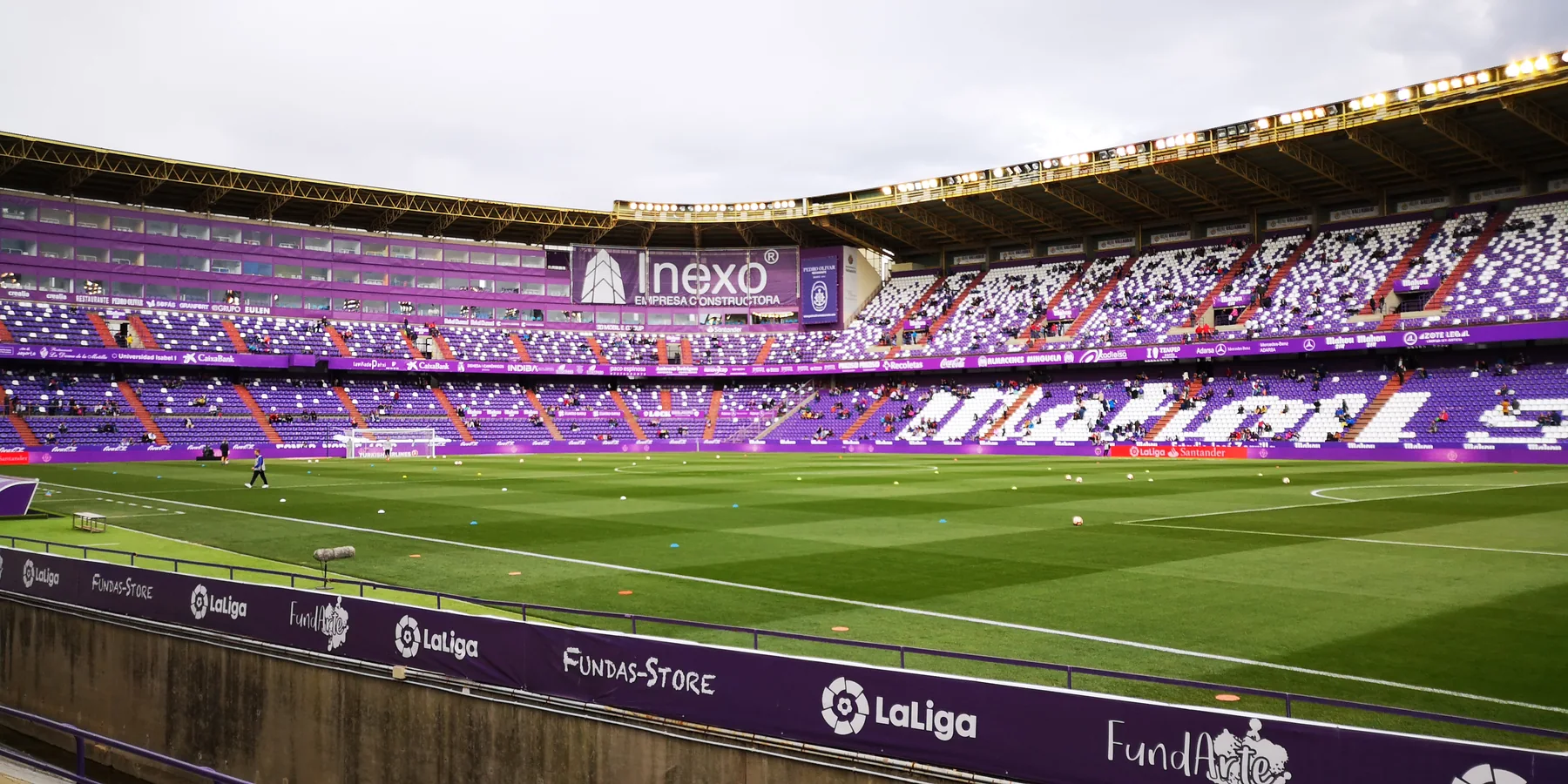
That equation sounded straightforward only on paper. Valladolid needed a win to have any hope of avoiding relegation, and Óscar Plano broke through to give them an 18th-minute lead. In Madrid's simultaneous match, Villarreal also went ahead. For a while, neither title contender was taking advantage, but every goal altered the possibilities.
Ángel Correa produced Atlético's equaliser in the 57th minute, carrying the ball between defenders and poking a low shot into the corner. Ten minutes later, a loose Valladolid pass sent Suárez clear. He advanced alone and finished past Jordi Masip for his 21st league goal. Atlético led 2-1 and finally had one hand on the trophy.
Real Madrid created its own late drama. Karim Benzema equalised against Villarreal in the 87th minute and Luka Modrić scored in added time for a 2-1 win. Had Atlético failed to win, that comeback could have delivered the title to Madrid on the head-to-head tiebreaker. Instead, the leaders closed out their own 2-1 victory and finished on 86 points to Madrid's 84.
The emotional centre of the race is therefore bigger than one last-day score. Atlético trailed in both of their final two matches and found four second-half goals. Suárez supplied the winner in each. Fans looking back through other completed matchdays can use the La Liga results archive, but few sequences show the value of late-season resilience as clearly as Osasuna followed by Valladolid.
Real Madrid, Barcelona and Sevilla in pursuit
Atlético did not run away from a weak field. Real Madrid pursued them to the final minute, Barcelona briefly had the chance to take control, and Sevilla stayed close enough in spring to create a genuine four-team conversation. The final positions hide how many times the pressure shifted.
Madrid finish two points short
Real Madrid were the most persistent challenger. Zinedine Zidane's side finished with 84 points, the same 67 goals as Atlético and only three more conceded. The club closed the league with an 18-match unbeaten run, winning 13 of those games. That finish included a Clásico victory over Barcelona and the last-day comeback against Villarreal.
The difficulty was that an unbeaten run can include expensive draws. Madrid recorded nine across the season, one more than Atlético, and finished with one fewer victory. Earlier defeats against Cádiz, Valencia, Alavés and Levante also reduced their margin for error. By the time the holders found their most stable rhythm, they needed Atlético to drop points as well as winning their own games.
Barcelona's attack and Sevilla's late challenge
Barcelona's record was more volatile. Ronald Koeman's team scored 85, the league's highest total, and Messi supplied 30 of them. At their best, the combination of Messi's creation and finishing, young midfield talent and attacking full-backs could overwhelm opponents. Their goal difference of plus 47 was actually five better than Atlético's.
However, Barcelona lost seven league matches, compared with four each for the top two. The clearest missed opportunity arrived on 29 April. A home win over Granada would have taken Barça top, but Granada recovered from Messi's opener to win 2-1. A 0-0 draw with Atlético left the leaders ahead, and a 2-1 home loss to Celta in the penultimate round ended Barcelona's mathematical hope. Finishing third on 79 showed the gap between an explosive attack and a complete title campaign.
Sevilla's involvement should not be reduced to a distant fourth. Julen Lopetegui's side won 24 matches, the same number as Barcelona, and a five-game winning streak carried them into May with a chance. Then Athletic Club survived Sevilla pressure at the Sánchez-Pizjuán and Iñaki Williams scored a 90th-minute winner on the counterattack. The 1-0 defeat removed the momentum and left Sevilla chasing three clubs with too little season remaining.
Sevilla still posted 77 points, only two behind Barcelona and nine behind the champion. Their presence made the season unusually broad at the top, but the final lesson was unforgiving: Atlético survived their late crises, while every challenger had already spent points it could not recover. The Real Madrid team page covers the club's current squad and fixtures; this two-point miss belongs to the completed 2020/21 race.
Europe and relegation in a pandemic season
The races below fourth place carried their own complications. Real Sociedad finished fifth with 62 points and Real Betis sixth with 61, earning the two Europa League places. Villarreal placed seventh on 58, but their European future was not decided by that league position alone.
Villarreal's special Champions League route
Four days after La Liga's final round, Villarreal faced Manchester United in the Europa League final. Gerard Moreno scored first, Edinson Cavani equalised, and the match remained 1-1 through extra time. Villarreal won an extraordinary shootout 11-10. The trophy carried automatic entry to the next Champions League group stage, so Spain sent five clubs to that competition: Atlético, Real Madrid, Barcelona, Sevilla and Villarreal.
That route matters when reading the final table. Seventh normally points toward the lowest UEFA place available through domestic allocation, but a European title can override the league destination. Villarreal's achievement did not move them above Betis or Sociedad in the 2020/21 standings; it changed which competition they entered in 2021/22. Our explainer on how La Liga teams qualify for the Champions League and Europe separates those routes in more detail.
Elche survive as three clubs fall
At the bottom, Eibar were the first of the final three to be confirmed. A 4-1 defeat at Valencia on Matchday 37 ended their seven-season stay in the top flight. Elche, Huesca and Valladolid then entered the final weekend with survival still unsettled.
Elche did what they could control, beating Athletic Club 2-0 and reaching 36 points. Huesca needed a better response but drew 0-0 at home to Valencia. As news of Elche's lead travelled to El Alcoraz, Huesca's score became insufficient; they finished two points below safety. Valladolid's 2-1 loss to Atlético simultaneously crowned the champion and confirmed Valladolid's relegation. They ended 19th on 31, one ahead of Eibar.
A season played under COVID restrictions
The entire story unfolded against the unnatural background of COVID restrictions. Most matches were played without ordinary crowds, removing much of the noise and home atmosphere that usually shape a Spanish season. LaLiga later called 2020/21 the season hardest hit by the pandemic. Its financial analysis identified closed stadiums as a major reason for reduced matchday income and said roughly 90% of the cumulative COVID impact on professional competition billings fell in that season.
Those conditions affected every club, not only the teams in trouble. Coaches managed congested schedules and health protocols; clubs operated without normal gate revenue; players contested the decisive moments in grounds that often sounded like training venues. It would be wrong to use the pandemic as a simple explanation for any one result, but it is equally wrong to remember the season as if it happened under ordinary conditions.
The European and relegation outcomes therefore add two kinds of context. Villarreal showed that a club's season can be transformed after its league position is fixed, while Elche survived because the last-day results finally moved in their favour. Above all, the closed-stadium setting made the campaign visually and emotionally distinct, even when its title and survival drama remained intense.
Messi wins the Pichichi: 2020/21 top scorers
Lionel Messi won the 2020/21 Pichichi Trophy with 30 La Liga goals in 35 appearances. It was his eighth Spanish top-scorer award and his fifth in a row. The achievement became even more historically resonant because it was his final league season for Barcelona before joining Paris Saint-Germain.
| Rank | Player | Club in 2020/21 | Goals |
|---|---|---|---|
| 1 | Lionel Messi | Barcelona | 30 |
| =2 | Karim Benzema | Real Madrid | 23 |
| =2 | Gerard Moreno | Villarreal | 23 |
| 4 | Luis Suárez | Atlético Madrid | 21 |
| 5 | Youssef En-Nesyri | Sevilla | 18 |
| 6 | Alexander Isak | Real Sociedad | 17 |
| 7 | Iago Aspas | Celta Vigo | 14 |
| =8 | Antoine Griezmann | Barcelona | 13 |
| =8 | José Luis Morales | Levante | 13 |
| =8 | Rafa Mir | Huesca | 13 |
Messi's eighth scoring title
Messi finished seven clear of both Benzema and Gerard Moreno. He also provided nine league assists according to Barcelona's annual report, so his influence extended beyond the finishing column. Barcelona's 85 goals were the division's highest total, and Messi scored more than a third of them.
The ranking also shows why goal totals need team context. Benzema's 23 drove a Real Madrid side that finished only two points short of the championship. Gerard Moreno matched that total for seventh-place Villarreal and then scored in the Europa League final. Suárez finished two behind them, but his 21 included the winners in Atlético's final two matches. The scoring champion was Messi; the goals with the clearest effect on the team champion belonged to Suárez.
Scoring spread across different objectives
Below the first four, Youssef En-Nesyri's 18 supported Sevilla's fourth-place finish and Alexander Isak's 17 helped Real Sociedad take fifth. Iago Aspas again carried much of Celta Vigo's attacking responsibility. The three players tied on 13 came from radically different campaigns: Griezmann played for the league's top-scoring team, Morales helped Levante stay clear of trouble, and Rafa Mir scored 13 even as Huesca were relegated.
That distribution is a useful final portrait of the season. The title did not simply go to the team with the leading scorer or the most team goals. Atlético won through defensive control, collective movement and the timing of Suárez's finishes. Messi nevertheless remained the division's most prolific individual and closed his Barcelona league career with another scoring record.
Use the current La Liga top scorers table for live figures. The ranking above is fixed to league goals in 2020/21 and does not mix in Copa del Rey, Champions League or Europa League totals.
Comments
Sign in with Google to comment. Keep the conversation useful and football-focused. New comments are reviewed before they appear.
Loading comments…