La Liga history and records
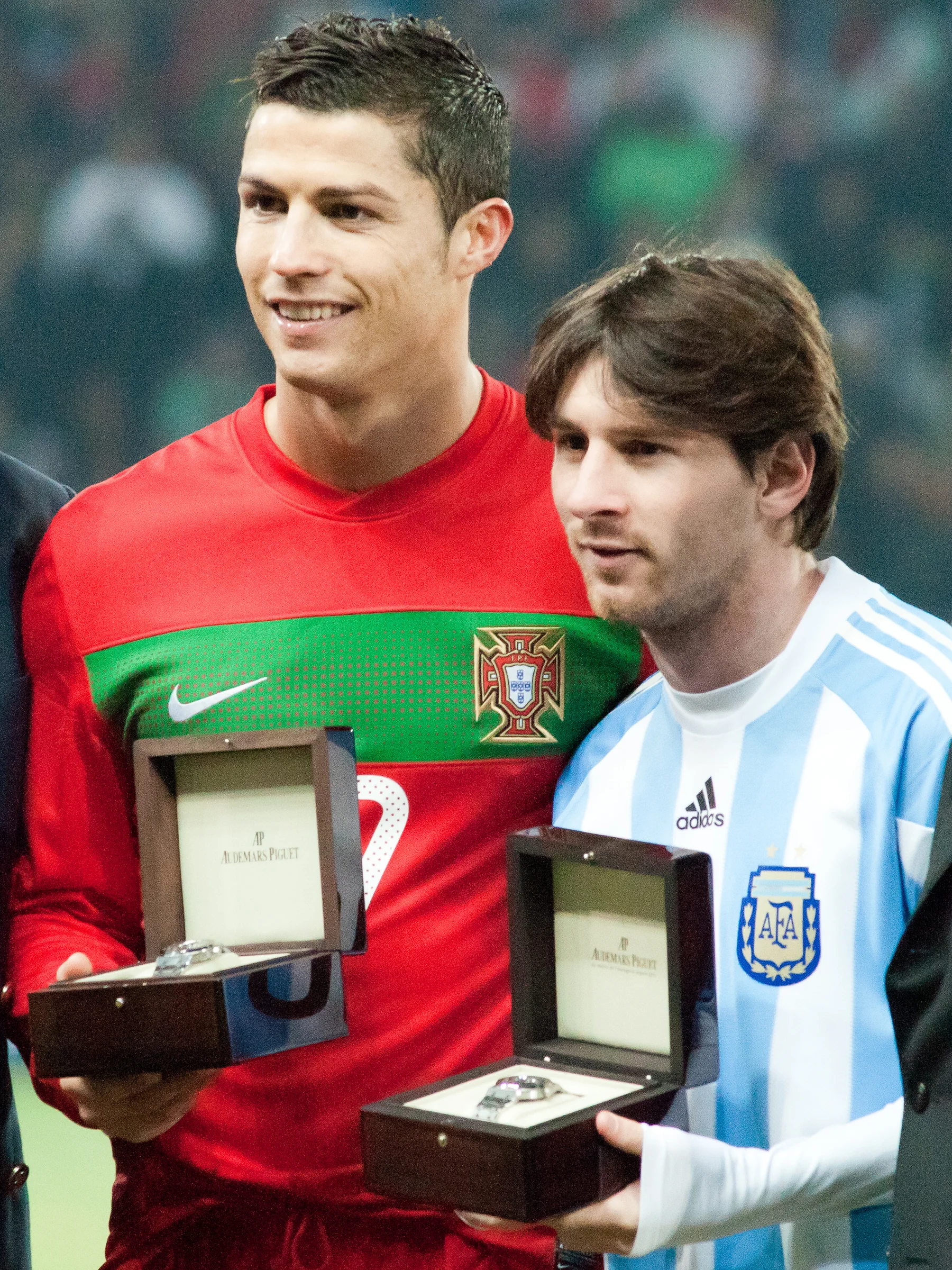
In their nine shared La Liga seasons, Lionel Messi scored 329 goals and Cristiano Ronaldo scored 311. Their scoring rate was virtually identical; Messi's larger creative output, five shared-era Pichichis and six league titles give him the stronger overall Spanish-league case.
This comparison fixes the denominator before choosing a winner. It separates the direct 2009/10–2017/18 contest from their full La Liga careers, labels provider-dependent assists, and keeps Champions League achievements outside a league-only verdict.
The Fair Comparison: Their Nine Shared La Liga Seasons
The cleanest Messi-versus-Ronaldo La Liga comparison begins on the opening weekend of 2009/10 and ends after the final round of 2017/18. Cristiano Ronaldo arrived at Real Madrid in the summer of 2009 and left for Juventus nine seasons later. Lionel Messi was already Barcelona's central attacking figure and remained in Spain beyond Ronaldo's departure, but those extra years do not belong in a like-for-like head-to-head. The shared window gives both players the same league, opponents, calendar and broad competitive environment.
Across those nine seasons, Messi scored 329 La Liga goals in 309 appearances; Ronaldo scored 311 in 292. Together they produced 640 league goals, a number so extreme that it explains why an ordinary title race often felt like two simultaneous events: Barcelona against Real Madrid, and Messi against Ronaldo. Eighteen goals separate them, but Ronaldo played 17 fewer matches. That immediately tells a fan why raw totals and scoring rate need to be read together rather than used as rival slogans.
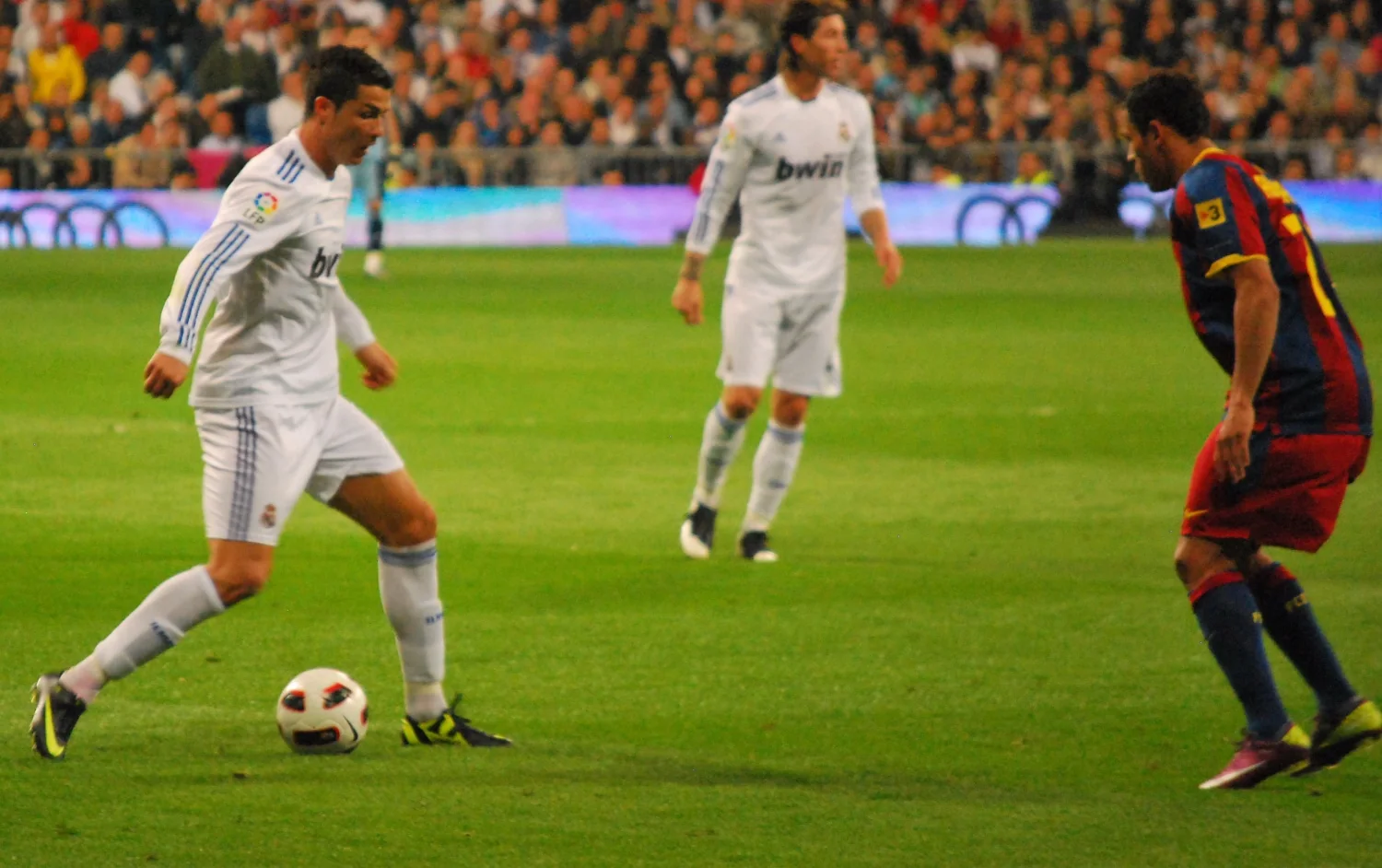
That distinction matters most when someone says Messi finished with 474 La Liga goals while Ronaldo finished with 311. The figures are legitimate full-career totals, yet they answer a different question. Messi accumulated league goals for Barcelona from 2004/05 through 2020/21. Ronaldo's Spanish sample is exactly his Real Madrid spell. A fan asking who owns the greater La Liga career should consider the complete totals; a fan asking who was better while they directly shared the stage should start with 329 against 311.
Assists require even more care. Different statistics publishers apply different rules to deflections, rebounds, won penalties and secondary actions. One current specialist comparison credits Messi with 122 league assists and Ronaldo with 87 during the overlap, while StatMuse lists a much narrower 64 for Messi in the same seasons. The gap is not evidence that one arithmetic answer is automatically false; it is evidence that assist providers do not all count the same event. This guide therefore keeps goal totals firm, labels assist figures by source and leans on rates only when the numerator and minutes come from one consistent dataset.
The result is a comparison built for football rather than social media. It preserves Ronaldo's remarkable scoring efficiency, gives Messi's creative workload room to be measured, and prevents three Barcelona-only seasons after 2018 from quietly changing a direct duel. Fans can also compare the current La Liga top scorers to see how unusual it is for any forward to sustain even a fraction of their output.
Titles, Pichichis and the Seasons That Shifted the Rivalry
La Liga is a 38-match argument about consistency, so the title column cannot be reduced to an individual scoring chart. During the nine seasons Messi and Ronaldo shared Spain, Barcelona won the league six times, Real Madrid twice and Atlético Madrid once. Messi therefore holds a clear shared-era championship advantage, but “Messi 6–2 Ronaldo” is still shorthand for team outcomes. Xavi, Andrés Iniesta, Sergio Busquets, Dani Alves and later Luis Suárez shaped Barcelona's control; Madrid's changing coaches, midfield balance and extraordinary European priorities shaped Ronaldo's context.
The Pichichi race produces a more individual comparison. Messi was La Liga's leading scorer in five of the nine seasons: 2009/10, 2011/12, 2012/13, 2016/17 and 2017/18. Ronaldo led in 2010/11, 2013/14 and 2014/15. Luis Suárez broke their run in 2015/16 with Barcelona. That 5–3 edge supports Messi's league case, but the season sequence is more revealing than the final count.
2011/12: records split
Messi set the lasting single-season La Liga record with 50 goals. Ronaldo scored 46, yet Madrid won the title with the more reliable week-to-week team campaign. The best scorer and champion were on opposite sides.
2013/14: Atlético intervenes
Ronaldo won the Pichichi, but Diego Simeone's Atlético took the league. It remains the clearest reminder that defending, set pieces, depth and resilience can outweigh the biggest individual total.
2014/15: 48 was not enough
Ronaldo reached his La Liga high of 48 goals, only two below Messi's record. Barcelona still won the championship as its Messi-Suárez-Neymar attack and improved defensive structure peaked together.
Those three campaigns expose the weakness in arguing from one award. Messi's 50-goal season did not bring the title; Ronaldo's 48-goal season did not either. A Pichichi tells us who finished the most league chances across a season. A championship tells us which squad accumulated the most points after tactical adaptation, injuries, rotation, away pressure and bad-weather afternoons. Both are important, but neither can substitute for the other.
The closing seasons altered the domestic balance again. Madrid combined Ronaldo's goals with a deeper midfield and bench to win 2016/17, their second league of the overlap. Barcelona responded by winning 2017/18, Messi taking the Pichichi as the team went unbeaten until its penultimate fixture. Ronaldo's Madrid simultaneously built a historic Champions League run, an enormous part of his legacy but outside a La Liga-only judgment. Keeping competitions separate is essential: this article asks what happened in Spain's league, not who assembled the larger European highlight reel.
For a fan choosing between the two on domestic evidence, the award record points in one direction: Messi combined more shared-era scoring titles with more league championships. Ronaldo's strongest counter is that his two highest league-output peaks coincided with a Madrid side competing against one of Barcelona's greatest cycles, and individual excellence cannot guarantee first place. Browsing completed La Liga results is a useful present-day reminder that even a star's brace can be cancelled by a team's defensive mistake or lost midfield battle.
Goals, Assists and Efficiency: What the Numbers Actually Say
The most surprising number in the entire rivalry is not a huge gap; it is an almost perfect tie. Divide the shared-era league goals by appearances and Ronaldo lands at roughly 1.065 goals per game, while Messi lands at roughly 1.065 as well. At normal rounding precision, both scored a little more than once per La Liga appearance. Ronaldo's rate is fractionally higher in the fourth decimal place, but treating that microscopic edge as a meaningful football difference would be false precision.
| Measure | Lionel Messi | Cristiano Ronaldo |
|---|---|---|
| Appearances | 309 | 292 |
| Goals | 329 | 311 |
| Goals per appearance | 1.0647 | 1.0651 |
| Assists, one specialist dataset | 122 | 87 |
| Minutes per goal contribution, same dataset | 58 | 63 |
The separation appears when the comparison widens from finishing to creation. Using one consistent specialist dataset, Messi supplied 122 assists to Ronaldo's 87 and recorded a goal or assist every 58 minutes, against every 63 for Ronaldo. These numbers should not be mixed with an assist total from another provider. Opta-style definitions, for example, apply conditions to deflections and rebounds; other historical records are more generous. The safest conclusion is directional: every major consistent count gives Messi the creative advantage, even when the exact total varies.
Different roles produced similar scoring by different routes
Ronaldo evolved from a left-sided attacker into the era's most punishing penalty-box forward. His movement across centre-backs, far-post timing and volume of shots gave Madrid a final action that could survive quiet stretches. Messi operated as a scorer, a number ten and often Barcelona's best ball-progressor at once. He could begin a move between midfield lines, eliminate a defender and still arrive for the finish. A goal-only table captures Ronaldo's primary job extremely well; it understates a larger share of Messi's.
That does not make goal contributions a complete player rating. They omit pressing instructions, ball retention, chance quality, tactical freedom and the value of teammates who create space. They also do not make one goal in a 5-0 equal in emotional or table impact to a late winner. For fans, the useful reading is narrower and stronger: their shared-era league scoring rate was effectively level, while Messi added more documented final-pass production. Team outcomes, seasonal peaks and high-pressure matches are needed before turning that statistical split into a verdict.
It is also worth remembering the environment. Barcelona and Madrid routinely pushed title-winning pace, forcing opponents into deep blocks and making dropped points feel catastrophic. The current La Liga table helps put that pressure in present-day terms: a spectacular individual total matters most when it changes wins, draws and the championship race.
Clásicos, Hat-Tricks and Penalties Under Pressure
El Clásico is the obvious pressure test, but its statistics are unusually easy to misuse. Some tables count only La Liga, while others combine the league, Copa del Rey, Spanish Supercopa and Champions League. LaLiga's official record credits Messi with 18 goals in 29 league Clásicos, making him the competition fixture's all-time leading scorer. A separate match log counts 30 Clásicos shared by Messi and Ronaldo across all official competitions. Those figures can coexist; they simply describe different scopes.
The best evidence is not one isolated tally but the range of ways both players changed the fixture. In October 2012, each scored twice in a 2-2 draw at Camp Nou, an almost too-perfect portrait of the rivalry. In March 2014, Messi scored a hat-trick as Barcelona won 4-3 at the Bernabéu, moving through creation and finishing while the match swung repeatedly. Ronaldo made away Clásicos feel permanently dangerous through transition runs, aerial threat and the confidence to attack Barcelona's high defensive line.
- Read the competition label. “Clásico goals” and “La Liga Clásico goals” are not interchangeable.
- Read the match state. An equaliser, opening goal and fourth goal of a rout all enter the same goals column but create different pressure.
- Read the role. Ronaldo threatened the final line relentlessly; Messi often created the route into the final third before finishing the move.
Hat-tricks show the scale; penalties need context
Both reached a record eight La Liga hat-tricks in a single season—Messi in 2011/12 and Ronaldo in 2014/15. That symmetry is a better description of their dominance than treating every three-goal match as proof of one player's superiority. They repeatedly turned league fixtures into personal scoring events at a frequency that modern contenders rarely approach.
Ronaldo's 61 La Liga penalty goals remain the competition record, one above Messi's full-career 60 in a historical league compilation. Penalties count because they decide real matches under concentrated pressure. They also reflect who a team appoints as taker and how often that team wins spot kicks. A non-penalty comparison can illuminate open-play finishing; it should not be presented as if converted penalties somehow disappeared from the scoreline.
The fairest pressure verdict is therefore balanced. Messi owns the stronger official La Liga Clásico scoring record and produced several of the rivalry's most complete playmaking performances. Ronaldo's recurring goals, penalty authority and movement gave Madrid a threat that did not require territorial control. Fans revisiting either club can start from the La Liga teams guide, then keep league-only records separate from their extraordinary cup and European histories.
So Who Had the Better La Liga Career?
On La Liga evidence, the stronger overall answer is Lionel Messi. He is the competition's record scorer with 474 goals in 520 appearances, won ten Spanish league titles and collected a record eight Pichichis. In the fair nine-season overlap he also led Ronaldo in total goals, consistently defined assists, leading-scorer awards and team championships. Those are four different forms of evidence pointing in the same direction rather than one convenient statistic.
Ronaldo's counterargument remains historically powerful. He scored 311 goals in only 292 La Liga appearances, about 1.07 per game, compared with Messi's full-career rate of roughly 0.91. No one should use the 163-goal gap without mentioning the 228-appearance gap. During the seasons they actually shared, their goals-per-game rates were separated only in the fourth decimal place. Ronaldo's Spanish spell was shorter, concentrated almost entirely in his prime and unmatched for immediate scoring speed.
That distinction is not a compromise designed to avoid choosing. It is what the numbers actually permit us to say. “Better player” includes creation, control and longevity; “higher scoring rate” measures goals against appearances. Fans can reasonably value one more than another, but they should not rename the measure after seeing which player leads it.
Nor does this settle the wider career debate. Ronaldo's Champions League knockout legacy, success in England and Italy, and international scoring belong in a complete assessment. Messi's years after Spain, Argentina career and playmaking outside La Liga belong there too. Bringing those achievements into a league-specific answer would make the headline larger and the conclusion less precise.
The lasting La Liga story is that both changed the scale. Telmo Zarra's old career scoring standard had stood for decades; Messi and Ronaldo finished first and second in the all-time list, while trading seasons that made 40 league goals feel briefly attainable. Use the current scorer tracker to appreciate the distance between that era and a normal Pichichi race, or browse recent results to see how today's leading forwards are converting their chances.
For this article's stated question, the final call is Messi. Ronaldo has the microscopic shared-era scoring-rate edge and the stronger full-spell rate; Messi matches the shared scoring pace, creates more, wins more domestic scoring awards and leaves the larger league record book. That is a football verdict with its denominator visible—the only kind worth trusting in this rivalry.
Comments
Sign in with Google to comment. Keep the conversation useful and football-focused. New comments are reviewed before they appear.
Loading comments…