2026/27 club geography
The 2026/27 La Liga map has 20 clubs across 16 home cities or municipalities, with major clusters in Madrid, Valencia, the Basque Country and Andalusia.
Use this guide to identify every club, city and stadium, understand the regional rivalries, see what changed with Racing, Deportivo and Málaga's promotion, and turn the map into a realistic match trip.
All 20 La Liga Teams, Cities and Stadiums for 2026/27
The 2026/27 La Liga map contains 20 clubs across 16 principal home cities or municipalities. Madrid has three clubs; Seville and Valencia have two each; the Barcelona metropolitan area has Barcelona and Espanyol in neighbouring municipalities. Racing Santander, Deportivo La Coruña and Málaga replace relegated Mallorca, Girona and Real Oviedo, shifting three pins toward Spain's north coast, Galicia and the Costa del Sol.
| Club | City / municipality | Region | Home ground |
|---|---|---|---|
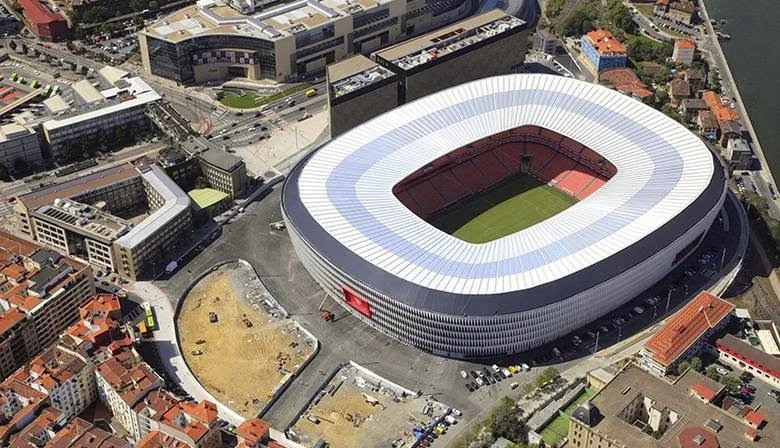
| Athletic Club | Bilbao | Basque Country | San Mamés |
| Atlético Madrid | Madrid | Community of Madrid | Metropolitano |
| Osasuna | Pamplona | Navarre | El Sadar |
| Celta | Vigo | Galicia | Balaídos |
| Alavés | Vitoria-Gasteiz | Basque Country | Mendizorrotza |
| Elche | Elche | Valencian Community | Martínez Valero |
| Barcelona | Barcelona | Catalonia | Camp Nou |
| Getafe | Getafe | Community of Madrid | Coliseum |
| Levante | Valencia | Valencian Community | Ciutat de València |
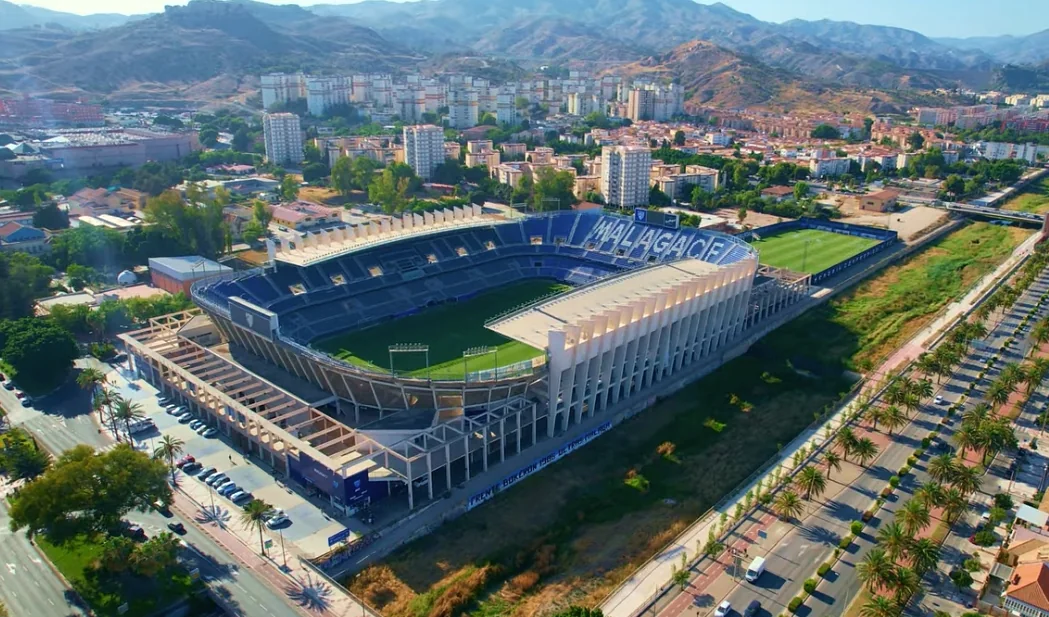
| Málaga | Málaga | Andalusia | La Rosaleda |
| Racing Club | Santander | Cantabria | El Sardinero |
| Rayo Vallecano | Madrid | Community of Madrid | Vallecas* |
| Deportivo | A Coruña | Galicia | Riazor |
| Espanyol | Cornellà de Llobregat | Catalonia | RCDE Stadium |
| Real Betis | Seville | Andalusia | La Cartuja |
| Real Madrid | Madrid | Community of Madrid | Santiago Bernabéu |
| Real Sociedad | San Sebastián | Basque Country | Anoeta / Reale Arena |
| Sevilla | Seville | Andalusia | Ramón Sánchez-Pizjuán |
| Valencia | Valencia | Valencian Community | Mestalla |
| Villarreal | Villarreal | Valencian Community | Estadio de la Cerámica |
*Rayo's historic home is Vallecas, but stadium inspections and works can force a match-specific venue change. Confirm the ground on the current fixture and ticket.
Two labels deserve special attention. Espanyol carries Barcelona in its identity but plays in Cornellà de Llobregat, immediately southwest of the city. Betis is a Seville club, but La Cartuja is its current match venue while the Benito Villamarín project changes the usual journey. Always check the ticket confirmation rather than navigating from an old stadium list.
Ground names also move with sponsorship. “Anoeta” and “Reale Arena” refer to the same San Sebastián stadium in everyday fan usage. A map built for supporters should recognise both searches instead of treating one as a different venue. The La Liga teams directory gives each club's fuller profile after this geographic overview.
Reading the Map: Spain's Regional Football Clusters
The clearest map pattern is concentration. The Community of Madrid and the Valencian Community each provide four clubs. The Basque Country and Andalusia provide three each. Those four regions alone account for 14 of the 20 places, while Catalonia and Galicia add two apiece and Navarre and Cantabria one each.
4
Madrid region
Real, Atlético, Rayo and Getafe
4
Valencian region
Valencia, Levante, Villarreal and Elche
3
Basque Country
Athletic, Real Sociedad and Alavés
3
Andalusia
Betis, Sevilla and Málaga
The northern arc is especially strong. Deportivo and Celta restore a two-club Galician rivalry on the Atlantic side. Racing returns Cantabria to the top flight. Continue east and the map reaches the Basque trio, then Osasuna in neighbouring Navarre. These clubs are close enough for intense regional travel but should not be collapsed into one identity: Galicia, Cantabria, the Basque Country and Navarre have distinct languages, histories and football cultures.
The east-coast cluster is just as useful for fans. Valencia and Levante share the city of Valencia, Villarreal sits north near Castellón, and Elche lies south in Alicante province. A single regional rail or road plan can reach several grounds, yet each match feels different—from Mestalla's steep old bowl to Villarreal's smaller-town intensity and Elche's broad Martínez Valero.
All 20 clubs are on mainland Spain this season. Mallorca's relegation removed the Balearic Islands from the map, while no Canary Islands side is present. Large interior areas also have no top-flight club. That empty space does not mean those regions lack football; it only reflects the annual promotion and relegation result at the highest level.
A map is therefore a season snapshot, not a permanent statement about Spanish football importance. Use today's La Liga schedule after choosing a region, because the fixture list determines whether a promising two-ground plan is actually possible on the same weekend.
Madrid, Barcelona and the Best Two-Ground City Trips
Madrid offers the greatest top-flight density. Real Madrid, Atlético and Rayo play inside the capital, while Getafe is in the metropolitan area to the south. That creates four possible home fixtures around one base, but it does not guarantee a double-header. La Liga spreads a matchday from Friday through Monday and confirms exact kickoffs in stages.
Madrid: maximum choice
Bernabéu, Metropolitano, Vallecas and the Coliseum create the best chance of finding one home game. Wait for venue confirmation because works can affect Rayo and Getafe plans.
Barcelona: metropolitan pairing
Camp Nou is in Barcelona; RCDE Stadium is in Cornellà de Llobregat. They belong to one urban trip but are not neighbouring grounds.
Seville: two identities
Sevilla use the Sánchez-Pizjuán, while Betis temporarily use La Cartuja during Villamarín works. Check the north-city journey for Betis rather than following an old route.
The Bernabéu is the easiest reference point for many first-time visitors: its official address is Avenida de Concha Espina, with Metro and Cercanías options listed by the club. The Metropolitano lies farther east, Vallecas sits southeast of the centre, and Getafe requires a separate suburban journey. Choosing a central hotel helps, but the fixture time should decide the route—not the straight-line distance on a map.
Barcelona and Espanyol demonstrate why municipal labels matter. RCDE Stadium is promoted as part of the Barcelona experience, yet its site is in Cornellà. Allow time for suburban transit and do not schedule a stadium tour immediately before another match. Camp Nou's ongoing redevelopment also means entrances, capacity and walking approaches can change during the season.
Seville currently offers an unusual two-ground comparison. The Sánchez-Pizjuán remains Sevilla's intense urban home in Nervión. Betis officially moved league games to the 70,000-seat La Cartuja on a provisional basis while the Benito Villamarín is rebuilt. The clubs remain eternal city rivals even though Betis's temporary matchday geography has moved north.
The best rule is simple: choose a city first, then wait for confirmed kickoff times, then buy travel. A map shows possibility; the calendar decides feasibility. If the second match is sold out or moved, the site's La Liga viewing guide helps find a legal local broadcast option instead of turning a tight connection into a stressful race.
The Three Promoted Clubs and How the Map Changed
Promotion moved the 2026/27 map in three distinct directions. Racing Santander and Deportivo La Coruña won the two automatic places by finishing first and second in the second tier. Málaga finished fourth, then survived two-legged ties against Las Palmas and Almería to claim the playoff place.
Racing: Cantabria returns
El Sardinero puts Santander back on the top-flight coast map. The club earned promotion directly as the second-tier champion.
Deportivo: derby restored
Riazor returns after an automatic second-place promotion, creating La Liga meetings with Celta and a two-club Galician region.
Málaga: playoff route
La Rosaleda hosts top-flight football again after eight years. Málaga beat Las Palmas and then Almería to complete the longer route.
For supporters, the Galician derby is the headline return. Celta and Deportivo represent Vigo and A Coruña, two Atlantic cities with a rivalry much older than this promotion. A national map shows only two nearby pins; the fixture carries regional history, family divisions and a journey supporters have waited to make again in the top flight.
Racing adds a different northern stop between Galicia and the Basque cluster. Santander had spent 14 years outside the top division, so its return expands the away-day choices on the Cantabrian coast. Málaga shifts the southern boundary toward the Mediterranean and gives Andalusia three clubs, linking La Rosaleda to the established Seville pair.
The outgoing clubs changed the picture just as much. Mallorca's relegation removed the only island pin. Girona's departure reduced Catalonia from three clubs to two. Oviedo's relegation left Asturias without a top-flight side. Promotion and relegation therefore alter air routes, train plans, regional derbies and the balance of supporter travel every summer.
Historical reputation does not begin a promoted club with extra points. Racing, Deportivo and Málaga bring famous grounds and experienced fan bases, but their first objective is the same as any newcomer: build a 38-match survival total. Follow their actual position on the La Liga table rather than assuming the size of the pin predicts the result.
How to Use the Map for a La Liga Match Trip
A club map answers “where,” but a successful match trip also needs “when,” “which entrance” and “how certain.” La Liga matchdays commonly stretch from Friday to Monday, with occasional midweek rounds. The date printed beside a matchweek is therefore a weekend anchor until the exact day and kickoff are confirmed.
1. Choose a cluster, not one fragile fixture
Madrid, Valencia, the Basque Country and Andalusia offer alternatives. If the preferred match moves to Monday, another local home game may still fit the trip.
2. Shortlist the entire matchweek
Treat Friday through Monday as possible. Do not book a Sunday-night flight home around an unconfirmed Sunday listing.
3. Buy through the club
Official ticket pages show member priority, public sale and hospitality options. Availability and release timing differ by club and opponent.
4. Re-check the venue
Betis's temporary home, Camp Nou works and uncertainty around Vallecas prove why an old map pin is not enough. Use the venue printed on the current match ticket.
5. Leave a matchday buffer
Arrive early for security, ticket issues and unfamiliar transit. Two nearby grounds on a screen can still require separate metro or suburban rail journeys.
Club membership can affect the best seats and earliest buying window. Athletic, for example, advertises priority periods and purchase limits to its supporter programme. High-demand matches against Barcelona, Real Madrid or a derby rival may offer little public inventory. Hospitality is legitimate but more expensive; an unofficial listing is not automatically trustworthy because it appears early.
Summer heat and stadium work add seasonal context. August kickoffs often move later, and construction can change perimeter access even when the ground itself remains the same. Save the club's matchday notice, confirm the gate on the mobile ticket and check public transport service on the day rather than relying on a route saved months earlier.
Finally, separate attendance from viewing. If logistics fail, the where-to-watch guide gives legal broadcast options, while today's schedule provides the current kickoff. A good map expands choices; it should never pressure a fan into buying before the match details are ready.
Comments
Sign in with Google to comment. Keep the conversation useful and football-focused. New comments are reviewed before they appear.
Loading comments…