How many La Liga teams are in Valencia?
Valencia city has two La Liga clubs in 2026/27: Valencia CF and Levante UD. The wider Valencian Community has four, because Villarreal CF and Elche CF also play in the top division. Those are two different answers to a deceptively simple search. A ticket for Villarreal does not take you to a neighborhood of Valencia, and an Elche match needs its own journey.
The distinction matters before you choose accommodation, arrange a stadium tour or buy a train ticket. “Valencia” can mean the city, the surrounding province or, more loosely in English football conversation, the entire autonomous community. Club identity is more precise. Valencia and Levante share a city; Villarreal belongs to Vila-real farther north, while Elche is a separate southern destination. This guide uses the 2026/27 top-flight membership and stadium information current on November 12, 2026.
| Club | City | Current home stadium | Planning implication |
|---|---|---|---|
| Valencia CF | Valencia | Mestalla | A city matchday; distinguish the current ground from Nou Mestalla. |
| Levante UD | Valencia | Ciutat de València | A second city stadium with a separate route and ticket sale. |
| Villarreal CF | Vila-real | Estadio de la Cerámica | A northern regional trip into Castellón province. |
| Elche CF | Elche | Martínez Valero | A southern regional trip rather than a city transfer. |
Think of the region as a north-to-south sequence: Vila-real, Valencia and Elche. Within Valencia, the two grounds offer different surroundings and supporter traditions. Across the region, the distances require another level of planning. Four clubs create more possible fixtures, but they do not create a four-ground weekend automatically. Home and away assignments, kickoff confirmation and the final connection home determine the practical choice.
Nor does “Valencian football” mean that these are the region’s only clubs. It identifies this season’s representatives in the highest domestic division. Promotion and relegation can change that list. For another region, use our national La Liga club map guide; for this trip, the useful question is which of these four homes fits the time you actually have. The teams directory is the starting point for following an individual club after choosing a destination.
Valencia CF: Mestalla now, Nou Mestalla later
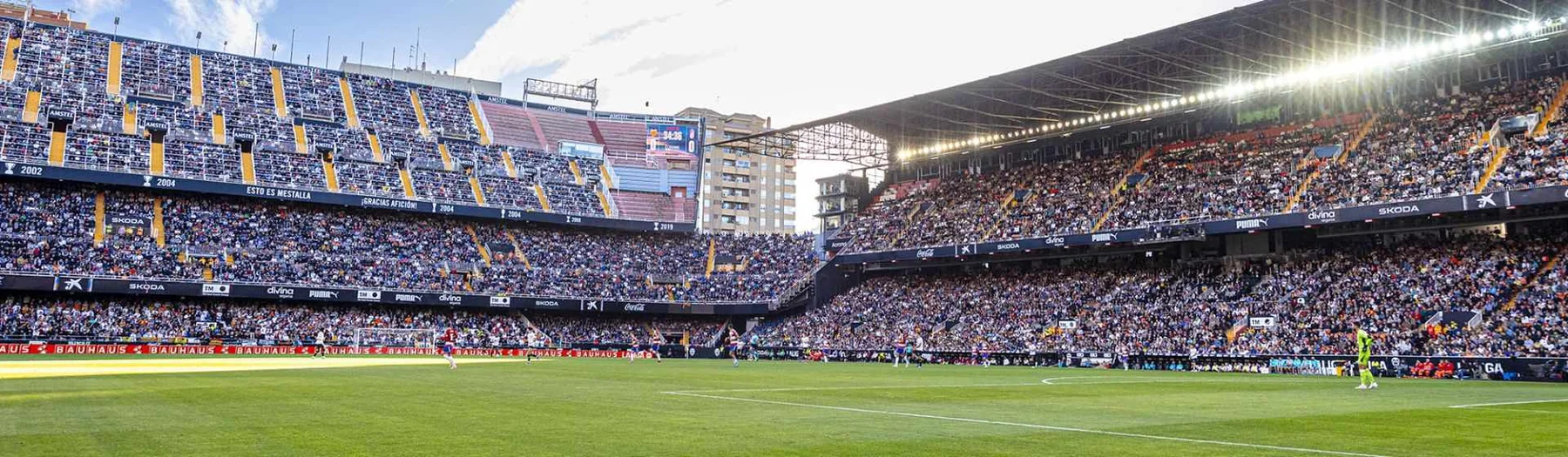
For a Valencia CF home match during the current 2026/27 season, start with Mestalla, the existing stadium on Avenida de Suecia. The club’s official stadium information dates its inauguration to May 20, 1923. Its long history and steep tiers make it an important destination in its own right, even for a visitor whose main interest is seeing the city rather than following Valencia every week.
The practical choice is the view you want and the access you need. A higher position can help you follow the team’s shape across the pitch, while a lower seat places you closer to individual duels. Those are different experiences, so compare the actual section before accepting the first available price. If stairs, mobility or accompanying children affect the decision, ask the club about the relevant arrangements; a dramatic stadium photograph cannot tell you whether a particular route suits your group.
Getting to current Mestalla
The official address is Avenida de Suecia, s/n, 46010 Valencia. Valencia’s stadium page identifies Aragón and Facultats among its public-transport reference points. You may also see the Valencian spelling Aragó when looking up the journey. Use the current Metrovalencia journey planner or the operator’s service notices for the day you travel, rather than assuming an old line diagram guarantees the same connection.
Keep the final walk separate from the rail journey. A station arrival time is not your seat-arrival time: you still need the correct side of the stadium, the entrance printed on the ticket and time to pass entry checks. Save the ticket before leaving your accommodation, locate the gate and agree where your group will meet if you become separated. An extra hour around the ground is more useful than a plan that depends on every connection running perfectly.
What the future move changes
Nou Mestalla is a different destination and remains a future stadium move in this guide. Valencia’s September 2026 access announcement identifies 2027/28 as the planned season for the move and explains that the new ground has different stand orientation and entrances. Treat that as the club’s plan, rather than evidence that a 2026/27 match has already changed venue. Check the named ground on the particular fixture and ticket whenever planning a later visit.
The official stadium-transition hub concerns future seating arrangements. That process does not replace buying an ordinary ticket for a current match. A future season-seat appointment, a tour of existing Mestalla and admission to Valencia’s next home game are three separate products with separate conditions. Keeping them distinct prevents the expensive mistake of organizing a trip around a reservation that does not admit you to the game you intended to watch.
Levante UD and a different Valencia matchday
Levante is Valencia’s other top-flight city club, with its own history, support and home stadium. Its official foundation year is 1909, ten years before Valencia CF’s. Calling it simply the alternative when Mestalla is unavailable misses that independent identity. A Levante home game is an opportunity to experience a different club, rather than buy a substitute version of Valencia’s matchday.
The same distinction helps you understand the rivalries. Valencia versus Levante is the city derby. A meeting with Villarreal or Elche is a regional encounter involving another municipality. That geography helps explain the atmosphere without reducing supporters to assumptions about occupation, income or political identity. Follow the individual fixture’s ticket arrangements, especially for a derby, rather than expecting every Levante match to offer an easy public sale.
Finding the Ciutat de València
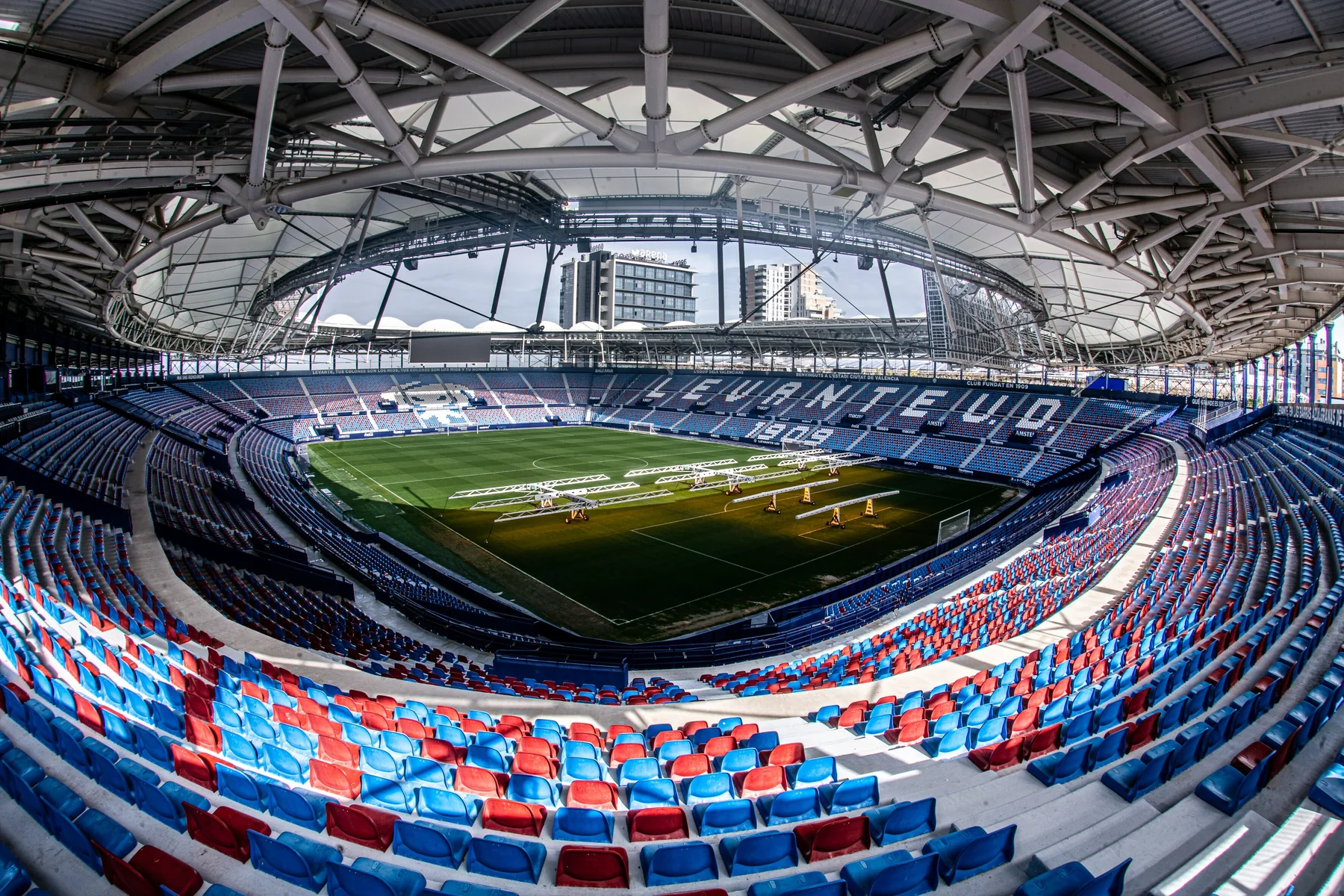
The club and Valencia’s municipal directory give the address as Calle San Vicente de Paúl, 44, 46019 Valencia; the Valencian street form is Carrer Sant Vicent de Paül. This is a separate destination from Mestalla. Check the full stadium name when ordering transport, because a general search for a “Valencia stadium” can point you to the other club or to the future Nou Mestalla.
Metrovalencia’s 2026 match-service guidance identifies the Estadi Ciutat de València stop on tram Line 6, by the stadium, with Machado another nearby reference point. Older football guides may still use the stop’s previous name, Estadi del Llevant. Use the current stop name and check the operator’s timetable for your travel date. A special late service announced for a previous match does not promise the same extension after the game you attend.
A useful city plan gives Levante its own afternoon or evening. Find the entrance, leave time to walk around the ground and decide how you will return before kickoff. If combining it with Mestalla, compare both confirmed kickoffs in the current La Liga schedule. One club being at home does not guarantee that the other is, and a convenient map does not justify leaving the first game early to make an uncertain connection.
Villarreal and Elche: two regional clubs beyond the city
The other two regional La Liga clubs expand the possibilities, but they change the scale of the trip. Villarreal is the northern option in Castellón province; Elche is the southern option in Alicante province. Both belong in a Valencian football guide. Neither should be described as another Valencia neighborhood or reached by assuming the city’s metro network extends to its stadium.
Vila-real and the Estadio de la Cerámica
Villarreal CF plays in Vila-real, the Valencian name you will encounter on local transport information. The club lists the Estadio de la Cerámica at Calle Blasco Ibáñez, 2, 12540 Vila-real. El Madrigal, familiar from older football coverage, is the same ground under its former name; the current name dates from 2017. Do not mistake the club’s training facilities for the first team’s stadium when choosing a map pin.
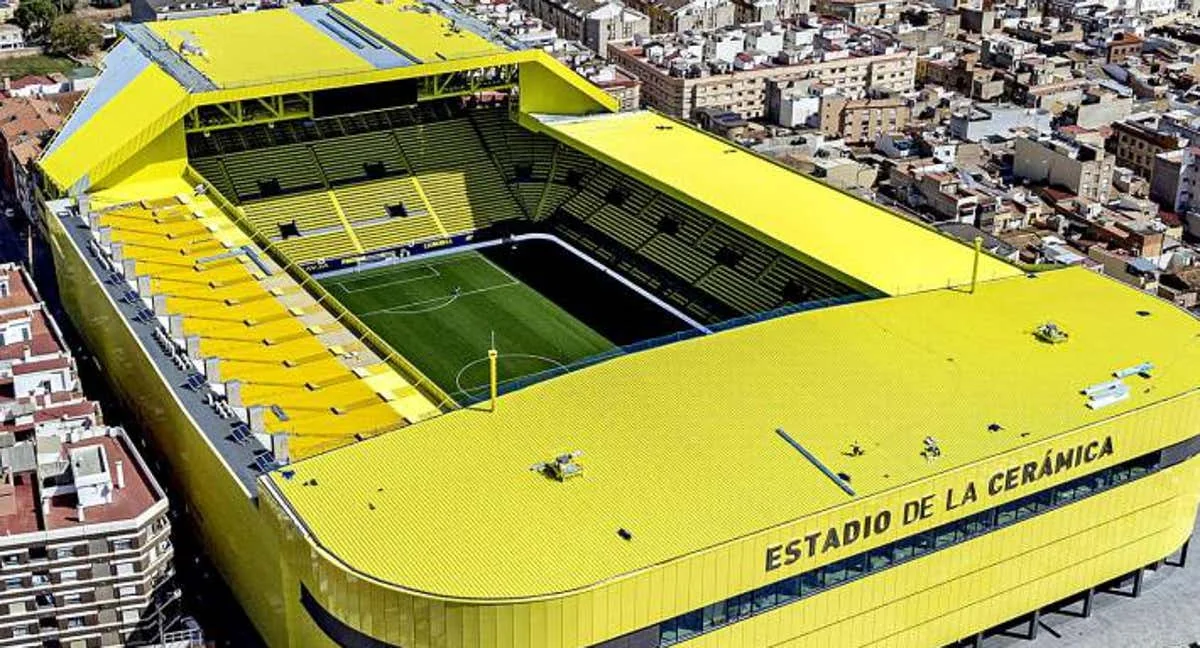
Adif lists Vila-real station on the C6 rail route, with services linked to València Estació del Nord and Castelló de la Plana. That gives you a useful route to investigate, not a guaranteed journey for every match. Compare the day’s outward and return services with the confirmed kickoff, then allow for the station-to-stadium leg and the crowds leaving afterward. The football ground and the railway station have different addresses; arriving in the right town still leaves a local journey.
This makes Villarreal a good candidate for a dedicated regional day when the transport fits. Arriving earlier lets you understand the ground’s setting instead of treating it as a quick platform-to-turnstile transfer. If the return train would force an early departure from the match, change the overnight plan or choose another fixture. Missing the final stages defeats much of the reason for making the trip.
Elche and the Martínez Valero
Elche’s home is the Martínez Valero, at Avenida Manuel Martínez Valero, 3, 03208 Elche. The club’s stadium history records its opening in September 1976 and its use during the 1982 World Cup. That gives the visit a different architectural and football background from Mestalla or the Ciutat. It is a destination with its own story, rather than the fourth name to tick off because all four share an autonomous community.
Pay particular attention to the arrival station. Elx/Elche Parc and Elche/Elx Alta Velocidad are different stations. Adif gives Parc’s address on Avenida del Ferrocarril, while Renfe places the high-speed station in Matola. A booking that says “Elche” therefore needs a second look before you calculate the final transfer to the Martínez Valero. Choose the service and actual station together, then plan local transport to the stadium and accommodation.
Elche is the stronger argument for allowing a separate day or overnight stay rather than forcing another match into a Valencia city weekend. Check the whole route, including any changes, before deciding that a train arrival leaves enough margin. A longer trip can be rewarding when it gives each club proper time. It becomes fragile when the second ticket depends on the first match ending promptly and every onward connection being available.
Buying the right ticket for the right ground
Choose the fixture before choosing the seat. All four clubs have separate sales and supporter arrangements; the regional connection does not create a shared admission pass. Valencia’s own ticket help page warns that some listed games may still have unconfirmed schedules and that match information can include games away from Mestalla. Read the opponent, home team, competition and venue together before paying.
| Club | Start here | Check before buying |
|---|---|---|
| Valencia CF | Valencia match-ticket listings | Current stadium, confirmed date and the distinction between ordinary and VIP admission. |
| Levante UD | Levante’s official ticket platform | Men’s first-team fixture, stadium and whether the product is a match or another experience. |
| Villarreal CF | Villarreal ticket-sales page | First team versus Villarreal B, and match admission versus a stadium experience. |
| Elche CF | Elche’s official club and ticket contact | The current home-match sale and any questions about purchasing or accessibility. |
The distinction between a match and an experience is particularly easy to miss. Levante’s platform lists the Tour Granota and additional experiences alongside match tickets. It also lists teams whose games can take place away from the Ciutat. Villarreal’s sales page similarly separates matches from experiences and includes Villarreal B. A familiar badge at the top of the screen does not establish that the product admits you to the men’s La Liga fixture.
Price comparisons need the same care. A specific package, member concession or hospitality offer is not the normal cost of every seat at every match. Levante’s current late-2026 offer, for example, combines home fixtures against Elche, Racing and Alavés; it is a different decision from buying one game during a short holiday. Work out which matches you can actually attend before comparing a package’s advertised per-match figure with a single ticket.
For a family or group, compare the whole booking rather than one attractive headline price. Check whether the available seats are together, whether the relevant age or companion conditions apply and whether everyone can use the chosen access route. If an accessible position is essential, contact the club before choosing a standard seat in the hope of changing it on arrival. The right section matters as much as obtaining any ticket.
Supporters traveling specifically with the visiting team should look for that club’s away-ticket instructions. A neutral visitor and an organized away supporter may need different seating arrangements. Preserve the club’s booking confirmation, use the admission format it specifies and recheck the fixture after any schedule announcement. A stadium-tour ticket can be a worthwhile alternative when a match does not fit; it remains a different visit, with its own date, areas and access conditions.
Planning a Valencia football weekend without rushing
Start with one match you most want to attend, then add possibilities around it. The number of clubs is useful because it gives you alternatives; it should not become a demand to collect every stadium. A city-only weekend can offer two contrasting club experiences with less travel, while a longer stay can give Villarreal or Elche the full day their separate journeys deserve.
Be particularly careful with a fixture shown under a Sunday matchday heading. La Liga’s confirmed announcement for matchweek 14 spreads the games from Friday, November 27, to Monday, November 30, 2026. A season-calendar weekend is therefore not sufficient evidence for booking a Sunday return flight. Use the later confirmed day and kickoff, then recheck before traveling.
A two-ground city visit
There is a concrete example available in the information checked on November 12: Levante versus Racing at the Ciutat on Friday, November 27, at 21:00, followed by Valencia versus Osasuna at Mestalla on Sunday, November 29, at 14:00. Those times are local to Valencia, which is on CET in November. The league announcement confirms the Friday opener, and Valencia’s ticket listing gives the Sunday match. This illustrates a possible itinerary; it does not guarantee seats remain available.
For that shape of weekend, arrive with enough margin for Friday’s game, leave Saturday for the city and make Sunday’s Mestalla visit a separate outing. Check accommodation access after the late match and calculate Sunday’s onward journey from the stadium, rather than from kickoff. The final whistle, exit queues and the trip to collect luggage all come before reaching an airport or long-distance platform.
If either sale or travel arrangement fails, keep the stronger match and change the optional one. A stadium tour can fill a different slot when its own timetable permits. You can also follow the other game through an appropriate broadcaster using our La Liga viewing guide. That preserves the football element of the weekend without making a second paid admission or rushed transfer essential to enjoying the trip.
Adding a regional away day
For Vila-real, put the outward train, local transfer, entry margin, match and return service into one timeline. For Elche, add any intercity change and verify whether your ticket arrives at Parc or Alta Velocidad. A regional extension works when the complete timeline fits comfortably. If it only works by leaving before the final whistle, it needs another night or another match.
Do the same exercise for the least mobile member of the group, rather than the fastest walker. Include time for food, station navigation and a slower exit, especially when traveling with children or using an accessible route. These are practical margins you control, unlike stoppage time or transport disruption. Keep a usable return option and the club’s current admission instructions together with the ticket.
The result should be a trip built around four distinct clubs and the places they represent: two homes within Valencia city, one northern destination in Vila-real and another to the south in Elche. Choose the match that interests you, confirm the real ground and kickoff, and let the available time determine the next addition. That gives the city derby, the regional rivalries and each stadium a chance to mean more than another pin on a map.
Comments
Sign in with Google to comment. Keep the conversation useful and football-focused. New comments are reviewed before they appear.
Loading comments…